
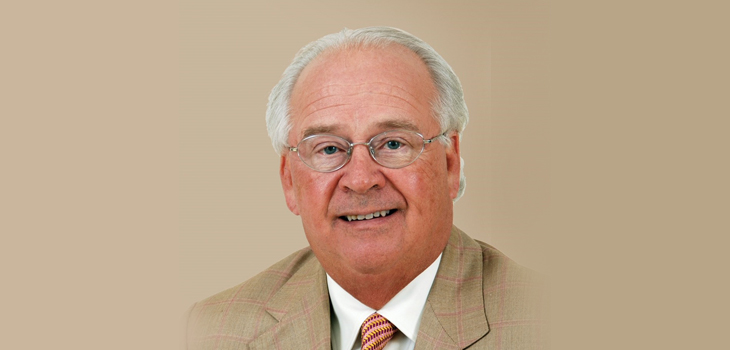
International sports medicine icon James R. Andrews, M.D. will be honored by the C Horatio Alger Association of Distinguished Americans, Inc., a nonprofit educational organization recognizing the achievements of outstanding individuals and encouraging youth to pursue their dreams through higher education.
James R. Andrews, M.D. 2020 Horatio Alger Award Winner
2 min read Premium comments
#horatioalgeraward#jamesandrews
At Louisiana State University (LSU), Dr. Andrews studied science and was an SEC Champion pole vaulter for LSU’s track team. He remained at that institution for medical school, then attended the Tulane School of Medicine for an orthopedic residency. Dr. Andrews also completed sports medicine fellowships at the University of Virginia and the University of Lyon in France.
Dr. Andrews’ career began in Columbus, Georgia at the clinic of Dr. Jack C. Hughston in 1973. He would go on to establish an orthopedic clinic in Birmingham, Alabama, which would later become the Andrews Sports Medicine & Orthopaedic Center. In addition, Dr. Andrews co-founded the American Sports Medicine Institute in Birmingham.
In 2007, Dr. Andrews’ name would later appear on a second facility—The Andrews Institute of Gulf Breeze, Florida. He followed that with a third location at Children’s Health in Dallas, Texas.
Dr. Andrews has operated on such legendary and hall of fame athletes as Jack Nicklaus, Roger Clemens, Drew Breeze, Charles Barkley and John Smoltz. Even more importantly, he has been a mentor and teacher to more than 450 orthopedic fellows.
One of Dr. Andrews most enduring passions is his dedication to helping less fortunate high school athletes, ensuring they have adequate care.
Dr. Andrews is a professor of orthopedic surgery and sports medicine at the University of Virginia, The University of South Alabama, the University of South Carolina, the University of Arkansas, University of Alabama Birmingham and Tulane University.
“It is truly an honor to be selected for membership in this prestigious organization,” said Dr. Andrews. “When I was first introduced to the Horatio Alger Association by my friend Bill Dorr, I was immediately drawn to its mission of supporting promising young students as they seek to achieve their dreams. I’ve dedicated much of my career to building up the next generation, and I look forward to doing the same for Horatio Alger Scholars.”
Regarding the future of sports medicine, Dr. Andrews wrote to OTW, “The field of orthopaedic sports medicine has grown significantly over the past number of decades and continues to expand at an exponential rate. In this particular field there is a lot of sensationalism by doctors, physical therapists, athletic trainers, and coaches, the media and players alike to jump to conclusions before significant evidence is concluded.
The areas of concern as regards the future of Sports Medicine that Dr. Andrews highlighted to OTW are:
- “The increasingly lost art of physical diagnosis.
- The unchecked development of orthobiologics ahead of scientific evidence.
- Robotic surgery and lack of technical training as a true surgeon.
- The demand on the sports surgeon to manage their ever increasing administrative duties and electronics.
- The decreasing reimbursement and the emphasis on economics for our future young surgeons.”
Words and concepts to take to heart.
Thank you, Dr. Andrews.
Author
React:
Discussion
This is a fascinating development. In my practice we've seen similar outcomes with the revised protocol. The key differentiator seems to be patient selection criteria. Has anyone else noticed the correlation with BMI thresholds?
Great point. I'd push back slightly on the conclusion, the sample size in the cited study is too small to draw population-level inferences. That said, the directional signal is compelling and worth a larger RCT.
We implemented a similar approach last year. Early results are promising but we're still gathering 12-month follow-up data. Happy to share our protocol if anyone is interested.
Join the conversation
Orthopedic professionals are discussing this. Sign in and upgrade to read every comment and add your voice.