
On January 6, 2020, Nextremity Solutions, Inc. announced 510(k) clearance by the FDA to market its tarsometatarsal joint (TMT) device, the InCore TMT System. It took the agency a little over three months to clear the system.
FDA Clears Nextremity Solutions’ Midfoot Fusion System
1 min read Premium comments
#fda510kclearanceSecondary#fusion#nextremitysolutions
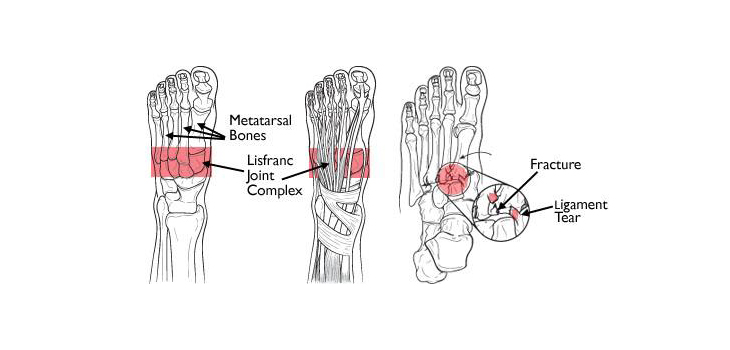
The company stated the system focuses on second and third TMT fusion, more commonly known as a Lisfranc joint fusion. Lisfranc fusions are intended to help provide stability to the midfoot and restore the anatomical arch of the patient’s foot.
This clearance is an addition to the 2018 clearance of the company’s InCore Lapidus system used for first tarsometatarsal fusion.
The company’s CTO Ryan Schlotterback said the team has done “an excellent job of expanding our InCore technology platform and building on the clinical success of InCore Lapidus.” Greg Denham, the company’s director of product development said the new system “applies all the advantages of InCore Lapidus including the solid intraosseous fixation construct aimed to minimize hardware prominence.”
InCore TMT System
According to the FDA clearance document, the system consists of a post and two headless compression screws.
Posts are available with a 4.9mm diameter, in an 18mm length, and in right and left orientations. Screws are available in a 2.7mm diameter and lengths of 16to 52mm.
Here’s how the FDA document describes the mechanics of using the system.
“The post is inserted into the cuneiform and compression screws are inserted into the metatarsal and into the post to maintain apposition of the bones during fusion. A post plug screw is threaded into the top of the post after all components have been implanted to prevent tissue ingrowth into the post and facilitate removal, if needed.”
All implants are manufactured from color anodized Ti-6Al-4V alloy conforming to ASTM F-136.
The system is provided with a set of accessory instruments designed for preparation of the implant site and insertion of the implants into bone.
Nextremity Solutions is privately held and based in Warsaw, Indiana, the “Orthopedic Capital of the World.”
Author
React:
Discussion
This is a fascinating development. In my practice we've seen similar outcomes with the revised protocol. The key differentiator seems to be patient selection criteria. Has anyone else noticed the correlation with BMI thresholds?
Great point. I'd push back slightly on the conclusion, the sample size in the cited study is too small to draw population-level inferences. That said, the directional signal is compelling and worth a larger RCT.
We implemented a similar approach last year. Early results are promising but we're still gathering 12-month follow-up data. Happy to share our protocol if anyone is interested.
Join the conversation
Orthopedic professionals are discussing this. Sign in and upgrade to read every comment and add your voice.