
Orthopedic giant DePuy Synthes and medical imaging startup Zebra Medical Vision based in Kibbutz Shefayim, Israel, have announced a global agreement to develop and commercialize a three-dimensional imaging technology for use in orthopedic surgery.
DePuy Synthes Partners With AI Leader, Zebra Medical Vision
2 min read Premium comments
#artificialintelligenceSecondary#depuysynthes#zebramedicalvision
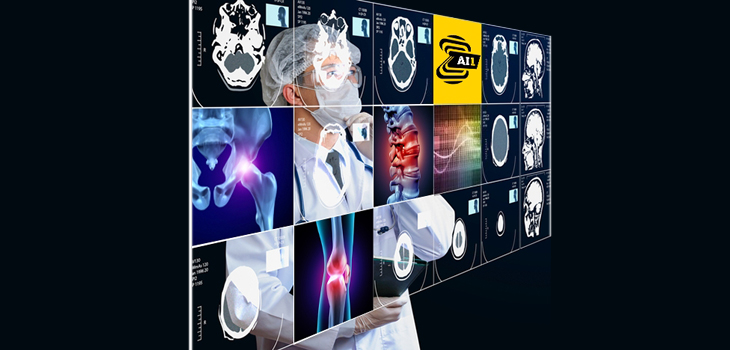
Zebra Medical’s technology is an affordable, radiation-free 3D imaging system that eliminates the needs for MRI or CT imaging in pre-surgical planning.
According to Zebra Medical Vision, “We aim to introduce an AI based technology that allows a creation of three-dimensional (3D) models from simple, 2D plain X-ray images.”
The new technology will be introduced as an addition to DePuy Synthes’ already-established VELYS Digital Surgery solutions.
Aldo Denti, company group chairman, DePuy Synthes, told OTW, “Our vision is to reimagine orthopedic care before, during and after procedures by building a connected, digital surgery ecosystem that elevates the standard of care. This collaboration with Zebra Medical Vision marks yet another exciting and important step in our commitment to transform orthopaedic care and enhance our digital surgery offering.”
Eyal Gura, co-founder and CEO of Zebra Medical Vision, said of the partnership, “We are thrilled to start this collaboration and have the opportunity to impact and improve orthopaedic procedures and outcomes in areas including the knee, hip, shoulder, trauma, and spine care.”
Gura continued, “We share a common vision surrounding the impact we can have on patients’ lives through the use of AI, and we are happy to initiate such a meaningful strategic partnership, leveraging the tools and knowledge we have built around bone health AI in the last five years.”
Zebra Medical Vision cites the agreement with DePuy Synthes as “another exciting and important step in our commitment to creating a digital system of connected technologies, through our VELYS Digital Surgery platform, that will transform orthopaedic care.”
Zebra Medical Vision’s mission is “to provide radiologists the tools they need to make the next leap in patient care.”
The company employs imaging analytics and artificial intelligence (AI) technology tools to support hospitals and clinics in identifying at risk patients and offering improved preventative treatment and care.
Zebra Medical Vision has raised over $52 million in funding and has been named a Fast Company Top-5 AI and Machine Learning company. A global leader in AI FDA-cleared products, Zebra Medical Vision technology is installed in hospitals globally.
The DePuy Synthes Companies (part of the Johnson & Johnson family of companies) are global leaders in orthopedic products and services—from trauma, spine, joint reconstruction, sports medicine and cranio-maxillofacial to biomaterials and power tools. The DePuy Synthes Companies employ around 18,000 people in 60 countries and generate around $10 billion annually in sales revenue. The agreement with Zebra Medical Vision is specifically with DePuy Synthes’ Ireland Unlimited Company, based in Cork, Ireland, a site which employs over 1,000 workers.
Author
React:
Discussion
This is a fascinating development. In my practice we've seen similar outcomes with the revised protocol. The key differentiator seems to be patient selection criteria. Has anyone else noticed the correlation with BMI thresholds?
Great point. I'd push back slightly on the conclusion, the sample size in the cited study is too small to draw population-level inferences. That said, the directional signal is compelling and worth a larger RCT.
We implemented a similar approach last year. Early results are promising but we're still gathering 12-month follow-up data. Happy to share our protocol if anyone is interested.
Join the conversation
Orthopedic professionals are discussing this. Sign in and upgrade to read every comment and add your voice.