
A new, anatomically contoured femoral head—manufactured from ceramic material—has been implanted in a patient by George N. Guild, III, M.D. at Emory University.
Anatomically Contoured Femoral Head Implanted at Emory
2 min read Premium comments
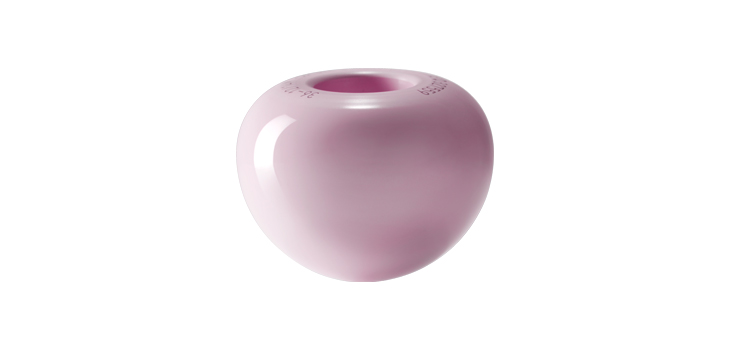
Secondary#bioloxcontoura#femoralheads
The component, The BIOLOX CONTOURA, distributed and marketed by Salt Lake City, Utah-based Total Joint Orthopedics, Inc., is made from ceramic material. It “was conceived and developed at the Harris Orthopedics Laboratory at Massachusetts General Hospital in Boston by Drs. Orhun Muratoglu, Kartik M. Varadarajan, Harry Rubash, Henrik Malchau, and Andrew Freiberg in cooperation with CeramTec, supplier of the BIOLOX delta advanced ceramics. “
According to CeramTec, “pre-clinical testing of the implant shows that the anatomically contoured design retains the same joint stability and dislocation resistance as currently available head designs. BIOLOX CONTOURA has been cleared by the FDA for use with Total Joint Orthopedics’ Klassic HD® Hip System, which is intended for prosthetic replacement without bone cement across a range of conditions, including non-inflammatory degenerative joint disease, rheumatoid arthritis, hip dysplasia, and revision of previously failed hip arthroplasty.”
Asked how challenging it was to come up with something truly innovative, Orhun Muratoglu, Ph.D., Director of the Harris Orthopaedics Laboratory, Director of the Technology Implementation Research Center (TIRC), Alan Gerry Scholar at MGH, and Professor of Orthopedic Surgery at Harvard Medical School, told OTW, “Hip replacement surgery has a long history in orthopedics and generally speaking it is a very successful procedure. Consequently, there is a tendency to assume that it’s a perfect procedure with no room, or no need for improvement.”
“It is certainly true that many of the historical and frequent failure mechanisms have been dramatically reduced with improvements in implantation tools, techniques and newer implant materials. However, this also means it is now time to pay more attention to improving patient satisfaction and meeting patient expectations, as opposed to thinking only in terms of preventing device failure or avoiding revision.”
“One such aspect of hip replacement relates to potential for anterior hip pain which can arise from soft-tissue impingement. While the pain may not always rise to the level of requiring a revision it nonetheless significantly affects the patient’s quality of life.”
“The design of the Contoura femoral head is such that its top half is a perfect hemisphere just like a conventional femoral head. This portion of the femoral head is critical because it is the part that articulates against the polyethylene cup to form the hip joint, and provides stability to the hip.”
“The lower part of a conventional femoral head is there primarily to connect it to the hip stem. In a conventional design this portion also has a hemispherical shape, which means it protrudes more into the joint space. In the Contoura design this portion is shaped to occupy much less volume within the joint space and thus reduce the chance of interacting with the surrounding tissue.”
“The first thing most surgeons ask is whether the Contoura design is the same ‘size’ as a conventional design. The answer is ‘yes’ since the size relates to the diameter of the top hemisphere. The next question is whether it provides the same ‘stability’ as a conventional design. Again, the answer is ‘yes’ because of the reasons described above (and confirmed by testing).”
“It is just that we have come to assume that the femoral head should look like a sphere, but the truth is that it does not exactly reflect what the native hip looks like.
Author
React:
Discussion
This is a fascinating development. In my practice we've seen similar outcomes with the revised protocol. The key differentiator seems to be patient selection criteria. Has anyone else noticed the correlation with BMI thresholds?
Great point. I'd push back slightly on the conclusion, the sample size in the cited study is too small to draw population-level inferences. That said, the directional signal is compelling and worth a larger RCT.
We implemented a similar approach last year. Early results are promising but we're still gathering 12-month follow-up data. Happy to share our protocol if anyone is interested.
Join the conversation
Orthopedic professionals are discussing this. Sign in and upgrade to read every comment and add your voice.