
Walnut Creek, California-based Trainer Rx has changed its name to RecoveryOne, raised $12 million and expanded the number of executives in the C-suite.
Trainer Rx Now RecoveryOne, Raises $12M, Announces New Leadership
2 min read Premium comments
Secondary#fundraising#recoveryone#trainerrx
Trainer Rx, founded in 2014, is a leader in musculoskeletal recovery. The company hopes that this name change will signify both expansion and a focus shift “to align with health plans and value-based health systems that share its objective of enabling their members with the most effective, cost-efficient means of recovery.”
The $12 million funding round was led by Cigna Ventures. There was significant participation by existing investor 7wire Ventures and personal participation by members of the management team.
Mark Luck Olson, CEO of RecoveryOne, told OTW, “We are thrilled to have closed on our latest round of financing and to have launched a new company name and strategy. Our new brand, RecoveryOne, reflects our mission to empower people struggling with musculoskeletal conditions to achieve optimal recovery, ultimately reducing personal and economic burden.”
“Our new team, comprised of very seasoned experts, will continue to break down barriers to accessibility and deliver our evidence-based solutions to our members when and where it best suits, driving greater adherence and better outcomes.”
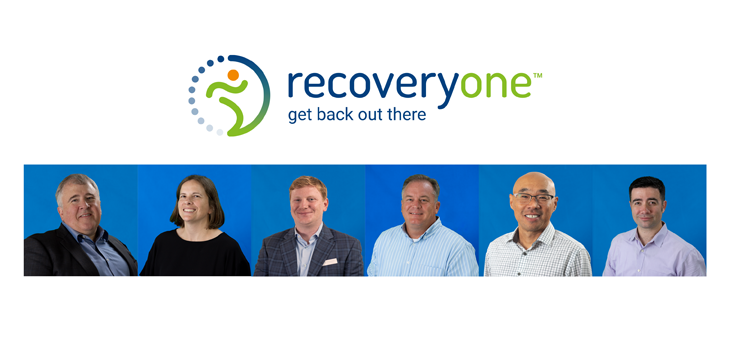
RecoveryOne’s new leadership team includes three new executive vice presidents and two new vice presidents:
- Miriam Beecham, Executive Vice President and Chief Product Officer
- Dustin Eggers, Executive Vice President and Chief Commercial Officer
- Joseph Kinnett, Executive Vice President, Enterprise Sales & Marketing
- John Araki, Vice President of Finance and Administration
- Sean Kinsman, P.T., D.P.T., Vice President of Clinical Operations
Beecham will lead the company’s commercial product roadmap and all aspects of customer experience, developing, curating and applying content to the Recovery One programs and enhancing user experiences.
Eggers will execute the company’s expansion of strategic relationships with health plans and value-based health systems.
Kinnett will focus and building the RecoveryOne sales team and oversee the implementation of new enterprise agreements within health plans and risk-bearing entities.
Araki will focus and capital fundraising and financial planning.
Kinsman will ensure RecoveryOne’s care pathways are evidence based, drive expansion into clinical care, and oversee clinical operations.
The new team will work closely with CEO Mark Luck Olson and Chief Technology Officer Chris Hughes, who joined the company in 2014.
Author
React:
Discussion
This is a fascinating development. In my practice we've seen similar outcomes with the revised protocol. The key differentiator seems to be patient selection criteria. Has anyone else noticed the correlation with BMI thresholds?
Great point. I'd push back slightly on the conclusion, the sample size in the cited study is too small to draw population-level inferences. That said, the directional signal is compelling and worth a larger RCT.
We implemented a similar approach last year. Early results are promising but we're still gathering 12-month follow-up data. Happy to share our protocol if anyone is interested.
Join the conversation
Orthopedic professionals are discussing this. Sign in and upgrade to read every comment and add your voice.