
When do you throw in the towel and remove the spinal implant?
The Hardest Decision Any Spine Surgeon Has to Make
6 min read Premium comments
#surgicalsiteinfection#revisionsurgery#implantremoval
Researchers under the direction of Aakash Agarwal, Ph.D., of the University of Toledo, tackled this immensely difficult subject in a recently published review in the Global Spine Journal.
Dr. Agarwal and his team reviewed 49 studies pertaining to the management of late onset surgical site infections (SSI) after spinal surgery.
The authors concluded that although long-term antibiotics, debridement, and continuous irrigation are the most common treatments for late onset SSI, the most statistically effective measure for reducing risk is implant removal or replacement.
Specifically, Agarwal and his team wrote that bacteria may lay dormant in the body for long periods and that bacteria-free implants are critical for biofilm prevention and therefore prevention of late onset surgical site infection (SSI.)
The other key question raised by the team is: Should American hospitals radically change their implant processing protocols?
First: What is the True Infection Rate?
Agarwal explained the impetus for the study to OTW, saying that “despite clinical data against reprocessing of implants, manufacturers are supplying these implants with impractical steps of cleaning.” According to Agarwal, these steps are not followed by hospitals and would not sufficiently clean the implant even if these protocols were followed. As a result, Agarwal stated, “every single patient is exposed to a risk of cross contamination and [the] FDA [has been] fully aware of it since October 2018.”
Agarwal told OTW, “we have multi-center level 2 clinical evidence that any touch or exposure of implants in the ‘sterile’ field results in bacterial biodose being accumulated onto these devices. These devices are then implanted deep in the bone. So, to appreciate the consequences of this egregious practice ongoing in the field of spine surgery, my interest in this review was to find out the discrepancy in reporting SSI in terms of average duration and management.”
The authors conducted a PubMed search of prospective and retrospective articles published between 2000 and 2018 relating to the characterization of SSIs after spinal surgeries. They conducted title and abstract reviews followed by full-text review of all references that appeared to address SSI infection management.
At the end of the process, the team had culled 49 articles culled out of 79 retrieved from PubMed. The team established relevancy based on the following criteria: implant removal rate, common organisms related to infection, infection onset time, or the ratio of superficial to deep infection.
The study authors, in addition to Aakash Agarwal, were: Amey Kelkar, M.S., Ashish G. Agarwal, M.B.B.S., Daksh Jayaswal, M.S., Christian Schultz, M.D., Arvind Jayaswal, M.D., Vijay K. Goel, Ph.D., Anand K. Agarwal, M.D., Sandeep Gidvani, M.D.
A Closer Look at SSI Prevention Protocols
SSIs are one of the leading causes of spine surgery readmission (often with longer hospital stays) and post-operative morbidity.
The team’s goals were “To summarize the implant removal rate, common bacterial organisms found, time of onset, ratio of superficial to deep infection, and regurgitating the prevalence among all the retrospective and prospective studies on management and characterization of surgical site infections (SSIs).”
The most commonly detected source of SSI found by this study were methicillin-resistant Staphylococcus aureus, methicillin-resistant Staphylococcus epidermis, Staphylococcus aureus, Staphylococcus epidermis, and Propionibacterium acnes.
There are a number of implant handling methods which can prevent SSI including but not limited to, “keeping implants covered until the immediate time of use, reducing OR traffic, avoiding reprocessing of implants (i.e., providing sterile prepackaged single-use implants), and to avoid touching the implants altogether.”
“SSIs in medical care are deemed as ‘never events’ and their occurrence is considered to be influenced by the hospital policies and procedures. Such an outlook toward infection leads many practitioners and hospital system[s] to bundle as many potential measures and/or increase the intensity (dosage in some cases) of individual measures, some to the point of redundancy.”
Despite all prevention methods, SSIs still happen.
Furthermore, said Dr. Agrawal, implant reprocessing should stop, and intraoperative exposure should be minimized.
Four Surgeries and $1 Million per Patient, on Average
Agarwal and his colleagues noted that it is possible for postoperative patients to remain infection-free a month or even a year following surgery, but still develop an infection later.
Their August 2019 research study, “Implant Retention or Removal for Management of Surgical Site Infection After Spinal Surgery,” reported that although long-term antibiotics and continuous irrigation and debridement were common clinical responses, the majority of the research cites implant removal or replacement as the most critical factor in decreasing the risk of infection recurrence.
Post-operatively, infections are most commonly managed via irrigation, debridement, vacuum-assisted wound closure (VAC) or antibiotics administration (both intravenous and oral).
And, the research team found, studies consistently suggested implant removal to avoid recurrence of SSI. Many authors wrote that repeat site debridement was not effective so long as pedicular and/or interbody construct implants remained.
One study estimated that SSI treatment required an average of four surgeries for each patient, with the “average cost of SSI treatment range from a quarter of a million to just shy of a million dollars per patient.”
Bottom Line: Take the Implant Out
Surgeons may feel reluctant to assume the risks of implant removal or replacement. “The challenge with implant removal (in addition to other post-operative procedures to eliminate or reduce SSI) is the possibility of spinal instability in the absence of fusion resulting in clinical symptoms, such as back/leg pain, or neurologic deficits.”
“There was never a consensus or appreciation for the inherent risk involved with spinal implants in the presence of bacterial contaminants,” continued Agarwal. “These risks should be considered even when choosing to retain or replace implants for delayed onset infection also, which isn’t a standard as of now (and there is a lot of debate around it).”
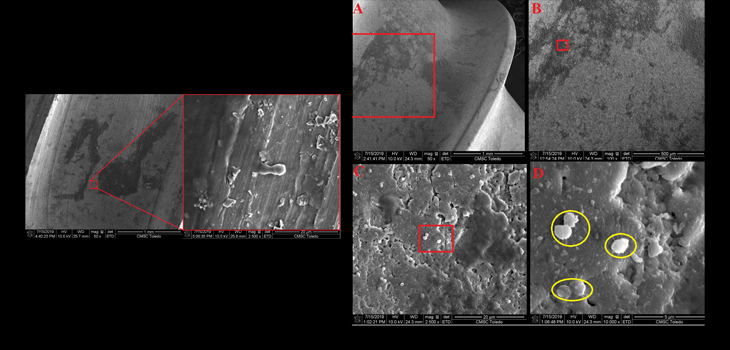
Furthermore, argues Agarwal, “debridement alone without implant removal could easily hinder eradication of infection because bacterial organisms always grow on metal surfaces and produce biofilm, to embed themselves into it. This matrix of extracellular polymeric substance (biofilm) makes the bacterial species resistant to further antibiotic administration.”
“In addition, recent evidence points toward another mode of failure when biofilm is left undetected on the implants; ‘aseptic’ screw loosening! Thus, the cascade of spinal instability begins even when the implants are not removed/replaced. Therefore, implant removal/replacement (replacing the implants would avoid any instability in cases with premature fusion) is necessary in such cases.”
Bottom line: “The evidence we have gathered and presented from the literature is clear and suggests implant replacement is the most prudent choice for delayed and late onset SSI.”
And Stop Reprocessing Implants
A number of countries (not the U.S., yet) have implemented new clinical practices to prevent implant infection including ceasing the practice of reprocessing implants. Agarwal said, “the least we can do now is stop reprocessing implants just like Scotland did 10 years ago (hospitals in The Netherlands and Japan are already halfway there), and also avoid any touching and exposure of implants in the ‘sterile’ field as a preventative measure.”
85% Likelihood You Won’t See Your Late SSI Patient
Agarwal and his colleagues found that few authors in the literature review focused specifically on late onset SSI. When the researchers conducted a poll asking surgeons about how many of their post-operative patients were their own, they found that only 15% were. This would imply that 85% of patients end up seeing a surgeon other than their original surgeon for late onset surgical infection.
Agarwal said, the “obvious question here is, who is keeping track of such SSI incidences? So, if a surgeon has 2% infection in the short term, it may mean he or she actually had 13% infection rate altogether, when accounting for the loss in patient follow-up. Therefore, the only way to really know the true infection rate and consequences of using contaminated implants is to find out what these long-term studies such as the one cited above recorded. Thus, I had to conduct this review.”
The researchers look forward to further evidence supporting what is already known, and hope for concrete clinical practice change that will help patients.
Implications for You and Your Practice
When OTW asked about the implications of the study, Agarwal said, “The conclusions of this and previous studies are very clear and correlated. We know what we have to do to prevent post-operative infection and implant loosening. And we also know that incidences are high and anecdotal experiences carry zero value in decision making.”
He continued, “Some other questions that hospitals and clinicians should further ponder upon are: Is it clinically more dangerous to implant reprocessed and exposed/touched implants when replacing implants for surgical management of SSI? As the patient is already susceptible to infection, and the risk of recurrent infection has increased, why should he/she be given a reprocessed or exposed implant? I just hope manufacturers, FDA, and hospitals would take this seriously and implement the known solution, which has no side effects and reduces U.S. healthcare costs.”
Author
React:
Discussion
This is a fascinating development. In my practice we've seen similar outcomes with the revised protocol. The key differentiator seems to be patient selection criteria. Has anyone else noticed the correlation with BMI thresholds?
Great point. I'd push back slightly on the conclusion, the sample size in the cited study is too small to draw population-level inferences. That said, the directional signal is compelling and worth a larger RCT.
We implemented a similar approach last year. Early results are promising but we're still gathering 12-month follow-up data. Happy to share our protocol if anyone is interested.
Join the conversation
Orthopedic professionals are discussing this. Sign in and upgrade to read every comment and add your voice.