
Össur, based in Reykjavik, Iceland, and the Alfred Mann Foundation (AMF) of Santa Clarita, California, have agreed to allow Össur to develop and license AMF’s implanted myoelectric sensor (IMES) to explore the potential of mind-controlled prosthetic technologies.
Össur, Alfred Mann Team Up on Mind-Controlled Prosthetics
2 min read Premium comments
Secondary#ossur#ilimbbionicprosthetichands#imes#myoelkectricsensors
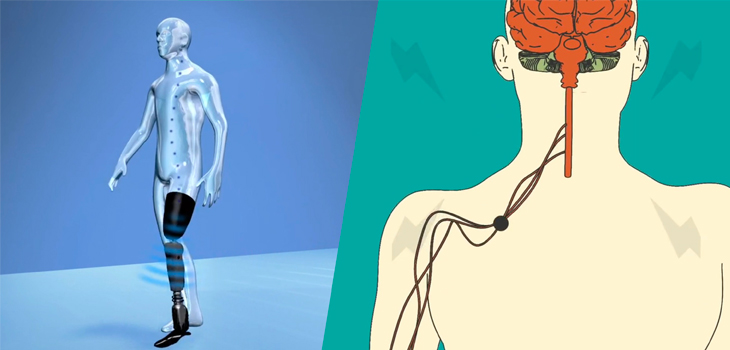
According to AMF, the sensors are “implanted in muscles that directly control the desired movement of a bionic prosthetic limb. The implants sense a small electrical charge in the muscle tissue and send information wirelessly to the prosthetic limb when the user intends to make specific movements. As a result, the bionic limb responds with the desired movement in virtually the same way that a sound arm, hand or leg would respond.”
“The world’s first-in-man cases to initially evaluate the IMES technology were conducted in 2014 on upper-limb amputees from the US military, using i-Limb bionic prosthetic hands produced by Össur. In 2015, two lower-limb amputees from Iceland had IMES units surgically implanted into their residual muscle tissue and demonstrated their ability to control their Össur leg prostheses with their intentions.”
“As the IMES system served as a bridge between the amputee users’ neuro-muscular system and their artificial limbs, the learning process took place subconsciously, continuously and in real-time for both users. The IMES system has also successfully been used in another pilot study to control an entire bionic arm in amputees who had undergone targeted muscle re-innervation (TMR) surgery.”
“We are proud to see our technologies taking a step towards the market, which is an essential part of our mission,” said John Petrovich, president and CEO of the Alfred Mann Foundation. “I can think of no better partner to carry on the future development of the IMES system. Össur has the most extensive lineup of devices capable of using the system, and more importantly they have the vision to see that mind control will be an important part of the future of bionic prosthetics.”
Jon Sigurdsson told OTW, “Össur has long been aware that AMF’s technology is the furthest developed, the most practical and the one closest to the market solution allowing for mind control of prosthesis. The world’s first-in-man cases to initially evaluate AMF’s implanted myoelectric sensor (IMES) system were conducted in 2014 on upper-limb amputees from the US military, using i-Limb bionic prosthetic hands produced by Össur.’
‘In 2015, AMF and Össur collaborated on the first lower limb cases where two lower-limb amputees in Iceland had IMES units surgically implanted into their residual muscle tissue and demonstrated their ability to control their Össur leg prostheses with their intentions. The IMES system has also successfully been used in another pilot study to control an entire bionic arm in amputees who had undergone targeted muscle re-innervation (TMR) surgery.”
“The encouraging insights from the studies and advancements that AMF have made to the IMES system has since then convinced us to extend our collaboration to further develop the system and pursue larger-scale clinical trials for continued exploration of mind-controlled prosthetic technologies.”
Asked what this collaboration look like in one year, he added, “We hope that the expanded clinical trial, using Össur’s Bionic prosthetic technologies and the IMES system will begin by late 2020.”
Author
React:
Discussion
This is a fascinating development. In my practice we've seen similar outcomes with the revised protocol. The key differentiator seems to be patient selection criteria. Has anyone else noticed the correlation with BMI thresholds?
Great point. I'd push back slightly on the conclusion, the sample size in the cited study is too small to draw population-level inferences. That said, the directional signal is compelling and worth a larger RCT.
We implemented a similar approach last year. Early results are promising but we're still gathering 12-month follow-up data. Happy to share our protocol if anyone is interested.
Join the conversation
Orthopedic professionals are discussing this. Sign in and upgrade to read every comment and add your voice.