
EOS imaging SA’s EOSedge has become the first general X-ray system powered by a high-resolution photon counting detector to be 510(k)cleared by the FDA.
First Photon Counting Imaging System Cleared by FDA
1 min read Premium comments
#fda510kclearanceSecondary#eosimaging#digitalradiology
The system is an updated version of the company’s previously cleared EOS system that used gaseous detectors.
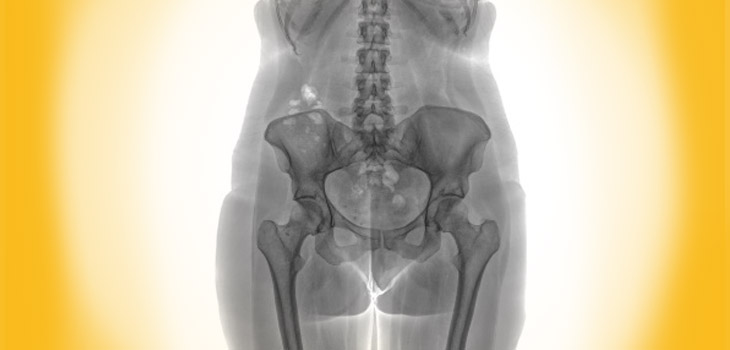
In a November 29, 2019 press release, the company said the system provides, “local and full body, weight-bearing, low-dose biplanar exams of adult and pediatric patients, allowing for undistorted images and precise anatomical measurements of patients in functional positions.”
EOSedge
The FDA clearance document states the EOSedge is a “digital radiography system comprised of an acquisition workstation, a gantry including an electrical cabinet housing the system power and communication controls, and an acquisition software to obtain diagnostic images.”
“Two sets of detectors and X-ray tubes are positioned orthogonally to generate frontal and lateral images simultaneously by scanning the patient over the area of interest. If desired, the Micro Dose feature enables image acquisition for assessing global skeletal deformities in follow-up exams.”
“The diagnostic images are stored in a local database and are displayed on a high-resolution medical-quality non-diagnostic monitor. The diagnostic image can be transmitted through a DICOM compatible digital network for printing and archiving.”
Commercial Launch
The clearance follows the commercial launch of EOSedge in Europe, Canada and Australia in early December. The system was unveiled at the Radiological Society of North America 2019 Annual Meeting December 1 in Chicago.
The Paris, France-based and publicly traded company founded in 1989 said it is targeting a $2 billion annual market opportunity. Over 350 system are installed in more than 30 countries generating more than 1 million patient exams annually. EOS imaging has corporate locations in the U.S., France, Canada, Germany, and Singapore, and has over 175 employees.
Author
React:
Discussion
This is a fascinating development. In my practice we've seen similar outcomes with the revised protocol. The key differentiator seems to be patient selection criteria. Has anyone else noticed the correlation with BMI thresholds?
Great point. I'd push back slightly on the conclusion, the sample size in the cited study is too small to draw population-level inferences. That said, the directional signal is compelling and worth a larger RCT.
We implemented a similar approach last year. Early results are promising but we're still gathering 12-month follow-up data. Happy to share our protocol if anyone is interested.
Join the conversation
Orthopedic professionals are discussing this. Sign in and upgrade to read every comment and add your voice.