
Just as Stryker Corporation was announcing the acquisition of Wright Medical and its TARS ankle system, the company warned of plastic fracture problems with its STAR (Scandinavian Total Ankle Replacement) system.
Stryker Issues STAR Ankle Safety Communication
2 min read Premium comments
#strykerSecondary#anklereplacementsurgery#safetycommunication#starankle
Stryker issued a “Safety Communication” on October 11, warning of higher than expected risk of polyethylene fracture. Click here for the notice.
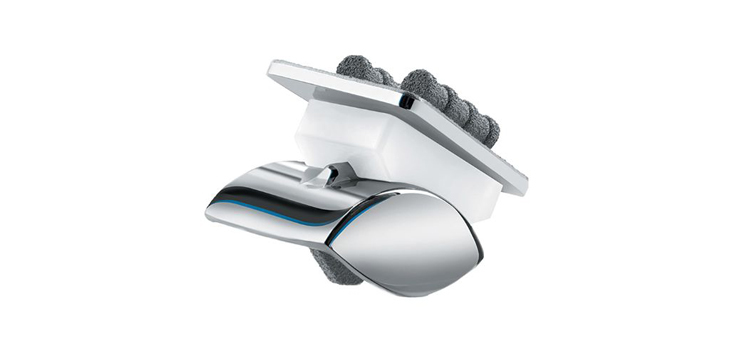
The communication stated the company became aware of data indicating that patients who’d received Stryker’s STAR Total Ankle Replacement distributed prior to August 1, 2014, “may experience a higher than expected risk of polyethylene fracture due to potential increase in polyethylene oxidation prior to or after implantation and potentially the implant geometry.”
Additional factors that may have contributed to the fractures are “component malalignment, surgeon learning curve, and reduced insert thickness.”
August 2014 is about the same time that Stryker acquired Small Bone Innovations, Inc., and STAR from the Viscogliosi Brothers.
Fractures
The Safety Communication added that the company identified a 13.79% polyethylene fracture rate at the eight-year follow-up in the post-approval study for the device. They also found more than 100 polyethylene fractures reported in the FDA MDR (Medical Device Reporting) database.
Those fracture rates “occurred substantially more often than with comparable total ankle replacement and with fixed bearing total ankle replacements.”
The polyethylene component manufactured and distributed subsequent to August 1, 2014 is not subject to the safety notice.
The final non-foil packed STAR polyethylene components were produced on July 10, 2014 and had a shelf-life of five years. Those components expired on July 10, 2019.
Risks
Risks associated with the fractures include:
- “Significant pain, newly developed and/or persistent for a significant time
- Inflammatory response, newly developed and/or persistent for a significant time
- Soft tissue injury e.g. blistering
- Loss of mobility in the operated ankle
- Possible damage to the metal components of the ankle after the polyethylene fractures, requiring revision of the entire total ankle replacement”
Two of the reported subjects had a fracture implant diagnosed only at exploratory surgery.
Providers were told they are required to inform users of the safety notice and sign a form included in the notice. The form has to be returned even if there are no affected products at the providers’ facility.
Patient Symptoms
Patients should be made aware that the fracture may be subtle. “The following symptoms may indicate that a complication has occurred:
- Increased pain
- Inability to bear weight
- New onset grinding or other noises
- Worsening instability in the ankle”
The company established a dedicated call center for patients. The number is 1-978-274-7633. Providers are asked to keep the company informed of any adverse events by emailing strykerortho6463@stericycle.com.
Lawyers and Regulators
The personal injury network got right to work. The website, aboutlawsuits.com, reported on November 13 that as a result of these problems, “it appears likely that a number of individuals who received the device may now pursue Stryker ankle replacement lawsuits, alleging that design defects caused the fracture or premature failure of the device.”
There is no word whether or not the safety issue with Stryker’s STAR system will have any impact on Department of Justice regulators evaluating possible anti-trust issues between Wright’s TARS ankle system and Stryker’s STAR ankle system. We reported on November 8, 2019, that Wall Street analysts had mentioned that the proposed Stryker Corporation purchase of Wright Medical will trigger a regulatory review and may result in a request for Stryker to divest itself of one or the other, though most likely STAR.
Author
React:
Discussion
This is a fascinating development. In my practice we've seen similar outcomes with the revised protocol. The key differentiator seems to be patient selection criteria. Has anyone else noticed the correlation with BMI thresholds?
Great point. I'd push back slightly on the conclusion, the sample size in the cited study is too small to draw population-level inferences. That said, the directional signal is compelling and worth a larger RCT.
We implemented a similar approach last year. Early results are promising but we're still gathering 12-month follow-up data. Happy to share our protocol if anyone is interested.
Join the conversation
Orthopedic professionals are discussing this. Sign in and upgrade to read every comment and add your voice.