
Germany-based mediCAD Hectec GmbH continues to internationalize its brand with the news that Japan’s regulatory authority has approved for commercial sale the company’s 2D and 3D modules.
Japan Regulators Approve mediCAD’s 2D and 3D Modules
2 min read Premium comments
Secondary#medicad
“With this approval, we now expect a clear demand for our product as well as an increase in growth on the Japanese market. We look forward to this new challenge,” stated Jörn Seel, managing director of mediCAD Hectec GmbH.
Asked about the most exciting aspect of this product, Andreas Feneberg, Head of Product Management, told OTW, “The modularity of the software. mediCAD is a package of modules intended for use by trained medical professionals.”
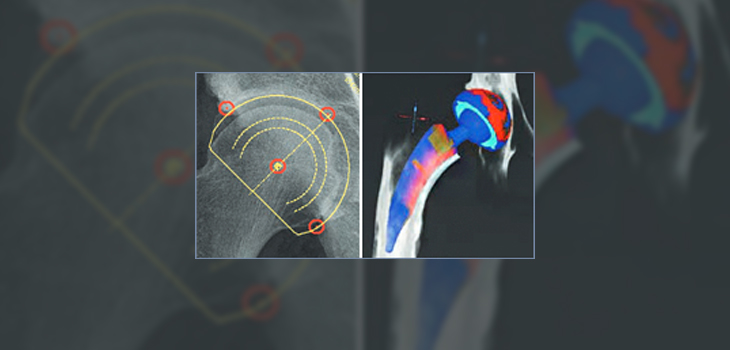
“It allows the assessment of bone and joint deformities and the preoperative planning of joint replacement implants and osteotomies based on 2D or 3D images. Each surgeon can individually choose whatever he needs.”
“Being a specialist for hip or knee replacements you are able just to choose the relevant hip and/or knee module. No need to buy ‘the whole packages.’ As well, the number of users can individually be chosen. ‘How many people work with the software in your clinic? Will you only need one license, two, 10 or even unlimited?’ No problem.”
“Besides that, mediCAD is an official approved medical product with certifications in the USA, Canada, Brazil, Europe, Japan and Russia.”
As for the integrated implant templates, he explained to OTW, “During the planning process, you do different measurements and calculations of f.ex. bone lengths, angles osteotomy, etc. After having done all these measurements you are able to choose the template of an implant you would like to use during surgery.”
“In the software you can filter by manufacturer name, implant size, model, material or even create your own favorite list.”
“These implant templates are integrated in the software and permanently checked and updated through our data management department in close cooperation with the implant manufacturers. We are closely working together with mostly all implant manufacturers worldwide who are supporting us with their templates of their implants. Currently we have more than 130 international manufacturers with more than 500.000 templates in our database—for all anatomies (Hip, Knee, Shoulder, Hand, Foot and Spine) in 3D and 2D. Permanently growing and updating.”
“The original size and manufacturer of the implant is going to be directly integrated in your planning. At the end of your planning you have a full presentation of your preop-planning exactly knowing which implant in which size from which manufacturer you will need for surgery and you can order and prepare adequately. Reduction of costs and a minimization of time in surgery for the patient as well as ‘a good and safe feeling’ for the patient (doctors are really taking care of my case) are the result of a good preoperative planning.”
Author
React:
Discussion
This is a fascinating development. In my practice we've seen similar outcomes with the revised protocol. The key differentiator seems to be patient selection criteria. Has anyone else noticed the correlation with BMI thresholds?
Great point. I'd push back slightly on the conclusion, the sample size in the cited study is too small to draw population-level inferences. That said, the directional signal is compelling and worth a larger RCT.
We implemented a similar approach last year. Early results are promising but we're still gathering 12-month follow-up data. Happy to share our protocol if anyone is interested.
Join the conversation
Orthopedic professionals are discussing this. Sign in and upgrade to read every comment and add your voice.