
Bellevue, Washington-based CurvaFix, Inc. has announced first-in-man for its novel intramedullary rodscrew pelvic fracture repair.
First-in-Man for Novel Pelvic Fracture Rodscrew
2 min read Premium comments
Secondary#curvafixrodscrew#pelvictrauma
Orthopedic trauma surgeon Kelly Lefaivre, M.D., M.Sc., FRCSC, associate professor at the University of British Columbia, Vancouver, British Columbia, performed the surgery as part of the CurvaFix sponsored RESTORE Clinical Study.
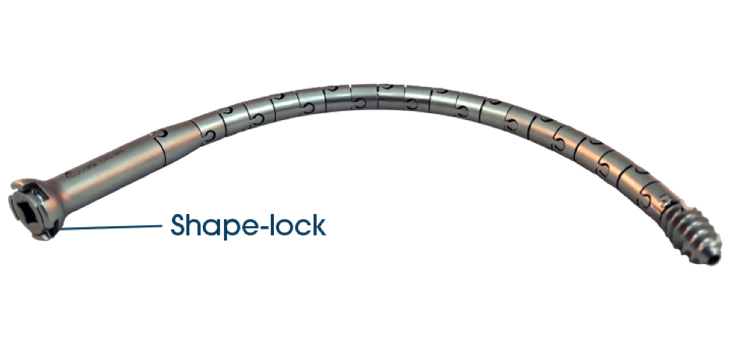
“The first patient, a female with a high energy lateral compression fracture of the pelvic ring, tolerated the surgical procedure well,” said Dr. Lefaivre. “The CurvaFix Rodscrew is the first intramedullary implant to follow the natural curves of the pelvis.”
“For the procedure, a rodscrew was implanted inside the bone across the fracture of the ilium,” continued Dr. Lefaivre. “The flexible rodscrew was then locked, making it rigid to hold the fracture reduction during bone healing.”
“The RESTORE study is focused on gathering clinical evidence supporting the Rodscrew System’s potential benefits for pelvic fracture patients in advance of our U.S. commercial launch in 2020,” said Steve Dimmer, company CEO. “The treatment of the first patient in Canada under a Health Canada Investigational Testing Authorization (ITA) is an important milestone as we work to restore mobility for pelvic trauma patients with our novel implantable device.”
Dimmer told OTW, “With percutaneous fixation today, surgeons must very carefully aim a straight cannulated screw through pathways within the bone that have multiple curves, which are different for each patient.”
“Unlike a straight screw, the CurvaFix Rodscrew follows the natural curved pathways of each patient’s unique pelvis shape and, as a result, the Rodscrew is longer, wider and curved, all of which should improve fixation strength. Stronger fixation has the potential for reduced fixation failures, reduced pain and earlier mobility for patients.”
Asked why there has to date been no intramedullary implant to follow the natural curves of the pelvis, he told OTW, “Creating a flexible implant that follows the natural curves of the pelvis and then is converted to a rigid state to handle the high physiological loads combined with a surgeon-friendly implantation procedure, required bringing together the right surgeons, engineers, and financing along with patience and persistence. CurvaFix was in stealth mode for our first four years while we learned, failed, fixed and created our way to the Rodscrew. We had to re-invent fixation in curved bones to solve this problem.”
Author
React:
Discussion
This is a fascinating development. In my practice we've seen similar outcomes with the revised protocol. The key differentiator seems to be patient selection criteria. Has anyone else noticed the correlation with BMI thresholds?
Great point. I'd push back slightly on the conclusion, the sample size in the cited study is too small to draw population-level inferences. That said, the directional signal is compelling and worth a larger RCT.
We implemented a similar approach last year. Early results are promising but we're still gathering 12-month follow-up data. Happy to share our protocol if anyone is interested.
Join the conversation
Orthopedic professionals are discussing this. Sign in and upgrade to read every comment and add your voice.