
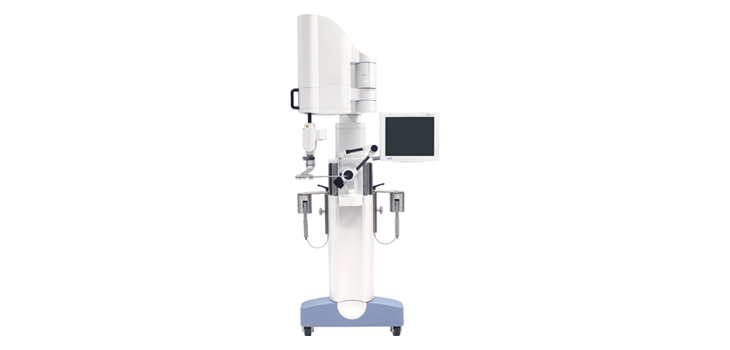
The FDA has cleared THINK Surgical, Inc.’s TSolution One Total Knee Application for use in total knee arthroplasty (TKA). According to the October 8, 2019 FDA clearance document, the application is compatible with the Zimmer Persona Knee System.
FDA Clears THINK Surgical’s Robotic System for TKA
2 min read Premium comments
#fda510kclearance#kneereplacementSecondary#robotics
The company previously received clearance for the system back in 2014 for total hip arthroplasty.
The FDA found this system substantially equivalent to the company’s previously cleared TSolution One Surgical System Model 210. The only noted difference between the new device and the predicate is that the new device “introduces a new indication for use for TKA and provides the tools and modified software for the preparation of the bone for this indication.”
The robotic system consists of two technologies, the Tplan 3D planning workstation and the TCAT computer-assisted tool. The two work together to bring about what the company calls “an exceptional degree of precision and accuracy” to total joint replacement surgery.
“Revolutionize Orthopedic Care”
Iman Ahmad, Director of Clinical Affairs at MCRA, LLC, said, the clinical trial results “clearly demonstrated” that the application “is going to revolutionize orthopedic care for patients in the U.S.” MCRA guided the company through the FDA processes.
A November 21, 2019 press release from MCRA states, that during total knee replacement surgery, “the surgeon implements the patient’s pre-planned procedure using the active robot, which prepares the joint according to the surgeon’s plan for precise placement of knee implants. The device was previously CE marked and has been actively marketed in Asia Pacific and Europe.”
Indications
The FDA document states the application is intended for use “as a device that uses diagnostic images of the patient acquired specifically to assist the physician with preoperative planning and to provide orientation and reference information during intraoperative procedures. The robotic surgical tool, under the direction of the surgeon, precisely implements the presurgical software plan.”
The preoperative planning software and robotic surgical tool are used as an alternative to manual planning and resecting techniques for the distal femur and proximal tibia preparation in primary TKA.
The application is indicated for orthopedic procedures “in which resecting techniques used for the distal femur and proximal tibia may be considered to be safe and effective and where references to rigid anatomical structures may be made.”
It is also intended to assist the surgeon “in determining reference alignment axes in relation to anatomical and instrumentation structures during stereotactic orthopedic surgical procedures.” Further, the application “facilitates accurate positioning of TKA implants, relative to these alignment axes.”
Clinical Trial Surgeons
The MCRA press release noted that five surgeons participated in the clinical trial, which confirmed the safety and effectiveness of the application compared to traditional knee replacement using manual surgical instrumentation. Study enrollment began in 2017 and was completed in December 2018. Data collection was completed in 2019 with 100% retention of the 115 enrolled patients.
The surgeons included Bernard Stulberg, M.D, Yair David Kissing, M.D., Stefan Kreuzer, M.D., Ralph Liebelt, M.D., and William Long, M.D.,
THINK Surgical is based in Fremont, California.
Author
React:
Discussion
This is a fascinating development. In my practice we've seen similar outcomes with the revised protocol. The key differentiator seems to be patient selection criteria. Has anyone else noticed the correlation with BMI thresholds?
Great point. I'd push back slightly on the conclusion, the sample size in the cited study is too small to draw population-level inferences. That said, the directional signal is compelling and worth a larger RCT.
We implemented a similar approach last year. Early results are promising but we're still gathering 12-month follow-up data. Happy to share our protocol if anyone is interested.
Join the conversation
Orthopedic professionals are discussing this. Sign in and upgrade to read every comment and add your voice.