
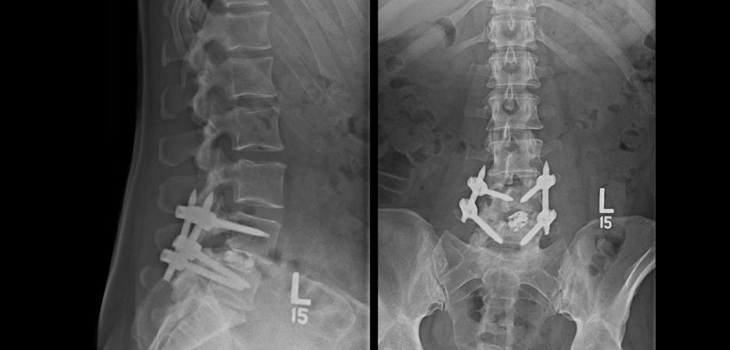
Researchers from The Johns Hopkins School of Medicine in Baltimore, Maryland, have conducted a study looking at all preclinical and clinical studies examining electrical stimulation technologies for spinal fusion.
Electrical Stimulation Users >2X Likely to Achieve Vertebral Fusion
2 min read Premium comments
Secondary#spinalfusion#bonyunion#directcurrentstimulationdevice
Their research, “The effect of electrical stimulation therapies on spinal fusion: a cross-disciplinary systematic review and meta-analysis of the preclinical and clinical data,” was published in the October 8, 2019 edition of Journal of Neurosurgery: Spine.
The team investigated 16 human studies and 17 animal studies that tested three types of electrical stimulation—one implanted and the others worn.
Co-author Ethan Cottrill, M.S., M.D./Ph.D. Trainee at Johns Hopkins Medicine explained the purpose of the study to OTW, “It’s generally accepted that clinical improvement following spinal fusion correlates with successful bony union across the fusion site. So, naturally, both surgeons and patients want to increase the likelihood of successful bony union following a fusion procedure.”
“Some surgeons prescribe electrical stimulation devices to aid in spinal fusion; patients themselves may also inquire about ‘ways to increase spinal fusion rates’ and come across electrical stimulation devices (from friends, Internet, etc.). Some of our patients have asked, ‘Do these devices really make a difference?’ We have also wondered this, especially given their relatively high cost. Thus, we set out to examine the mechanisms of action, preclinical data, and clinical data for electrical stimulation devices in the reported literature to be able to answer these questions for our patients and improve care.”
“Based on the available data to date, electrical stimulation therapy significantly enhances rates of spinal fusion, which is supported by biochemical mechanistic data and pre-clinical and clinical evidence. Patients who received electrical stimulation devices were more than twice as likely to have their vertebrae fuse successfully compared to those who did not.”
“By type of device, the use of DCS [direct current stimulation] to enhance spinal fusion rates is supported by preclinical and clinical data, the use of ICS [inductive coupling stimulation] is supported by clinical evidence, and the use of CCS [capacitive coupling stimulation] is not supported by either preclinical or clinical data. Additional research is needed to analyze the cost-effectiveness of these devices. It may be possible that electrical stimulation devices are cost-effective in patients with difficult-to-fuse spines, weighed against the cost of a re-operation procedure.”
Asked about device removal, he noted, “EST [electrical stimulation technologies] manufacturers provide guidelines specific to their devices. In general, the devices can be removed after radiographic evidence of fusion is indicated (usually about six to nine months after the fusion surgery). For DCS devices, most manufacturers recommend that the electric generators that supply the DCS are removed after this time, though they technically can be left in.”
“Removing the DCS electric generator does require an additional small surgery; the electrodes themselves, which are physically embedded in the fusion mass, are left in place. ICS and CCS devices are wearable; when fusion is indicated, the devices are not worn anymore (and can be sold/gifted to others for future use).”
The researchers did caution that the implanted device, “may not allow for MRIs, and the devices do have a small risk of infection, discomfort and immune reaction.”
Author
React:
Discussion
This is a fascinating development. In my practice we've seen similar outcomes with the revised protocol. The key differentiator seems to be patient selection criteria. Has anyone else noticed the correlation with BMI thresholds?
Great point. I'd push back slightly on the conclusion, the sample size in the cited study is too small to draw population-level inferences. That said, the directional signal is compelling and worth a larger RCT.
We implemented a similar approach last year. Early results are promising but we're still gathering 12-month follow-up data. Happy to share our protocol if anyone is interested.
Join the conversation
Orthopedic professionals are discussing this. Sign in and upgrade to read every comment and add your voice.