
Does using the keel-based ProDisc C versus the spike-based ProDisc Vivo affect the frequency of heterotopic ossification (HO) formation over time?
3rd Generation Cervical Discs Cut Risk of Heterotopic Ossification?
2 min read Premium comments
Secondary#prodisccvivo#heterotopicossification#prodiscc
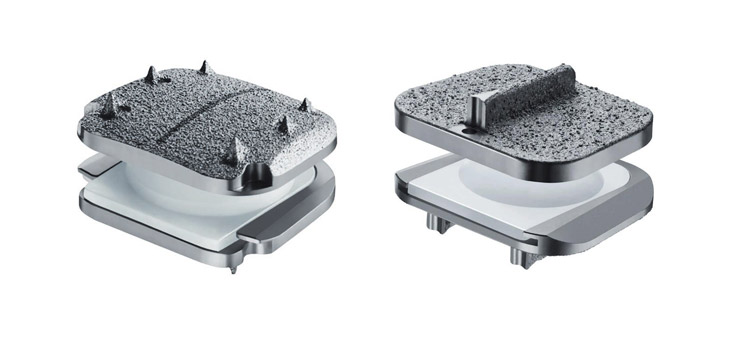
A team of researchers from Germany compared 40 patients treated with ProDisc C and 42 patients treated with ProDisc Vivo to find an answer to those questions. Their work, “Implant Design and the Anchoring Mechanism Influence the Incidence of Heterotopic Ossification in Cervical Total Disc Replacement at 2-year Follow-up,” appears in the November 1, 2019 of Spine.
Co-author Dr. Christoph Mehren, Head of Department, Spine Centre at the Schoen Clinic in Munich, Germany, explained to OTW the reason he and his team undertook the study, “The occurrence of heterotopic ossifications is a well-known problem but has not yet been completely solved. Although high grade ossifications are not relevant for the clinical outcome (unchanged good!), they could lead to a loss of function of the prosthesis.”
“Various studies have dealt with risk factors and explanatory attempts. The opening of the cortical bone structures and the leakage of bone marrow blood have been discussed several times as one of the causes. Due to the fact that the third generation of this prosthesis (ProDisc C Vivo) differs from the first generation (ProDisc C) mainly only by the implantation mechanism and the primary anchoring, a comparison group (ProDisc C Vivo) was examined for the clinical and radiological results (with a focus on the incidence of the development and grading of HO) and compared with data from a ProDisc C study.”
“It is also important to note that the 3rd generation of ProDisc, the ProDisc C Vivo, delivers consistently good clinical results (Visual Analog Scale, Neck Disability Index) in 2-year follow-up. Fortunately, the incidence and severity of HO was significantly reduced compared to the ProDisc C group. The significantly more minimally invasive implantation and anchoring mechanism is absolutely sufficient for primary stability, but there is a slightly higher risk of prosthesis dislocation, especially with insufficient posterior release.”
“Thus, maintaining the integrity of the cortical structures is an important factor in avoiding HO, even if this is only part of the cause. If the possibility of an intraoperatively posterior release is low or an increased risk of implant luxation is given due to the lack of a posterior release, the use of a keel-guided prosthesis with maximum primary stability is a valuable alternative.”
“The spiked anchoring mechanism is absolutely sufficient for the necessary primary stability with correct implant placement and leads to a reduced incidence of HO compared to the keel-guided variant. The simplicity of the implantation process reduces surgery time and increases the surgeon’s well-being.”
Author
React:
Discussion
This is a fascinating development. In my practice we've seen similar outcomes with the revised protocol. The key differentiator seems to be patient selection criteria. Has anyone else noticed the correlation with BMI thresholds?
Great point. I'd push back slightly on the conclusion, the sample size in the cited study is too small to draw population-level inferences. That said, the directional signal is compelling and worth a larger RCT.
We implemented a similar approach last year. Early results are promising but we're still gathering 12-month follow-up data. Happy to share our protocol if anyone is interested.
Join the conversation
Orthopedic professionals are discussing this. Sign in and upgrade to read every comment and add your voice.