
Providence, Rhode Island-based University Orthopedics (UOI) is now the hot spot for patients with hip pain.
University Orthopedics Launches Dedicated Hip Institute
1 min read Premium comments
Secondary#UniversityOrthopedics#hippreservation
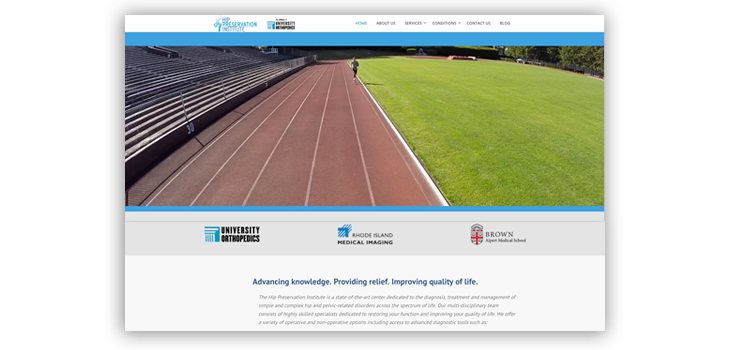
UOI has inaugurated the Hip Preservation Institute, an operative and nonoperative center specializing in hip and pelvic disorders.
“The Hip Preservation Institute is a state-of-the-art center dedicated to the diagnosis, treatment and management of simple and complex hip and pelvic-related disorders across the spectrum of life. Our multi-disciplinary team consists of highly skilled specialists dedicated to restoring patient’s function and improving quality of life,” said Ramin Tabaddor, M.D., an orthopedic surgeon at UOI and director of the institute.
The Hip Preservation Institute offers advanced diagnostic tools such as ultrasound, high-resolution MRI and arthrograms as well as dynamic X-ray testing and interventional therapies.
According to the UOI news release, “The Hip Preservation Institute includes more than 15 providers specialty trained to treat conditions of the hip. These conditions include but are not limited to: Sports Hernia, Hip Impingement Syndrome, Ischiofemoral Impingement, External and Internal Snapping Hip Syndrome, Gluteus Medius Tears, Trochanteric Bursitis, Hip Osteoarthritis, Developmental Dysplasia of the Hip(DDH), Slipped Capital Femoral Epiphysis (SCFE), Femoral Anteversion, Nerve Impingements, Hamstring tears and Labral Tears(FAI).”
Dr. Tabaddor told OTW, “This level of care has not been available before for two reasons: The wide breadth of expertise in the various conditions affecting the hip and pelvis was not present and the critical mass of experts to create a center of excellence in this field is now available.”
“The hip and pelvis have layers of clinical complexity that are not present in the knee that require of full spectrum of experts and specialists to diagnose, manage and treat. In addition, hip preservation is a dynamic and swiftly growing field that is being better understood through research and collaboration.”
Author
React:
Discussion
This is a fascinating development. In my practice we've seen similar outcomes with the revised protocol. The key differentiator seems to be patient selection criteria. Has anyone else noticed the correlation with BMI thresholds?
Great point. I'd push back slightly on the conclusion, the sample size in the cited study is too small to draw population-level inferences. That said, the directional signal is compelling and worth a larger RCT.
We implemented a similar approach last year. Early results are promising but we're still gathering 12-month follow-up data. Happy to share our protocol if anyone is interested.
Join the conversation
Orthopedic professionals are discussing this. Sign in and upgrade to read every comment and add your voice.