
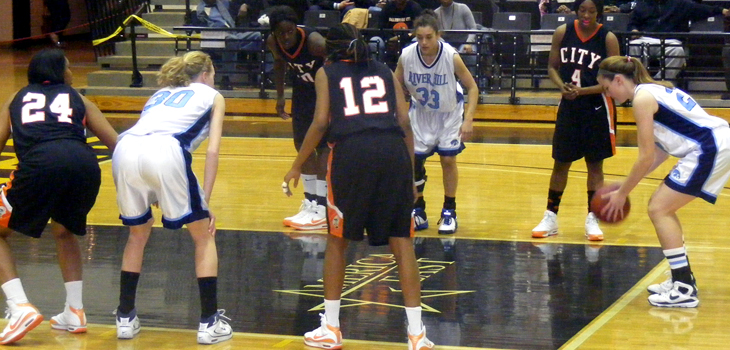
A new study, “Sport Specialization and Coordination Differences in Multisport Adolescent Female Basketball, Soccer, and Volleyball Athletes,” published in a special thematic issue of The Journal of Athletic Training focused on youth sport specialization suggests that female athletes in basketball, soccer and volleyball are less likely to suffer hip and knee injuries than their fellow athletes who specialize in just one sport.
Playing Multiple Sports Lowers Hip, Knee Injury Risk
2 min read Premium comments
Secondary#kneeinjuries#sportspecialization#hipinjuries
The journal is the scientific publication of the National Athletic Trainers’ Association.
The researchers found that female athletes who sport-specialized had a higher incidence rate of lower extremity coordination issues that affected their ability to land safely and therefore increased their risk for injury. In addition, middle and high school female basketball, soccer and volleyball athletes who sport-specialized also had an increased risk of patellofemoral pain.
The researchers suggest that specializing in a sport so early may be affecting motor-skill and coordination development of young athletes because of lack of diversity in the types of movements they use in their one sport. Inconsistent growth in bone mineral and muscular and connective tissue strength is also a concern.
The study looked at data for 1,116 adolescent female basketball, soccer and volleyball athletes. Each participant was asked to undergo a three-dimensional motion-analysis assessment that included a drop-vertical-jump task.
According to the data collected, the sport-specialized group demonstrated a higher rate of coupling variability in dominant-limb hip flexion and knee flexion (p = .015), knee flexion and knee abduction (p = .014), and knee flexion and knee internal rotation (p = .048) while landing.
The researchers wrote, “Altered coordination strategies that involve the hip and knee joints may underlie unstable landings, inefficient force-absorption strategies, or greater contact forces that can place the lower extremities at risk for injury (or a combination of these).”
“Females, who specialize early in sports such as basketball, soccer and volleyball too early in age may hinder motor development and lead to compromised hip and knee coordination during dynamic landing and jumping activities, which can lead to increased chance of potentially life-altering injuries,” said lead author and biomechanist Christopher A. DiCesare, M.S., CSCS, Cincinnati Children’s Hospital Medical Center.
“By understanding the influence that sport specialization has on coordination and the potential for injuries, there is the potential to make better decisions of when it may be appropriate to safely specialize in a sport.”
Author
React:
Discussion
This is a fascinating development. In my practice we've seen similar outcomes with the revised protocol. The key differentiator seems to be patient selection criteria. Has anyone else noticed the correlation with BMI thresholds?
Great point. I'd push back slightly on the conclusion, the sample size in the cited study is too small to draw population-level inferences. That said, the directional signal is compelling and worth a larger RCT.
We implemented a similar approach last year. Early results are promising but we're still gathering 12-month follow-up data. Happy to share our protocol if anyone is interested.
Join the conversation
Orthopedic professionals are discussing this. Sign in and upgrade to read every comment and add your voice.