
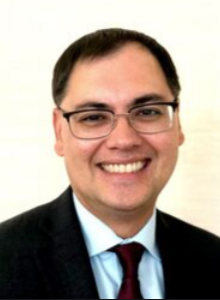
As of November 1, 2019, Douglas Fesler will be the new executive director of The American Society for Bone and Mineral Research (ASBMR). Fesler, who currently serves as associate executive director, has 22 years of experience in association management for ASBMR. Fesler will assume the new role following the planned retirement of longtime ASBMR Executive Director Ann Elderkin, P.A.
Douglas Fesler: New Executive Director of ASBMR
1 min read Premium comments
#asbmr#douglasfesler
According to the ASBMR, “Fesler brings a proven track record of growing the association through membership recruitment and retention initiatives, fostering membership engagement, facilitating collaboration within the bone and musculoskeletal research field, and leading advocacy efforts to raise awareness for issues affecting the industry.”
“In addition to his current role on ASBMR, Fesler is also Executive Director for the District of Columbia Dental Society which serves more than 500 dentists in and around the metro Washington, D.C. area. There, he led the restructuring of the organization’s operations, reinvigorated new member engagement, and redesigned the annual event. Fesler has a B.A. in International Relations and Economics from Texas Christian University and an M.A. in International Affairs from The Catholic University of America.”
“Doug has been an integral part of the ASBMR team for more than twenty years. His deep knowledge of the bone and mineral science field, along with his passion for advocacy and experience in driving strategic programs, makes him the ideal executive to lead ASBMR,” said Bart Clarke, M.D, ASBMR President. “We are thrilled to have Doug serve in this critical role for ASBMR. The team and ASBMR leadership look forward to continuing to work collaboratively with him to advance the organization.”
Fesler told OTW, “The collective expertise, drive and passion that ASBMR members possess are the backbone of the organization. I have had the privilege of working alongside ASBMR members and share their passion for the ASBMR mission and their values.”
“The strides ASBMR has made these last few years to close the treatment gap in osteoporosis and reinvigorate its membership have been impressive. I look forward to building on this forward momentum, as well as working with the leadership and staff to expand the Society’s educational offerings beyond its successful Annual Meeting.”
Author
React:
Discussion
This is a fascinating development. In my practice we've seen similar outcomes with the revised protocol. The key differentiator seems to be patient selection criteria. Has anyone else noticed the correlation with BMI thresholds?
Great point. I'd push back slightly on the conclusion, the sample size in the cited study is too small to draw population-level inferences. That said, the directional signal is compelling and worth a larger RCT.
We implemented a similar approach last year. Early results are promising but we're still gathering 12-month follow-up data. Happy to share our protocol if anyone is interested.
Join the conversation
Orthopedic professionals are discussing this. Sign in and upgrade to read every comment and add your voice.