
A new Children’s Hospital of Philadelphia (CHOP) study (“Factors Affecting Recovery Trajectories in Pediatric Female Concussion”) published in the September 2019 issue of Clinical Journal of Sports Medicine that explored the gender differences in concussion recovery has raised new questions about inequities in the concussion care female athletes receive on the sideline compared to their male counterparts.
Are Female Athletes Not Getting Proper Concussion Treatment?
2 min read Premium comments
Secondary#concussion#FemaleAthletes#childrenshospitalofphiladelphia#concussionrecovery
According to researchers from the Sports Medicine Program at CHOP who analyzed the electronic health records of 192 athletes between the age of 7 and 18, female athletes tend to pursue specialty treatment for a sports-related concussion (SRC) later than male athletes do, and this may be the reason female athletes are experiencing more symptoms and longer recoveries.
Overall in this study, female athletes didn’t see a specialist for the concussion until about 15 days after the injury while male athletes were typically evaluated by a specialist within 9 days of the injury. In addition, the female athletes returned later to school (4 vs. 3 days), and exercise (13 vs. 7 days). Their neurocognitive recovery also took longer (68 vs. 40 days) as did vision and vestibular recovery (77 vs. 34 days), and they also returned to full participation in their sport much later (119 vs. 45 days).
The researchers say that further investigation is needed to see if the root of the problem is that female youth and high school sports teams don’t have the same access to medical and athletic trainer coverage during games and practices as male sports teams do.
“There is speculation in the scientific community that the reasons adolescent female athletes might suffer more symptoms and prolonged recoveries than their male counterparts include weaker neck musculature and hormonal differences,” explained senior author Christina Master, M.D., a pediatric and adolescent primary care sports medicine specialist and Senior Fellow at CHOP’s Center for Injury Research and Prevention.
“We now see that delayed presentation to specialty care for concussion is associated with prolonged recovery, and that is something we can potentially address.”
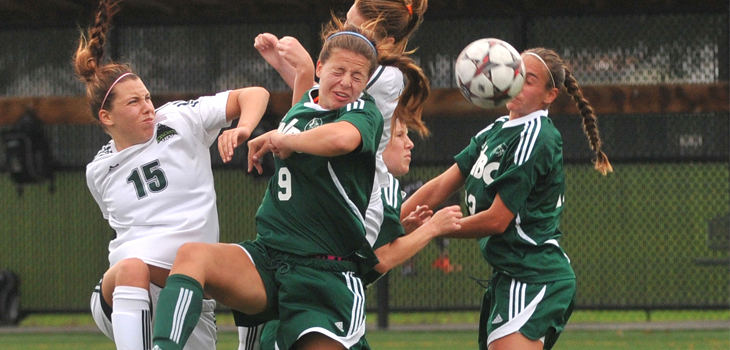
Soccer, basketball and cheerleading, sports where females are at the greatest risk for concussion, are only considered to be “moderate-risk sports” and therefore they tend not to get the same medical coverage as sports like football, ice hockey and men’s basketball.
“It is possible that the lack of athletic training coverage at the time of injury may affect the time to concussion recognition during the first critical hours and days after injury,” Master said.
“This period is a window of opportunity where specific clinical management, such as immediate removal from play, activity modification and sub-symptom threshold exercise is correlated with more rapid recovery.”
Author
React:
Discussion
This is a fascinating development. In my practice we've seen similar outcomes with the revised protocol. The key differentiator seems to be patient selection criteria. Has anyone else noticed the correlation with BMI thresholds?
Great point. I'd push back slightly on the conclusion, the sample size in the cited study is too small to draw population-level inferences. That said, the directional signal is compelling and worth a larger RCT.
We implemented a similar approach last year. Early results are promising but we're still gathering 12-month follow-up data. Happy to share our protocol if anyone is interested.
Join the conversation
Orthopedic professionals are discussing this. Sign in and upgrade to read every comment and add your voice.