
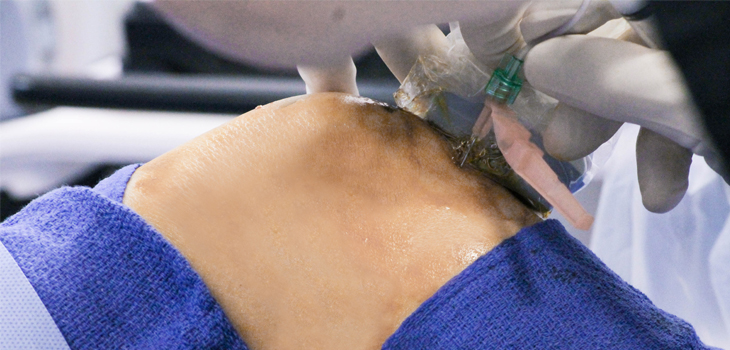
A new study conducted at New York’s Hospital for Special Surgery titled, “A Randomized Controlled Single-Blind Study Demonstrating Superiority of Amniotic Suspension Allograft Injection Over Hyaluronic Acid and Saline Control for Modification of Knee Osteoarthritis Symptoms” published in the Journal of Knee Surgery found clear evidence that amniotic suspension allograft (ASA) injections may be a superior anti-inflammatory treatment for knee osteoarthritis.
Amniotic Fluid Injections to Treat Painful Knees
2 min read Premium comments
#hyaluronicacidSecondary#kneeosteoarthritis#amnioticsuspensionallograft
This was a multicenter, three arm, randomized to a control trial where the ability of amniotic suspension allograft to modulate inflammation and swelling was compared with saline and hyaluronic acid (HA) injections in patients with knee osteoarthritis.
Two hundred subjects were randomized 1:1:1 to ASA, HA, or saline. Primary endpoints included changes from baseline of patient-reported outcomes (PROs)-EQ-5D-5L, Knee Osteoarthritis Outcome Score (KOOS), visual analog scale (VAS), Tegner, and Single Assessment Numerical Evaluation (SANE). Any patient who reported unacceptable pain at 3 months were considered treatment failures and removed from the study. They included 13.2% in the amniotic suspension allograft group, 68.8% in the HA group and 75% in the saline group.
According to the data collected, patients receiving ASA demonstrated greater improvements in overall pain (VAS), KOOS pain, and KOOS-activities of daily living scores compared to those in the (HA) group at 6 months and in both groups at 6 months. OMERACT-OARSI [Outcome Measures in Rheumatology-Osteoarthritis Research Society International] responder rates for amniotic suspension allograft, HA, and saline groups were 69.1, 39.1 and 42.6%, respectively (p = 0.0007).
Andreas Gomoll, M.D., a sports medicine and orthopedic surgeon at the Hospital for Special Surgery summarized the results of the study to OTW.
“The amniotic fluid and membrane injection showed the best results because there are a lot of anti-inflammatory substances in amniotic membrane and it is the inflammation and swelling that really hurts.”
He added, “We use a lot of injections with injured athletes. If there is a truly mechanical problem, then surgery is indicated, but many athletes just have pain and inflammation. Less is often more when it comes to treating these athletes because it is harder to get back to sport after surgery.”
“The amniotic suspension allograft injections are also a good option for older patients as well. They allow us to try to delay or prevent all together the need for knee replacement,” he said.
Author
React:
Discussion
This is a fascinating development. In my practice we've seen similar outcomes with the revised protocol. The key differentiator seems to be patient selection criteria. Has anyone else noticed the correlation with BMI thresholds?
Great point. I'd push back slightly on the conclusion, the sample size in the cited study is too small to draw population-level inferences. That said, the directional signal is compelling and worth a larger RCT.
We implemented a similar approach last year. Early results are promising but we're still gathering 12-month follow-up data. Happy to share our protocol if anyone is interested.
Join the conversation
Orthopedic professionals are discussing this. Sign in and upgrade to read every comment and add your voice.