
Researchers from the Netherlands set out to determine if using a continuous subcuticular bonding stitch in addition to a conventional three-layer closure method reduced the incidence of prolonged wound leakage and (prosthetic joint infections) PJIs after total hip arthroplasty (THA) and unicondylar and knee arthroplasty (TKA).
A Modified Wound Closure Approach Cuts Injection Risk
2 min read Premium comments
#prostheticjointinfections#totalhiparthroplastySecondary#tha#Wound
The study, “Reduced wound leakage in arthroplasty with modified wound closure: a retrospective cohort study,” was published in the November 2019 edition of the Archives of Orthopaedic and Trauma Surgery.
The research team enrolled 439 THA and 339 TKA patients in a control group which were then matched with 460 THA and 350 TKA in the study group. The team found that 11.7% of the control group patients had a prolonged leaking wound compared to 1.9% in the study group.
Patients who were assigned to the control group received a three-layer closure method post-surgery between November 1, 2015 and October 31, 2016. The patients assigned to the study group received the four-layer closure method post-surgery January 1, 2017 and December 31, 2018.
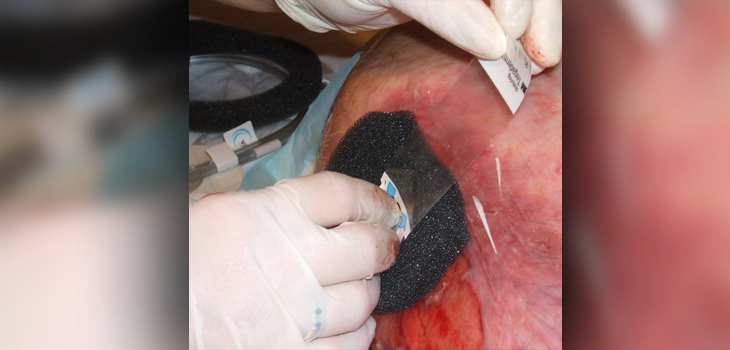
All patients received an Aquacel dressing on their wound directly after closure. The Aquacel has an adhesive hydrocolloid bordering a hydrofiber core.
For the control group, the research team kept the dressing in place until 5–7 days after surgery; in the event of blood or fluid leaking from the dressing the team removed it and replaced it with a new Aquacel. In case of more leakage, the team removed Aquacel removed and used an absorbable bandage.
For the study group, the Aquacel remained in place until 10 days postop. In case of blood or fluid leaking from the dressing within the first 72 hours after surgery, the team employed absorbable bandages while keeping the Aquacel in situ.
For the study group, the research team removed both the bandages and the Aquacel 72 hours postop and assessed the wound for leakage. They then placed a negative pressure wound therapy device on leaking wounds as well as a new clean Aquacel on the dry wounds.
For the study group, the team made no other changes in infection prevention measures and surgical protocols during the study period.
According to their resulting paper, using a “modified wound closure method produced a protective effect for obtaining prolonged wound leakage; odds ratios were 0.09 for THA and 0.21 for TKA. Prosthetic joint infection rate decreased from 1.54% to 0.37%.”
The authors wrote, “…In the control group, 11.7% of the patients had a prolonged leaking wound compared to 1.9% in the study group. The modified wound closure method showed a protective effect for obtaining prolonged wound leakage…”
Co-author Ramon Roerdink is a physician assistant with the Department of Orthopaedics at Jeroen Bosch Hospital in The Netherlands told OTW, “The most exciting aspect is the giant reduction of prosthetic joint infection!”
Author
React:
Discussion
This is a fascinating development. In my practice we've seen similar outcomes with the revised protocol. The key differentiator seems to be patient selection criteria. Has anyone else noticed the correlation with BMI thresholds?
Great point. I'd push back slightly on the conclusion, the sample size in the cited study is too small to draw population-level inferences. That said, the directional signal is compelling and worth a larger RCT.
We implemented a similar approach last year. Early results are promising but we're still gathering 12-month follow-up data. Happy to share our protocol if anyone is interested.
Join the conversation
Orthopedic professionals are discussing this. Sign in and upgrade to read every comment and add your voice.