
Three institutions in South Africa and Belgium came together to compare the validated Knee Osteoarthritis Grading System (KOGS) with patient satisfaction data and implant survivorship.
Validated, “Intuitive” Grading System Found Helpful in Knee OA
2 min read Premium comments
#totalkneearthroplastySecondary#unicompartmentalkneearthroplasty#kneeosteoarthritisgradingsystem
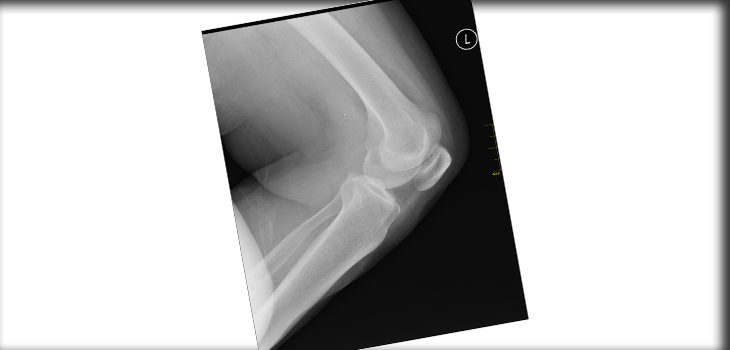
According to the research team, this is the first study to assess unicompartmental knee arthroplasty (UKA) and total knee arthroplasty (TKA) in consecutive osteoarthritis (OA) knee arthroplasties using this system.
The research, “The patient results and satisfaction of knee arthroplasty in a validated grading system,” appears in the September 12, 2019 edition of International Orthopaedics.
Co-author Rudolf Oosthuizen, M.B.C.H.B., M.M.E.D., an orthopedic surgeon with the University of the Witwatersrand in Johannesburg, South Africa, explained the purpose of the study to OTW, “The work was initiated due to the premise that surgery in the knee should be minimal, functional, less destructive and intended for focal lesions.”
“Most surgeons struggle to identify the suitable candidates for UKA and due to peer group pressure will default to a TKA. The lack of a system that can compare different degrees of degeneration and instability is a prime reason for the acceptance of the TKA as the first and final solution of osteoarthritis treatment irrespective of the severity of the lesions.”
“This took me on a journey of developing the Knee Osteoarthritis Grading System (KOGS) to help surgeons evaluate knees and identify the correct knee for a specific arthroplasty. This system was validated and published (J Arthroplasty 2019) and allows new comparative options in the treatment efficacy of knee arthroplasty.”
In the current study, researchers evaluated 1,177 consecutive knees (311 TKA, 695 medial UKA, 154 lateral UKA and 17 PFA).
Dr. Oosthuizen summarized the results of his study to OTW, “The assessment of the knee cannot solely be by the Kellgren and Lawrence OA assessment (1957) as it is not sufficient in determining the status of the degenerative tri-compartmental joint with many different options of quality interventions disregarded in favour of a ‘one solution fits all TKA.’”
“With the KOGS and a Functional Scoring system like the Oxford Knee Score a comparison is possible of the survival and functional results when implementing a specific prosthesis for a specific degree of degeneration—for example, comparing Grade 1 UKA vs a Grade 1 TKA. Additionally, this approach can also assess different age groupings. It can also compare the results of a KOGS 3A (Isolated Tibia-Femoral OA with an ACL) where the treatment could be a UKA and ACL reconstruction with TKA results for same pathology. And compare Bi UKA in KOGS 4 A with TKA where patella was not resurfaced etc. The possibilities of comparative studies are much more scientific than the current status quo and can improve the personalized treatment of the individual knee.”
“The KOGS is a simple, intuitive X-ray evaluation method in knee arthroplasty for a very complex joint that deserves better personalized/individualized treatment. The system also improves the identification of suitable candidates for the various options in knee arthroplasty.”
“The ratio of UKA vs TKA at the moment is about 1,5 out of 10 in the world and with this system, better surgical techniques, improved frequency of utilization, demand by the public for improved functional restoration it should become at least 5 out of 10 if not 6.”
Author
React:
Discussion
This is a fascinating development. In my practice we've seen similar outcomes with the revised protocol. The key differentiator seems to be patient selection criteria. Has anyone else noticed the correlation with BMI thresholds?
Great point. I'd push back slightly on the conclusion, the sample size in the cited study is too small to draw population-level inferences. That said, the directional signal is compelling and worth a larger RCT.
We implemented a similar approach last year. Early results are promising but we're still gathering 12-month follow-up data. Happy to share our protocol if anyone is interested.
Join the conversation
Orthopedic professionals are discussing this. Sign in and upgrade to read every comment and add your voice.