
How can residents get up to speed effectively and, if necessary, rapidly with respect to the basic but complex task of bone drilling—notably in complex surgical cases?
Tips and Tricks for Optimal Bone Drilling Technique
2 min read Premium comments
Secondary#bonedrilling#deanamercer#southwestorthopaedictraumaassociation
This was what researchers from New Mexico and Utah sought to determine with their work, “A Novel Approach for Assessing and Training the Drilling Skills of Orthopaedic Surgeons.” The study appears in the August 21, 2019 edition of The Journal of Bone and Joint Surgery.
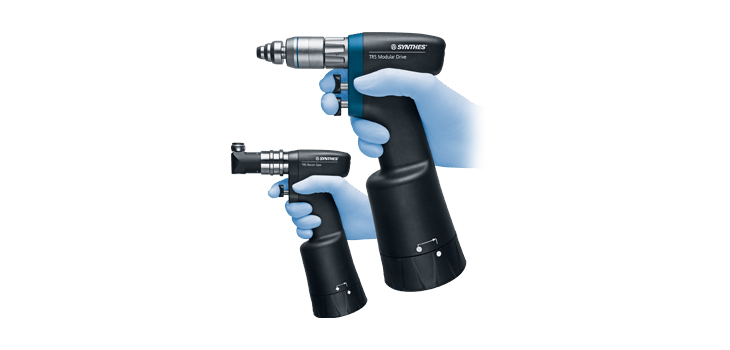
After modifying a rotary handpiece, 25 postgraduate year one orthopedic residents from seven institutions were asked to perform a bi-cortical drilling task three times—both before and after attending a motor skills course. Researchers then collected kinetic and kinematic data using force, acceleration, and visual sensors.
Deana Mercer, M.D., with the Department of Othopaedics and Rehabilitation at the University of New Mexico in Albuquerque explained the rationale behind the study to OTW, “This study began in part to address the need for resident motor skills training out of the operating room. We have led this effort through the Southwest Orthopaedic Trauma Association’s (SWOTA) postgraduate year one orthopaedic residents motor skills course that is now in its 22nd year.”
“We recognized that most training courses lacked objectivity in their evaluation of resident performance with common surgical instruments. We sought to remove bias from this training and evaluation.”
“We asked the faculty surgeons who participated in the SWOTA course what they believed to be important outcome measures when using a surgical drill. We found further evidence of the importance of these outcomes in orthopaedic literature related to residency training.”
“We selected low-cost sensors that would allow us to quantitatively measure motor skills outcomes. We developed four prototypes of the drill that were each used by residents and attending surgeons participating in the SWOTA course over 4 years. We eventually converged upon the outfitted handpiece that enabled collection of all outcome measures without interfering with the expected surgical task.”
“We found that overpenetration correlates positively with force and negatively with revolutions per minute (RPM).”
“We suggest that running the drill at high RPM may require less force for advancement (feed), thus reducing the potential for overpenetration. An optimal combination of high drill RPM and high, but controlled feed rate, may also minimize the effects of friction.”
“Unpublished results from our research have shown that low feed rate and/or low drill RPM increases temperature which has been shown to increase the potential for tissue injury. We found a positive correlation between overpenetration and palmar-dorsal toggle.”
“We suggest that bracing the drilling arm against the body and positioning the drill immediately above and in line with drill direction may minimize palmar-dorsal toggle, thus having an effect on limiting overpenetration and, though not directly tested, may enable a more controlled drill bit advancement through bone.”
“Objective motor skills evaluation may help improve the technical competency of residents and allow measured improvement of residents over the course of their residency training period. It may elucidate areas for improvement and allow for personalized training to ensure residents graduating from each program have met a standard competency level across the board.”
Author
React:
Discussion
This is a fascinating development. In my practice we've seen similar outcomes with the revised protocol. The key differentiator seems to be patient selection criteria. Has anyone else noticed the correlation with BMI thresholds?
Great point. I'd push back slightly on the conclusion, the sample size in the cited study is too small to draw population-level inferences. That said, the directional signal is compelling and worth a larger RCT.
We implemented a similar approach last year. Early results are promising but we're still gathering 12-month follow-up data. Happy to share our protocol if anyone is interested.
Join the conversation
Orthopedic professionals are discussing this. Sign in and upgrade to read every comment and add your voice.