
Finding a long-term solution that provides pain relief AND preserves the motion of the foot has been a challenge for orthopedic surgeons treating patients with metatarsal joint pain.
Foot Pain Relief and Motion Preservation System Cleared by FDA
2 min read Premium comments
#fda510kclearanceSecondary#arthritis#arthrosurface
The August 14, 2019 FDA 510(k) clearance of Arthrosurface, Inc.’s Boss Toe Fixation System may offer hope to those surgeons.
Non-Fusion Option
“Finally, there is an option other than fusion for failed synthetic implants,” said Carl Hasselman, M.D., orthopedic surgeon with UPMC in Pennsylvania, in a September 5, 2019 company press release. “We can preserve motion of the joint, even in these difficult cases where there is a defect or void in the bone.”
The Boss
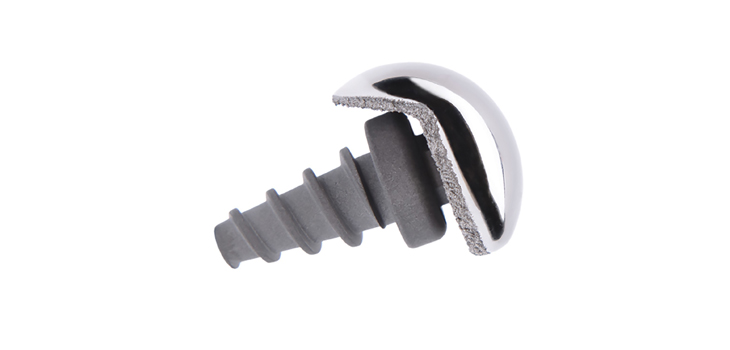
The FDA clearance document states “the metatarsalphalangeal (MTP) implant incorporates an articular resurfacing component and a taper post component that mate together via a morse taper interlock to provide stable and immobile fixation of the implant and stress bearing contact at the bone/prosthetic interface.”
The document notes the system is for use “in the treatment of patients with degenerative and post-traumatic arthritis in the metatarsal joint in the presence of good bone stock along with the following clinical conditions: hallux valgus or hallux rigidus, and an unstable or painful metatarsal/phalangeal (MTP) joint. The device is a single use implant intended to be used with bone cement or without bone cement.”
The system, says the company, is used in conjunction with its existing line of HemiCAP DF implants and ToeMotion Systems. “It offers immediate rigid fixation in cases with metaphyseal bone loss and is designed to stabilize the joint while also maintaining the length and mechanical axis of the toe.”
Company President and CEO Steve Ek told us that the company’s surgeon advisors needed a new fixation component for the company’s DF and Toemotion 1st MTP systems “that would allow for immediate rigid fixation in cases where there was a large distal bone void or cyst as they had seen in some of their returning failed synthetic cartilage cases. The mid-body revolved ring on the fixation component, also referred to in engineering terms as a “boss,” provides this enhanced stability as documented in verification testing.”
The system will be unveiled at the Arthrosurface Booth, #130, during the American Orthopaedic Foot & Ankle Society (AOFAS) Annual Meeting September 12-15 in Chicago and the product will be available at the end of September.
Author
React:
Discussion
This is a fascinating development. In my practice we've seen similar outcomes with the revised protocol. The key differentiator seems to be patient selection criteria. Has anyone else noticed the correlation with BMI thresholds?
Great point. I'd push back slightly on the conclusion, the sample size in the cited study is too small to draw population-level inferences. That said, the directional signal is compelling and worth a larger RCT.
We implemented a similar approach last year. Early results are promising but we're still gathering 12-month follow-up data. Happy to share our protocol if anyone is interested.
Join the conversation
Orthopedic professionals are discussing this. Sign in and upgrade to read every comment and add your voice.