
The FDA has 510(k) cleared a new bone graft substitute from Irvine, California-based Biogennix LLC.
FDA Clears Bone Graft From Biogennix
1 min read Premium comments
#fda510kclearance#bonevoidfillerSecondary#biogennix
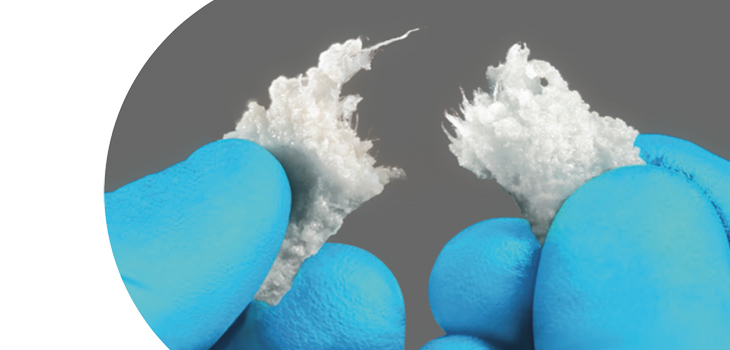
The product, Morpheus-C, was designed, according to the company, “to address surgeon demand for a collagen-enhanced product. With [Morpheus-C, rebranded as Agilon], Biogennix introduces the addition of purely-sourced, type-1 bovine collagen, for optimal material handling properties, among other potential benefits.”
The FDA clearance document states the filler is a “moldable, resorbable osteoconductive bone graft substitute composed of 1-2mm osteoSPAN granules suspended in a biocompatible organic binder to facilitate shaping and containment of the implant.” The organic binder in the filler is a combination of a biocompatible polymer and type I collagen fibers. The polymer, “is rapidly absorbed in-situ, leaving behind osteoSPAN granules and collagen fibers as an osteoconductive scaffold.”
The document goes on to say that the material is indicated “to be gently packed into bony voids or gaps of the skeletal system (i.e., the extremities, and pelvis). These defects may be surgically created osseous defects or osseous defects created from traumatic injury to the bone. The product provides bone void filler that resorbs and is replaced with bone during the healing process.”
TrelCor Technology
Differentiating a product dependent on being deemed substantially equivalent to previously approved products, can be tricky. What differentiated this products, according to a September 4, 2019 company press release, is its TrelCor technology, which “provides full interconnected porosity within naturally-sourced calcium phosphate/calcium carbonate composite (CP/CC) granules. The interconnected pores average 500 microns (µ) in size, which closely emulates the natural blueprint of human cancellous bone.
“With TrelCor technology, all surfaces throughout the porosity are covered by a thin layer (4 microns) of calcium phosphate. Studies have shown that TrelCor technology allows Biogennix’s bone grafting material to become incorporated into a bone fusion, while gradually resorbing over a 6-12-month period.”
The company claims that in preliminary testing, after handling Agilon side by side with other bone graft products, “a majority of surgeons surveyed preferred Agilon over what they’re using today, most often citing the product’s exceptional handling as a key benefit.”
It took the agency a little under six months to clear the product.
Author
React:
Discussion
This is a fascinating development. In my practice we've seen similar outcomes with the revised protocol. The key differentiator seems to be patient selection criteria. Has anyone else noticed the correlation with BMI thresholds?
Great point. I'd push back slightly on the conclusion, the sample size in the cited study is too small to draw population-level inferences. That said, the directional signal is compelling and worth a larger RCT.
We implemented a similar approach last year. Early results are promising but we're still gathering 12-month follow-up data. Happy to share our protocol if anyone is interested.
Join the conversation
Orthopedic professionals are discussing this. Sign in and upgrade to read every comment and add your voice.