
Posterior stabilized or constrained condylar knee…surgeon, take your pick. A team of researchers from Chicago set out to put some data behind those choices.
Constraint in Knee Revisions? New Data Says Less Is More
1 min read Premium comments
Secondary#condylarconstrainedknee#posteriorstabilizedknee
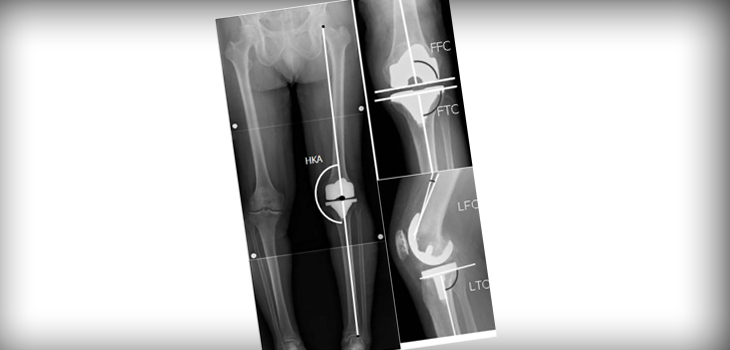
Their work, “Superior Survivorship for Posterior Stabilized Versus Constrained Condylar Articulations After Revision Total Knee Arthroplasty: A Retrospective, Comparative Analysis at Short-Term Follow-Up,” was published in the July 11, 2019 edition of The Journal of Arthroplasty.
Brett Levine, M.D., with Rush University Medical Center in Chicago and co-author explained the goals of this work to OTW, “We wanted to see what the longevity was for our revision total knees that were treated with more constraint (Condylar Constrained Knee (CCK) group) versus less constraint (posterior stabilized (PS) group).”
“Anecdotally, we felt that there might have been a higher rate of revision in the former group and we wanted to assess this and look for potential factors associated with failure.”
“In reviewing 253 revision TKA [total knee arthroplasty] patients we found that the use of a posterior stabilized articulation conferred better survivorship than the condylar constrained knee polyethylene.”
“There were higher rates of re-revision in the latter group secondary to persistent infection and aseptic loosening. While there were limitations to our study, we feel that it is important to use the least amount of constraint possible during revision TKA procedures.”
“Meticulous detail in balancing the knee during revision surgery is important so that adequate stability can still be provided by less constraining polyethylene options.”
“Further research is warranted in assessing the limitations of condylar constrained knee articulations (or even midlevel constraint) in revision and even complex primary.”
“Optimizing stability in revision TKA with limiting constraint is paramount. However, when constraint is necessary the increased forces of such constructs need further research to determine what aspects of enhanced constraint may contribute to adverse outcomes.”
“Lastly, while large exposures and releases are required during revision TKA, there is a price to potentially pay if this leads to the necessity of greater constraint to gain stability.”
Author
React:
Discussion
This is a fascinating development. In my practice we've seen similar outcomes with the revised protocol. The key differentiator seems to be patient selection criteria. Has anyone else noticed the correlation with BMI thresholds?
Great point. I'd push back slightly on the conclusion, the sample size in the cited study is too small to draw population-level inferences. That said, the directional signal is compelling and worth a larger RCT.
We implemented a similar approach last year. Early results are promising but we're still gathering 12-month follow-up data. Happy to share our protocol if anyone is interested.
Join the conversation
Orthopedic professionals are discussing this. Sign in and upgrade to read every comment and add your voice.