
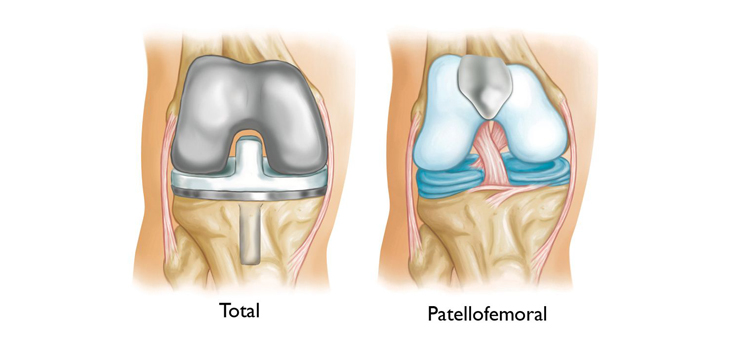
Patients with knee osteoarthritis (OA), say researchers, have a 10% chance of isolated patellofemoral joint (PFJ) arthritis. A team from the University of Louisville in Kentucky set out to improve their ability to predict patella femoral arthroplasty failure.
The research, “Isolated Patellofemoral Joint Arthroplasty: Can Preoperative Bone Scans Predict Survivorship?” appears in the August 14, 2019 edition of The Journal of Arthroplasty.
How to Predict Patellofemoral Arthroplasty Failures
3 min read Premium comments
Secondary#kneeosteoarthritis#petellofemoralarthplasty
Co-author Arthur Malkani, M.D., orthopedic surgeon at the University of Louisville, explained the necessity of his research study to OTW, “There has been a steady increase in the number of partial knee replacements in North America. There have been significant improvements in the design and fixation of modern patellofemoral implants from their initial first-generation introduction. Despite these improvements, there is still a high failure incidence requiring conversion to TKA.”
Malkani had noted that systemic reviews of patellofemoral arthroplasty in the literature (Van Der List et al.) had previously documented a 38% patellofemoral implant failure rate. According to that research, the proximate cause was disease progression and patient selection appeared to be the most important determinant of patellofemoral arthroplasty patient success (or failure).
Therefore, said Malkani, “We were looking for a preoperative means to predict disease progression in patients presenting with isolated patellofemoral symptoms who we felt would be good candidates for patellofemoral arthroplasty after failure of non-operative treatment.”
“Two current radiographic tools readily available to assess the extent of knee osteoarthritis include MRI and bone scintigraphy. We decided to compare these two radiographic modalities to determine if we could improve our patient selection criteria for PFA and therefore improve survivorship.”
“We compared 16 patients undergoing isolated PFA using bone scans as the preoperative radiographic tool to determine the extent of the disease in the medial, lateral and patellofemoral compartments. We compared this group to a matched group of 16 patients where we had used an MRI as a selection criterion to determine the extent of disease involvement in the knee. The procedures were performed at the same institution with the same surgical technique, implant design and postoperative protocols.”
“In the bone scan group, the survivorship was 100% at an average 52 month follow-up (30-105). In the MRI cohort, the survivorship was 69% at an average follow-up of 63 months (38-115). All the failures requiring conversion to TKA in the MRI cohort was due to disease progression in the other knee compartments and not implant related.”
“This study helps confirm that disease progression is the primary mode of failure of patellofemoral arthroplasty and patient selection plays a significant role. Using a modern design patellofemoral implant along with a negative bone scan result in the medial and lateral compartments of the knee, we were able to achieve a 100% survivorship in patients undergoing patella femoral arthroplasty at an average 52 month follow-up.”
“The questions that we still have to answer with future studies include, Can this information also be used for isolated medial and lateral compartment unicompartmental arthroplasty?”
“The use of bone scans in predicting osteoarthritis disease progression has been documented in the literature by Dieppe et al. Although our study is retrospective with a small group of patients, our results demonstrating 100% survivorship at an average 52 months is promising with a bone scan now being routinely used at our institution as an additional tool for patient selection prior to patellofemoral arthroplasty.”
“The main points to take away from this paper is that despite the use of modern design patella femoral implants, there is a high failure rate of patellofemoral implants leading to conversion to TKA due to disease progression and bone scans can help play a role in patient selection.” — EH
Author
React:
Discussion
This is a fascinating development. In my practice we've seen similar outcomes with the revised protocol. The key differentiator seems to be patient selection criteria. Has anyone else noticed the correlation with BMI thresholds?
Great point. I'd push back slightly on the conclusion, the sample size in the cited study is too small to draw population-level inferences. That said, the directional signal is compelling and worth a larger RCT.
We implemented a similar approach last year. Early results are promising but we're still gathering 12-month follow-up data. Happy to share our protocol if anyone is interested.
Join the conversation
Orthopedic professionals are discussing this. Sign in and upgrade to read every comment and add your voice.