
“The good physician treats the disease; the great physician treats the patient who has the disease.” – Sir William Osler[i]
Freddie H. Fu, M.D.: A Force of Nature
8 min read Premium comments
#anteriorcruciateligament#acl#freddiefu
Freddie H. Fu, M.D. is a great physician.
Many have mused about what makes the indefatigable Freddie Fu tick. Few have known…but we think we found Dr. Fu’s secret (and superpower).

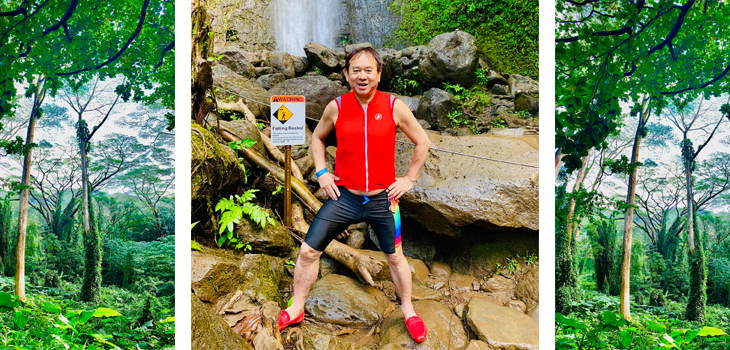
Freddie H. Fu, M.D., chair of the Department of Orthopaedic Surgery at the University of Pittsburgh School of Medicine and the University of Pittsburgh Medical Center (UPMC) for 21 years, appreciates nature in all its forms. Whether in the stunning beauty of a Hawaiian sunset or in the individualized complexity of any given anterior cruciate ligament (ACL), Dr. Fu finds reason to inquire and dig deeper.
A recent study in the Orthopaedic Journal of Sports Medicine found that the top journal and top author publishing on the ACL were The American Journal of Sports Medicine and Freddie H. Fu, who published 378 articles—2% of all articles published on the subject.
Born and raised in Hong Kong, Freddie Fu, one of five children, attended high school at the famed St. Paul’s College where he played basketball, helping guide his team to the number one spot in Hong Kong. When not on the court he was playing guitar in a rock band and dreaming of his future.
Dr. Fu: “I left Hong Kong at the age of 18 to attend undergraduate at Dartmouth in New Hampshire, where I remained for medical school and married my lovely wife, Hilda. As they had only a two-year program at the time, in 1975 I moved to the University of Pittsburgh to complete my M.D. It was then that I came into contact with the inimitable Dr. Albert Ferguson Jr., who holds the record of training more orthopedic chairs than anyone in world. Because I had a history of team sports, and because Dr. Ferguson was so impressive, I ‘landed’ in orthopedics.”
After an orthopedic residency and a fellowship in orthopedic research, Dr. Fu also undertook an internship in general surgery at Brown University and an international fellowship at the Hanover Trauma Center in Germany. “I completed my formal training in 1982 and joined the University of Pittsburgh School of Medicine faculty as an assistant professor of orthopedic surgery and director of sports medicine. Although I was increasingly interested in sports medicine, I did the full gamut of orthopedics during that time—trauma, pediatrics, you name it.”
Dr. Fu, who at that point was on call every third night, apparently wasn’t busy enough. “I began covering local high school teams, the Pittsburgh Ballet Theatre, and then became chairman of the board and executive medical director of the Pittsburgh marathon.”
Super doc…bad patient…
Eventually honored with a lifetime service award for his dedication to the local bicycle community, Dr. Fu also has a deep understanding of what it means to be an orthopedic patient. “I have been hit by cars on several occasions and experienced open fractures. ‘I am a bad patient because I demand to go back to work very quickly…one time it was two weeks after an accident involving multiple fractures.’”
Given such dedication to his work, Dr. Fu was promoted to clinical vice chairman of the department of orthopedic surgery in 1990 and executive vice chairman in 1994. “When I became chair, I had to relinquish certain roles and delegate some work to others. I also had to rebuild the department, which took roughly four years.”
Head team physician for the University of Pittsburgh Department of Athletics since 1986, Dr. Fu helped establish the Sports and Preventive Medicine Institute, now the UPMC Rooney Sports Complex, which has evolved into one of the most comprehensive sports medicine clinical and research centers in the world. “I am proud to have helped design this unusual complex, which includes, among other things, 34 large exam rooms, a Neuromuscular Research Laboratory, and a plyometric training floor to help recovering athletes regain power and rapid movement capabilities. It also houses the indoor and outdoor training facilities of the University of Pittsburgh Panthers and the Pittsburgh Steelers.”
The backstory on the knee…
“I began doing arthroscopic ACL surgery in the early to mid 1980s. It was particularly difficult to break into knee research at the time, so I began doing biomechanical shoulder research. Much of that work eventually transferred to ACL research.”
“Dr. Jon Warner and I worked to develop the robotic technology to study, ‘A Dynamic Model for Motion and Stability of the Glenohumeral Joint,’ work that won the Kappa Delta Young Investigator Award in 1996. This provided the foundation for the research. ‘Anatomic Anterior Cruciate Ligament Reconstruction: A Changing Paradigm” that won the Kappa Delta award in 2014.’”
“My work expanded to proprioception—which no one was doing at the time—and then on to the issue of why females tear their ACLs more than males. That led to our efforts to instruct female athletes on how to jump and land in a safe manner. This work expanded to include prevention of injuries in elite military groups. This extensive funding and collaboration led to the formation of the Warrior Human Performance Research Center.”
Asked what he finds enchanting about the ACL in particular, Dr. Fu told OTW, “Early in my career I was fortunate to do some work with Dr. Owen Lovejoy, the anthropologist who reconstructed the famed Lucy, the 3.2 million year-old upright walking human discovered in Ethiopia 40 years ago. Through that experience I recognized that in the evolution of the human body the knee is the only structure that has a cruciate ligament, meaning that the knee can do many things that other joints cannot.”
“And, unlike the shoulder, for example, it can do these things with control and a good deal of mobility. Historically, we didn’t think that the cruciate was important until the ’70s or ’80s. However, once it became clear that it is the cruciate that allows us to function and play sports then people began giving it more attention.”
Like meat in a supermarket…
“Traditionally,” says Dr. Fu, “physicians have looked at the ACL like meat in a supermarket. But the real ACL is like a pounding heart…it’s a really active, beautiful structure.”
“I have learned that the bony morphology is critical because it dictates what the ACL is like. I examined the knees of so many species alongside Dr. Lovejoy, looking at how many bundles there were, the location of the insertion sites, etc. The knee—and the ACL—is not a one-size-fits-all situation.”
“It’s like fingerprints and if you treat them all the same then you miss out on important details. Before each surgery I do a preop 2D/3D evaluation—along with an MRI—so that I know how big the ACL is, the bony morphology, etc.”
“There are stem cells in the ACL so it has its own healing potential. We conducted one study that found high cytokine levels in all postop patients, showing that the environment is unfriendly for ACL healing. On the other hand, some patients can heal by themselves. This is evidence that even more work is needed on this complex ligament.”
As for what Dr. Fu finds important, he says, “We all make mistakes, so it is important to be critical of oneself; if you think you are perfect then you won’t progress in life. I always ask another question, such as, ‘Why will or won’t XYZ work?’ In our weekly two-hour ACL meetings, my team and I go over all of our cases and ask such questions.”
Dr. Fu has taught his processes to thousands of promising surgeons. “At any one time we have roughly 15 fellows from all over world. We run 13 labs, the latest of which is our robotic lab that has a custom robot from Japan. There are only four in world and we have the only one in the U.S. This amazing machine is programmed to study cadavers and will be providing a plethora of vital information going forward to help us see the knee that nobody else can see.”
Asked what promising things he sees on the horizon for orthopedics, Dr. Fu noted, “It is imperative that we more fully understand anatomy…orthopedic surgery is fundamentally all about anatomy. And it is not one size fits all…we must truly individualize cases.”
This enduring man is endearing…
Dr. Fu’s longtime friend and colleague, James Kang, M.D., chairman of the Department of Orthopaedic Surgery at Brigham and Women’s Hospital and the Thornhill Family Professor of Orthopedic Surgery at Harvard Medical School, said this about Dr. Fu “I did my orthopedic residency at the University of Pittsburgh 1992 and later returned as an assistant professor of Orthopaedic Surgery at the University of Pittsburgh, later serving as the UPMC Endowed Chair in Orthopaedic Surgery. Freddie was a constant presence in my life, each day passionately urging me to think more deeply about issues that were arising. I think it is that passion that makes him tick.”
Describing Dr. Fu as THE most energetic individual he has ever met, Dr. Kang notes, “His love of orthopedics really fuels him and is probably responsible for his being able to give so much of himself. He has actually been known to fly from Pittsburgh to Australia, give a complex presentation, and four hours later get on a plane to go back home for work the next morning.”
Using the words “focused” and “ambitious” for Dr. Fu, Dr. Kang says that the most important clinical thing he ever learned from him was “the art of conveying to patient that you really care in short period of time.”
“Freddie has a way of quickly making patients feel endeared to him. He has a photographic memory. If you tell him that your uncle had cancer or that you took a trip to the Amazon, then he will ask you about it later…and patients truly appreciate that.”
As for what Dr. Fu taught him about running a program, Dr. Kang states, “He taught me to be benevolent. As chair one can wield a lot of power, but Freddie said that you can be strong but be good to people at the same time…without a quid pro quo. It was an honor to be his disciple.”
The original superpower, Nature…
After all these years and so many studies, Freddie Fu has come to be a true and deep believer in the power of nature to heal. “So often we miss the lessons of nature. I was actually on the board of Chatham University, the school that Rachel Carson, author of Silent Spring, attended. They have a wonderful sustainability program that has brought renewed hope and progress as far as protecting nature. Indeed, for the first time in the last five years I can hear birds while I sit in my home.”
Asked if he had any concerns about the future of orthopedics, Dr. Fu replied, “My number one concern is that we fail to adequately focus on the patient. Patient care should be evidence- and scientific-based and not market-driven. Our patient first approach is simple: ‘Only a life lived for others is a life worthwhile’ – Albert Einstein. In all forms of medicine, we need to respect what was done in the past in order to embrace the future.”
“My second concern is cost. I have come to believe that about 30-40% of orthopedic surgeries are unnecessary.”
His message to the field: “We must be critical of ourselves. There are 100 things that have come and gone in orthopedics, so don’t get overly excited before something has stood the test of time.”
Freddie Fu…they just might rename the ACL the FFL…
[i] Sir William Osler, 1st Baronet, FRS FRCP was a Canadian physician and one of the four founding professors of Johns Hopkins Hospital. Osler created the first residency program for specialty training of physicians, and he was the first to bring medical students out of the lecture hall for bedside clinical training.
Author
React:
Discussion
This is a fascinating development. In my practice we've seen similar outcomes with the revised protocol. The key differentiator seems to be patient selection criteria. Has anyone else noticed the correlation with BMI thresholds?
Great point. I'd push back slightly on the conclusion, the sample size in the cited study is too small to draw population-level inferences. That said, the directional signal is compelling and worth a larger RCT.
We implemented a similar approach last year. Early results are promising but we're still gathering 12-month follow-up data. Happy to share our protocol if anyone is interested.
Join the conversation
Orthopedic professionals are discussing this. Sign in and upgrade to read every comment and add your voice.