
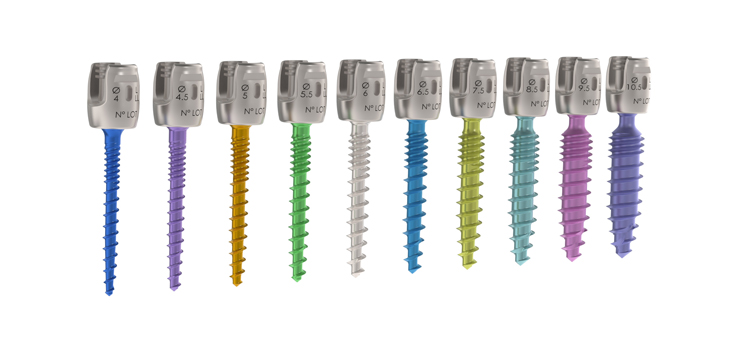
On August 2, 2019, Lyon, France-based Medicrea Group announced FDA 510(k) clearance for its Tulip Genesis, a top loading screw system. The screw is a subset of the company’s PASS LP system, which was cleared back in May.
FDA Clearance Completes Medicrea’s AI Spine Platform
2 min read Premium comments
#spinesurgery#artificialintelligenceSecondary#fusion
The Tulip clearance, according to the announcement, “completes” the company’s UNid ASI (Adaptive Spine Intelligence) proprietary platform technology.
That platform includes: IB3D, a selection of 3D-printed patient-specific interbody cages; UNiD ROD, a patient-specific rod industrially pre-bent to match the individual surgical simulation; PASS LP, a modular screw system; and Tulip Genesis, the top-loading screw system.
Artificial Intelligence
The company says the Artificial Intelligence (A.I.) embedded within the platform “allows a surgeon to visualize the compensatory mechanisms above and below the instrumented spine that will most likely occur based on their surgical plan.”
The FDA clearance document states the fixation system is “intended for immobilization and stabilization of spinal segments in skeletally mature patients as an adjunct to fusion…in the treatment of acute and chronic instabilities or deformities of the thoracic, lumbar, and sacral spine.”
The system, which took less than three months to be cleared, consists of pedicle screws, hooks, sacral plates, iliac screws, clamps, rods, nuts, rod plates and crosslink components. It can be used for single or multiple level fixations. Components are manufactured from titanium alloy (Ti-6Al-4V ELI).
The company stated that the combination of A.I. with this product offering makes Medicrea “the only manufacturer able to streamline inventory required to operate as well as provide patient-specific devices, through intelligent pre-operative surgical planning.”
“The combination of big data and patient-specific care is the new frontier,” said Chris Ames, M.D., director of spinal tumor and spinal deformity surgery at UCSF Medical Center in California. “Through the power of data collection and machine learning, a unique capability is created, allowing for a continuous cycle of improvement.”
Company President and CEO Denys Sournac said surgeons have performed more than 4,000 cases using the UNiD ASI technology, with an adoption rate of over 47% in the U.S. since the beginning of the year. “With the adoption of the UNiD ASI technology accelerating, Medicrea created a unique opportunity for a pull-through effect by offering surgeons a complete solution of implants.”
Author
React:
Discussion
This is a fascinating development. In my practice we've seen similar outcomes with the revised protocol. The key differentiator seems to be patient selection criteria. Has anyone else noticed the correlation with BMI thresholds?
Great point. I'd push back slightly on the conclusion, the sample size in the cited study is too small to draw population-level inferences. That said, the directional signal is compelling and worth a larger RCT.
We implemented a similar approach last year. Early results are promising but we're still gathering 12-month follow-up data. Happy to share our protocol if anyone is interested.
Join the conversation
Orthopedic professionals are discussing this. Sign in and upgrade to read every comment and add your voice.