
EmCyte Corporation, a leader in platelet rich plasma and progenitor stem cell biologics, recently launched a new technology, the ASPIRE™ Bone Marrow Harvesting System, that allows for the easier collection of purified bone marrow aspirate.
EmCyte Launches New Bone Marrow Harvesting System
1 min read Premium comments
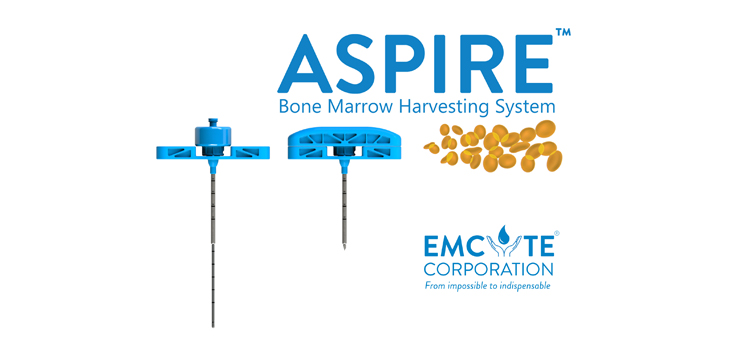
Secondary#emcytecorporation#aspire#bonebarrowharvestingsystem
With this system, high numbers of viable progenitor stem cells, platelet growth factors and cell mediators can be collected as minimally invasive as possible while keeping levels of oxidative free hemoglobin low.
According to a press release, “The system has needles that gently penetrate trabecular bone, maintaining a dormant tissue environment during deployment and collection. This results in a significant reduction in tissue activation and free hemoglobin content, providing a better bone marrow aspirate sample for centrifugation.”
Recent studies on ASPIRE found that “ASPIRE Bone Marrow Aspirate provides post processing cell concentrates that have [total nucleated cell], [hematopoietic stem cell] and [mesenchymal stem cells] cell counts that are equal to or greater than 5.5 times the baseline values” and that “the red blood cell content was reduced by more than 80% and the oxidative free hemoglobin content was reduced by 75%. Furthermore, the megakaryocyte platelet increase from aspirate to concentrate increased by 8-fold, while maintaining a cell viability of more than 96%”.
Patrick Pennie, president & CEO of EmCyte Corporation, said, “ASPIRE is highly innovative and unique. Free hemoglobin is profoundly oxidative, highly inflammatory and is found in the majority of bone marrow systems today. Until now, this has been accepted as a norm in regenerative biologics. However, the innovation of ASPIRE has turned the corner on conventional thinking and provides a better treatment option.”
Author
React:
Discussion
This is a fascinating development. In my practice we've seen similar outcomes with the revised protocol. The key differentiator seems to be patient selection criteria. Has anyone else noticed the correlation with BMI thresholds?
Great point. I'd push back slightly on the conclusion, the sample size in the cited study is too small to draw population-level inferences. That said, the directional signal is compelling and worth a larger RCT.
We implemented a similar approach last year. Early results are promising but we're still gathering 12-month follow-up data. Happy to share our protocol if anyone is interested.
Join the conversation
Orthopedic professionals are discussing this. Sign in and upgrade to read every comment and add your voice.