
Dominic Thomas Kleinhenz, M.D., a surgeon specializing in neck and back problems, has joined University Orthopedics, located in East Providence, Rhode Island.
Dominic Thomas Kleinhenz, M.D. Joins University Orthopedics
1 min read Premium comments
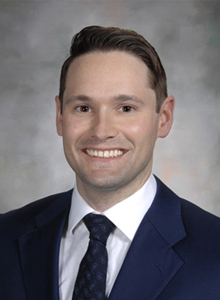
Secondary#dominickleinhenz
“Dr. Kleinhenz has demonstrated an eagerness to treat patients using the latest technological advances available that will serve University Orthopedics well,” said Edward Akelman, M.D., president of University Orthopedics. “We are pleased he is joining our group of physicians and we look forward to seeing the results of his work.”
“University Orthopedics is leading the way in providing patients with the most advanced surgical techniques available, and I am thrilled to be involved in the implementation of technological advances that UOI will surely adopt in the coming years,” said Dr. Kleinhenz.
Dr. Kleinhenz, who earned his medical degree at the University of Florida College of Medicine, is a board eligible orthopedic surgeon with the American Board of Orthopaedic Surgery. He completed a residency in orthopedic surgery at Brown University and The Miriam Hospital/Rhode Island Hospital. He also completed a fellowship in spine surgery at Brown University and Rhode Island Hospital.
Dr. Kleinhenz told OTW, “The technological advances that I’m planning on using include motion-preserving techniques, such as cervical disc replacement and interlaminar stabilization devices as well minimally invasive lumbar fusion techniques. For adult scoliosis and adult spinal deformity cases, I will continue to use patient-specific instrumentation, mainly in the form of pre-bent custom rods based on a pre-operative template and plan.”
“Two primary principles in my practice will be individuality and accessibility. I will treat each patient as the individual and develop a treatment plan based on their needs. Also, I will be accessible for patients and available to them whenever needed.”
Author
React:
Discussion
This is a fascinating development. In my practice we've seen similar outcomes with the revised protocol. The key differentiator seems to be patient selection criteria. Has anyone else noticed the correlation with BMI thresholds?
Great point. I'd push back slightly on the conclusion, the sample size in the cited study is too small to draw population-level inferences. That said, the directional signal is compelling and worth a larger RCT.
We implemented a similar approach last year. Early results are promising but we're still gathering 12-month follow-up data. Happy to share our protocol if anyone is interested.
Join the conversation
Orthopedic professionals are discussing this. Sign in and upgrade to read every comment and add your voice.