
For a quarter century, Centennial, Colorado-based AlloSource has now been advancing the science of tissues transplanted from one person to another for use in medical treatments (otherwise known as allografts) including those with living cells.
Congratulations AlloSource on Your Magnificent 25th Anniversary
6 min read Premium comments
#allosource#organharvesting#organprocurement
Since 1994, this remarkable group of organ procurement organizations and its Colorado based-processor have been honoring the precious gift of tissue donation by making sure that each donation reaches the maximum number of patients and is not only safe but will function properly in order to get patients out of the hospital and back to their lives.
As can be said about most all of the companies in this remarkable segment of the musculoskeletal community, they facilitate the best intentions of this country’s Good Samaritans.
History Rooted in Tissue Donation and Transplantation
Over its entire history, AlloSource has been a “nonprofit organization dedicated to advancing the science and use of transplantable allogeneic cells and tissue through pioneering research in regenerative therapies.” AlloSource “offers life-saving and life-enhancing solutions in orthopedic, spine, burn and wound procedures to help restore patient health and mobility.”
AlloSource is one of the largest tissue processers in the world taking in more than 200 types of bone, skin, soft-tissue and custom allografts in order to serve communities nationally and internationally, including North and South America, Latin America, the European Union and the Asian Pacific Rim.
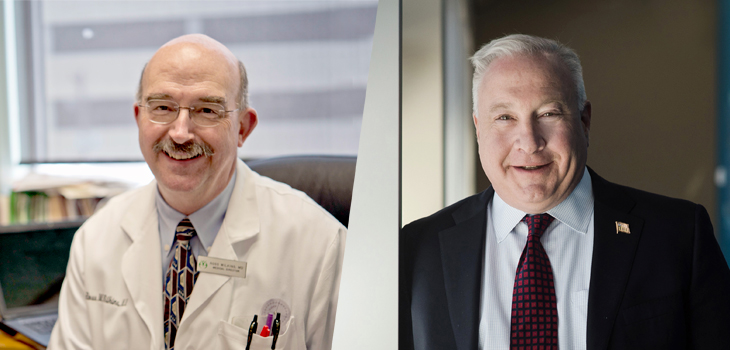
OTW spoke with Ross Wilkins, M.D. about AlloSource’s history. Dr. Wilkins is the Senior Medical Director for AlloSource and Chairman of AlloSource’s Medical Advisory Board. He is also Chairman and Founder of the Limb Preservation Foundation and a Faculty Member at Colorado State University Animal Center. An orthopedic oncologist by training, Dr. Wilkins is recognized as a limb preservation expert, as well as an expert on bone and soft tissue tumors and bone transplantation, both nationally and internationally.
Dr. Wilkins shared with OTW that AlloSource began as the Mile High Transplant Bank—a “fledgling tissue bank” in 1984. The tissue bank had high standards for procurement and care and, according to Dr. Wilkins, over time people began seeking out their high-level of care, so the organization grew. This initial regional tissue bank slowly developed into a “sophisticated tissue and processing facility,” addressing orthopedic, reconstructive, and even neurosurgical needs.
Three federally licensed Organ Procurement Organizations (OPOs) came together with the idea to merge and operate as a cooperative. This was a “totally unique” corporate structure said Dr.Wilkins. The owners of AlloSource—or “members”—would be the organizations who provided the tissue through their donors.
AlloSource was born.
Current Leadership
AlloSource’s current President and Chief Executive Officer Tom Cycyota has over 35 years of experience in the medical technology industry. Under his leadership, AlloSource has become a leader in the field.
Prior to joining AlloSource, Cycyota was the Vice President of Alternate Care Business with Johnson & Johnson Medical (JJM). In this board-level role, he led the company’s movement into the alternate healthcare market. Previous positions also include serving as Worldwide Director, Marketing, Wound Management for JJM and Vice President of Marketing and Materials Management with New Dimensions in Medicine. He also spent ten years at Kendall Healthcare Products Company.
Cycyota says of his time at AlloSource, “I came to AlloSource 19 years ago and was drawn to the opportunity to run a mission-driven company.”
Regulatory Standards and Risk Mitigation
Inspired by tissue donors and their families, AlloSource has grown into a world leader in processing cell-based biologics, cartilage tissue for joint repairs, and skin allografts to support the healing of severe burns. With this comes responsibility and health and safety is a priority for AlloSource. Infection transmission risk is very low, estimated by AlloSource to be less than 1 in 1.6 million. The organization is dedicated to mitigating risk and has no record of any incidences of disease transmission.
Tissues undergo extensive physical assessment and medical/social risk assessment review prior to donation. Blood and tissues are then also screened for disease and/or infection.
The Food and Drug Administration (FDA) regulates much of these processes, with additional regulatory oversight involvement by the American Association of Tissue Banks (AATB) and the Clinical Laboratory Improvement Amendments (CLIA). In addition to meeting these requirements, AlloSource is compliant with international Quality System requirements for Health Canada and the European Parliament and Council of the European Union.
Research and Expansion
Through the AlloSource Investigator Initiated Research (IIR) program, the organization accepts proposals and provided grants and support for research in the field in order to continue to advance developments of innovative tissue and organ healing technology. In this way, AlloSource aims to “honor the gift” of tissue and organ donation by promoting increasingly medically effective treatments for patients.
AlloSource recently developed AlloSource Placental Donation Services. This project provides expectant mothers in Colorado an opportunity to donate their placentas directly following birth. The amniotic tissue created from this donation has the potential to help heal patients suffering from spinal surgeries, wounds, foot and ankle surgeries among other ailments.
Business With a Personal Impact
Not only has AlloSource had a positive impact on the lives of its organ and tissue recipients—it has also impacted the lives of the people who work there.
Tom Cycyota described the impact that AlloSource has had on his own life. “It’s difficult to simply articulate the most rewarding aspect of working at AlloSource since serving as President and CEO is an incredible job, but it always comes back to our sacred responsibility of honoring a tissue donor’s wishes by helping surgeons heal their patients. There is healing for a donor family, there is healing for a patient and we help make that possible. The impact is overwhelming.”
“I am tremendously blessed,” he says.
Dr. Wilkins explained that his career has allowed him to participate in multiple levels of AlloSource’s process, from family involvement to tissue procurement and processing to clinical work. The concrete outcomes in improved quality of life, for example seeing a child who may have required an amputation not receive one, or seeing allografts provided for the victims of horrible burns, continue to move him personally. “To be able to have traveled that whole journey from the beginning to the end and to understand what a precious gift we’ve been given by the donation of this tissue…it’s very impactful.”
Tom Cycyota echoes this sentiment, stating, “I can say after all this time I remain in awe of the important work our employees do.”
Mission-Driven Vision for the Future
AlloSource’s work is both mission-driven and humanitarian in nature. Its vision is to “lead[]ing the way in cellular and tissue therapies” and its mission is to “responsibly provide innovative cellular and tissue allografts to advance patient healing.”
Describing its work, AlloSource tells the story of one of its donors, Garrett. “We have a sacred responsibility to carry on the stories of thousands of donors. Each one is unique, just like Garrett’s. Following the devastating loss of 10-year-old Garrett, his family made the generous decision to donate his organs, eyes and tissue. Through the gift of this donation: Garrett changed the lives of 125 tissue recipients throughout the U.S. and Canada.”
AlloSource’s leadership repeatedly uses words like, “gift,” “sacred,” and “honoring the donor” when explaining the organization’s scope of work. The feeling of reverence for both donors and recipients of tissues is palpable.
CEO Cycyota states, “AlloSource’s mission is two-fold—honor the sacred gift tissue donors have entrusted to us and do this by creating products surgeons need to heal their patients. Our work allows a tissue donor family some solace at one of the toughest moments of their lives, while also providing an opportunity for a patient in need of physical healing to regain their quality of life. I can’t say enough how seriously everyone at AlloSource takes the responsibility of our mission.”
The organization’s accomplishments and innovative, research-based approach to their mission has produced many striking milestones over the years. The story of AlloSource reflects the evolution of biologic technology over the past 25 years.
Author
React:
Discussion
This is a fascinating development. In my practice we've seen similar outcomes with the revised protocol. The key differentiator seems to be patient selection criteria. Has anyone else noticed the correlation with BMI thresholds?
Great point. I'd push back slightly on the conclusion, the sample size in the cited study is too small to draw population-level inferences. That said, the directional signal is compelling and worth a larger RCT.
We implemented a similar approach last year. Early results are promising but we're still gathering 12-month follow-up data. Happy to share our protocol if anyone is interested.
Join the conversation
Orthopedic professionals are discussing this. Sign in and upgrade to read every comment and add your voice.