
A new study, “Prevalence of Sagittal Spinal Deformity Among Patients Undergoing Total Hip Arthroplasty,” has revealed that those with stiff spines have some fascinating hip-spine kinematics going on. This work was published in the August 10, 2019 edition of The Journal of Arthroplasty.
20% of Hip Replacement Patients May Have Spinal Deformity
3 min read Premium comments
#hipreplacementSecondary#hipdislocation#sagittalspinaldeformity
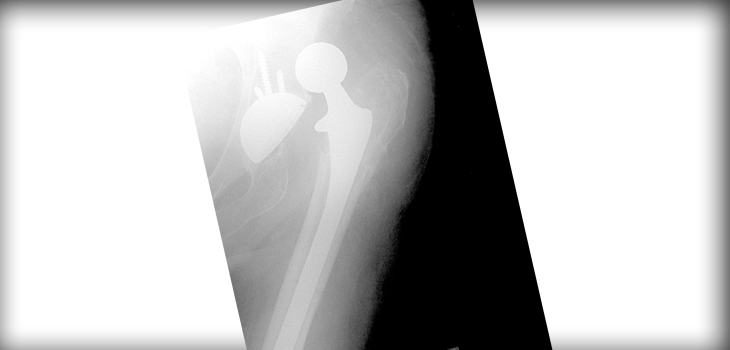
Jonathan Vigdorchik, M.D., assistant professor of Adult Reconstruction and Joint Replacement at Hospital for Special Surgery and Weill Medical College of Cornell University in New York and study co-author explained to OTW why he and his colleagues tackled this subject. “The hip-spine relationship has been shown to be an extremely important factor in determining patients at risk for dislocation after total hip replacement. Although hip replacement is one of the most successful surgeries of all time with the lowest complication rates, certain patients are at a higher risk, and it is important to identify these patients prior to surgery.”
“The patients most at risk for a dislocation after hip replacement are those with spinal deformity and also those with spinal stiffness.”
To tease out which patients may be most at risk for dislocation, Vigdorchik and his colleagues mined a multicenter database of preoperative total hip arthroplasty patients. They pulled from those databases standing radiographic parameters for anterior pelvic plane tilt (APPt), spinopelvic tilt (SPT), and lumbar lordosis (LL). They then measured pelvic incidence using computed tomography scans.
They set (or defined) lumbar flatback as a pelvis incidence—lumbar lordosis (PI-LL) mismatch greater than 10°, balanced PI-LL was set (defined) at between -10° to 10°, and they then set (defined) hyperlordosis as PI-LL less than -10°.
After collecting, categorizing and analyzing data from 1,088 patients (average age was 64 years, 48% were female) the researchers found that 59% (n=644) of the patients could be characterized as having balanced alignment.
The research team also found that 16% (n=174) had pelvic–lumbar lordosis mismatch greater than >10° and that 4% (n=46) of the patients in the study had severe flatback deformity which they defined as a PI-LL greater than 20°.
Finally, the team found hyperlordosis (as defined) in 25% (n=270) of the patients studied.
The team noted that flatback patients tended to be older than balanced and hyperlordotic patients (69.5y vs. 64.0y vs. 60.8y). Spinopelvic tilt, they noticed, was more posterior in flatback patients than in either the balanced or hyperlordotic patients.
Dr. Vigdorchik summarized the key takeaways from the study to OTW, “It is a common misconception that only patients with a spinal fusion have a stiff spine and are at risk for dislocation. Our research has shown that the majority of patients with stiff spines actually have a biologic fusion that functions like a surgical fusion in terms of the hip-spine kinematics.”
“Likewise, as we show in this paper, 20% of patients undergoing hip replacement actually have a spinal deformity, which directly affects how their hip replacement is positioned and how it functions.”
Dr. Vigdorchik’s message to patients: “It is important to let your surgeon know if you have a history of scoliosis, back pain, or previous spinal surgery. This will help your surgeon determine whether to order specialized X-rays of your hip and back, in both standing and sitting positions, and to appropriately counsel you about your risk after hip replacement and also plan a more successful hip replacement surgery.”
“This study has shown a 20% prevalence of spinal deformity in patients undergoing hip replacement surgery. We have previously published very clear and simple steps for surgeons to follow when analyzing the hip-spine relationship.”
“The first step is to identify whether there is a spinal deformity, and the second is to identify whether there is spinal stiffness. Knowing these two things, the surgeon can identify patients at risk, and then implement changes to the surgical plan during a hip replacement to minimize that risk and to maximize the patient outcome and ultimately the patient satisfaction.”
Author
React:
Discussion
This is a fascinating development. In my practice we've seen similar outcomes with the revised protocol. The key differentiator seems to be patient selection criteria. Has anyone else noticed the correlation with BMI thresholds?
Great point. I'd push back slightly on the conclusion, the sample size in the cited study is too small to draw population-level inferences. That said, the directional signal is compelling and worth a larger RCT.
We implemented a similar approach last year. Early results are promising but we're still gathering 12-month follow-up data. Happy to share our protocol if anyone is interested.
Join the conversation
Orthopedic professionals are discussing this. Sign in and upgrade to read every comment and add your voice.