
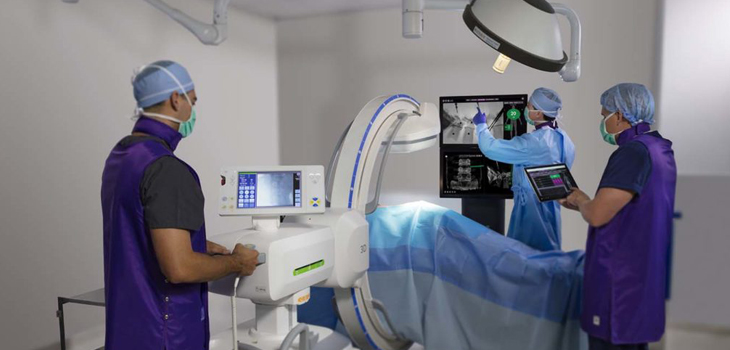
NuVasive, Inc. has officially launched the Pulse integrated technology platform which, says the company, is the first platform to incorporate imaging, planning, navigation, neuromonitoring and other technologies into a seamless platform for more “efficient, less disruptive surgical approaches in all spine procedures.”
NuVasive Launches Pulse Platform for Spine Surgery
2 min read Premium comments
#nuvasiveSecondary#bendini#pulseplatform
“The Pulse platform is uniquely engineered to equip surgeons with a single platform of integrated technologies necessary to perform all spine surgeries, including minimally invasive approaches,” said NuVasive CEO J. Christopher Barry. “Pulse provides an intuitive surgeon experience by anticipating user needs and fusing these technologies to create a seamless, optimized OR workflow, while addressing a broad range of clinical challenges…”
Pulse Platform Hardware and Software Modules
According to the company, Pulse delivers the following to spine surgeons:
“2D- and 3D-Imaging and Navigation: Image transferring for both 2D- and 3D-imaging that combines novel camera, array and workflow technologies to improve line of sight, ease of use and surgical efficiency in the OR.
Surgical Planning with Integrated Global Alignment (iGA): Preoperative planning software that incorporates alignment parameters, implant integration, surgical modeling and other tools to help create a reliable plan prior to stepping into the OR. iGA is the only system on the market able to intraoperatively assess the surgical approach and effects on spinal alignment through real-time insights.
Neuromonitoring: Automated nerve detection system with standardized setup and clinically validated alerts that help reduce variability and allow for faster interpretation of neural information.
Smart Imaging with Radiation Reduction through LessRay: Imaging system designed to take low-quality, low-dose images and improve them to look like conventional full-dose images.
Rod Bending with Bendini: Spinal rod-bending technology used to create patient-specific rods, which are bent exactly to implant locations, expediting manual rod manipulation through computer-assisted bend instructions without leaving the OR.”
NuVasive’s rep explained Pulse’s features to OTW, “Navigation technology allows for the real-time visualization of an instrument and spinal implant relative to the anatomy during surgical procedures where the surgeon doesn’t have direct visualization for him or herself (e.g., in a minimally invasive procedure with small incisions), all through the use 3D imaging of the anatomy, specialized tracking cameras and array instruments, and computer software. This system helps the surgeon pin point where to place a screw in the spine by showing the anatomy location in real-time as he or she adjusts the instruments and screws.”
“Pulse is a modular system that can conform to other technologies already available at the facility and to allow additional systems, such as smart tools and robotics to integrate with it. In addition, it is available in different technology packages to be purchased based on surgeon and hospital needs.”
“Pulse has an open imaging compatibility setup which means it will integrate with any other C-arm or 3D intra-operative imaging device in the OR to process and utilizes images in its applications during surgery, providing efficiency and cost savings for the hospital.”
“Depending on the surgeon’s needs and hospital budget, the Pulse platform can be purchased with either only a few technology applications, or all of them at different price points. Customers can choose to upgrade to other applications at a later time.”
Author
React:
Discussion
This is a fascinating development. In my practice we've seen similar outcomes with the revised protocol. The key differentiator seems to be patient selection criteria. Has anyone else noticed the correlation with BMI thresholds?
Great point. I'd push back slightly on the conclusion, the sample size in the cited study is too small to draw population-level inferences. That said, the directional signal is compelling and worth a larger RCT.
We implemented a similar approach last year. Early results are promising but we're still gathering 12-month follow-up data. Happy to share our protocol if anyone is interested.
Join the conversation
Orthopedic professionals are discussing this. Sign in and upgrade to read every comment and add your voice.