
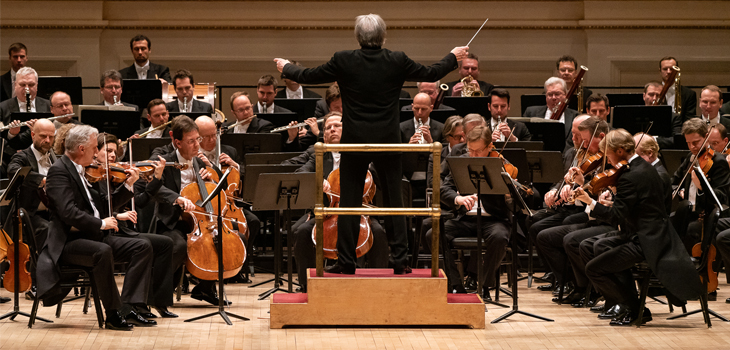
Is your operating room a finely tuned symphony orchestra or a jam session?
Is Your OR an Orchestra or a Jam Session?
7 min read Premium comments
#kneepain#hippain#jointimplant#largejoint
When the jobs of surgery and the people who perform them are well coordinated within a buttoned-down system then the patient—the ultimate focus of the healthcare system—benefits mightily.
And, says Adolph Lombardi, Jr. M.D., president of Joint Implant Surgeons in New Albany, Ohio, so does the system. Dr. Lombardi, an active advocate of efficiency in the OR, is working to streamline the pre-, intra-, and postoperative processes down to the minute.
“Why waste time and effort if things can be made more efficient?” asks Dr. Lombardi, who also operates at Mount Carmel New Albany Surgical Hospital. “My experience in optimizing our time in the OR has led me to believe that we are missing a vast number of opportunities to reduce wasted resources.”
“There is ongoing criticism about the cost of the products used in total joint replacement (TJR). During each such debate people say, ‘Such-and-such and implant shouldn’t cost so much!’”
But, says Dr. Lombardi, this focus is too narrow and bypasses a whole universe of things that are not being discussed.
“We have to examine the overall cost of doing business. If I can safely complete five procedures as opposed to three in the same amount of time, then I am utilizing the same amount of personnel, heat, electricity, etc., and have thus been more productive and more efficient.”
“In studying cost, we need to examine all different parts of the equation. When assessing cost, one must look at the way we practice, especially in larger facilities. You have to step through the day, in essence.”
Number one, says Dr. Lombardi, the surgeon sets the tone and mood with regard to expectations.
“Sit down with the administration and develop a detailed plan as to how you will optimize patient care. What can you do preoperatively to ensure things go smoothly? What can you agree on as far as time of patient arrival? Surgeon arrival? Will you allow fluids up to 4 hours before the procedure? What medications do patients need to halt before surgery? And so on.”
“It is particularly useful to develop educational materials regarding what happens before surgery, the day of surgery, what to expect in the hospital, and what patients need to go home. As for the staff, everyone understands that the goal is to get the patient up and walking the same day.”
A healthy patient with a joint problem…
It’s a triad of care, says Dr. Lombardi, with the hospitalist, orthopedic surgeon, and anesthesiologist coming together to coordinate the procedure. Citing a need for a philosophical shift, Dr. Lombardi notes, “We need everyone on the same page as far as understanding that we are not treating a sick patient, but instead are treating a healthy patient with a joint problem. Our job is to maintain this person’s health status and get him or her moving again.”
To that end, maintaining a positive attitude is critical. “Let’s say that when the patient is brought to the preop holding area the nurse says, ‘This operation involves a lot pain and pain medications and you won’t be able to move around easily for a while.’ That is in stark contrast to a nurse who says, ‘You have a painful hip, but the surgeon can fix it, and we will manage any pain the best we can. You will likely be up and walking later and then go home tomorrow.’ My mantra is that regarding outcomes, it can take one person on the team to knock things out of whack.”
How they do it…
While Dr. Lombardi isn’t standing around with a stopwatch, he is completely aware that every minute counts…and he knows how to count them.
“Diane Doucette, president and COO of our hospital, invented the concept of the time stamp as part of the surgical process. We track what time the patient arrives and every minute after that. If the first case is scheduled for 6:30 and he arrives at that time then it is noted, as is the time that he moves to anesthesia.
The surgeon’s arrival time is noted, the time the patient gets to the OR, etc. This way, we can readily identify where the problem/obstacle is. And if the patient is the problem we have to determine if there was an issue with communication on our end.”
To de-clutter the anesthesia process, Dr. Lombardi arranged for this to start during preop. “The patient is monitored by a nurse and a representative from anesthesia, who can do a block and a spinal at that point. That way, when you roll the patient into the OR there are not five or six people trying to get a spinal into the patient.”
In Dr. Lombardi’s OR, proactivity, as opposed to reactivity, is the order of the day. Such is the case with the preference cards at Mount Carmel New Albany. “If Surgeon X likes osteotome Y…or prefers a certain needle driver, then that is put on Surgeon X’s preference card so whoever is pulling the case for the next day has that information. The cards are very specific, and say, for example, ‘John Doe is undergoing a right TKA with Dr. Lombardi using the Vanguard system.’ And then everything I need is there when I need it.”
Also catering to convenience is the object deemed the “minibar” says Dr. Lombardi. “In the event that a surgeon drops an instrument and the central sterilization department is on another floor, just imagine having to run down to get a rongeur mid-surgery. With the minibar, you can grab a new one and leave a note saying that it was removed so that it gets replaced.”
One way to inject an air of ongoing seriousness into the process is to formalize things with a regular meeting. Dr. Lombardi: “Every month we bring together surgeons, anesthesia staff, someone from medicine, and nursing, to discuss what needs to be changed or even overhauled. This keeps us all on our toes and keeps our processes up to date.”
Enter the efficiency wizard…
One of the participants in the monthly meeting is the aforementioned Diane Doucette, a healthcare veteran who for 25 years had a consulting business comprised of establishing total joint replacement programs.
Doucette, who has built five hospitals centering on efficiency, told OTW, “It is critical to surround yourself with people who can manage the various parts of the process so that the surgery happens—and happens on time. Work with the anesthesiologist to develop a plan of care for preop diagnostic testing so there are no delays on the day of surgery—or cancellations.”
“Sometimes it is the hospitalist or the medical clearance person who will cancel a surgery. Thus, the more people who undergo preadmission testing and the more input you have from those specialized in perioperative medicine, the better. These are the individuals who know how to optimize patients and ensure that they can withstand surgery.”
Invest, standardize, simplify…
“Develop your team to expect excellence. Invest in them—and standardize and simplify all processes. For example, you may have 100 instruments in a hip set, but do you really need all 100 of those instruments? Why make the sterilization department do all that work when it’s not necessary? Another example of efficiency is if you teach your team to properly position, prep, and drape the patient. Then you can go out and communicate with the family, write orders, mark the surgical site, and then walk in and start the case…and you have saved approximately 20 minutes.”
Me? The cog in the wheel?
Diane Doucette: “From the moment patients walks in, every aspect of their journey is catalogued and posted with the time of each event. Each staff member can readily see what time XYZ happened and if we hit our marks along the way. If not, was it the nurse, the surgeon, or the patient who was the hold up? This transparency regarding execution works well because no one wants to be the variance…and nobody thinks they are the variance.”
For a patient facing surgery, nothing is more frustrating than to arrive at the agreed-upon time only to be told to wait. Doucette: “Patients say, ‘I was told to be here at 5AM and now it’s 5:30. Why am I sitting around?”
Not at our hospital, says Doucette. “We tell patients, ‘We’ve been expecting you! You’re having a right total knee with Dr. Lombardi. Come right in.’ All the best companies, from the Ritz Carlton to Disney, know that part of satisfying people involves keeping them moving.”
“In most hospitals the circulating nurse interviews the patient then waits with them and pushes them back to the OR. At our facility the circulating nurse goes out and interviews the patient and says, ‘I am going back to the OR now to help ensure that everything is ready for you.’ It is the anesthesia provider who pushes the patient back to the OR. Patients who receive sedation must be continuously monitored, so this works out well. In addition, the anesthetist has a few extra minutes with the patient to bond and answers any questions that might help put him or her at ease.”
The Circle of Surgery…
“When the case is done, the anesthesia provider and circulator go out and give a short report to the family, then the circulator immediately goes to preop for the next patient. It is essentially a circular process.”
“The anesthesiologist knows when Dr. Lombardi is starting to cement the knee and he calls preop so to start anesthesia for the next patient. At that point you have about 15 more minutes in the OR before the surgeon’s physician assistant (PA) begins final incision closure. During the 15 minutes the PA is closing the incision the doctor is speaking with the patients family to inform them how the surgical procedure went, entering patient orders, dictating the surgical case, and marking the site for another upcoming patient while the staff members are positioning, prepping and draping the next patient who was blocked 20 minutes earlier.”
“We are proud that visiting healthcare teams come from all over the world say, ‘Nobody’s scurrying around here…it’s like a symphony.’ And it all works because everyone knows everyone else’s job, as well as the timing of those roles.”
Diane Doucette: “We tell surgeons, ‘You are the conductor…make it great.’”
Author
React:
Discussion
This is a fascinating development. In my practice we've seen similar outcomes with the revised protocol. The key differentiator seems to be patient selection criteria. Has anyone else noticed the correlation with BMI thresholds?
Great point. I'd push back slightly on the conclusion, the sample size in the cited study is too small to draw population-level inferences. That said, the directional signal is compelling and worth a larger RCT.
We implemented a similar approach last year. Early results are promising but we're still gathering 12-month follow-up data. Happy to share our protocol if anyone is interested.
Join the conversation
Orthopedic professionals are discussing this. Sign in and upgrade to read every comment and add your voice.