
Add low-level, non-opioid laser treatment to the toolbox for treating lower back pain.
FDA Clears Low-Level Laser Device for Lower Back Pain
2 min read Premium comments
Secondary
On June 1, 2019, after less than three months of review, the FDA granted 510(k) clearance to Melbourne, Florida-based Erchonia Corporation’s FX-635 laser system for the “adjunctive use in providing temporary relief of nociceptive musculoskeletal pain.”
The predicate devices were all previously cleared Erchonia laser devices.
22 Clearances for Erchonia
In a July 17, 2019 press release, the company said this is another first for Erchonia, “which started the low-level laser category in January 2002. That year, the FDA issued its first 510(k) market clearance for any low-level laser based on Erchonia’s clinical trial for chronic neck and shoulder pain.” Altogether, the company says it has had 22 FDA 510(k) market clearances based on their patented laser systems.
Low-Level Laser Technology
The device uses low-level laser technology and patented laser diode arms to target lower back pain centers. “It reduces inflammation while promoting bio-stimulation at a cellular level in the musculoskeletal point of the pain’s origination. Unlike other lasers that are too strong and unreliable—and produce unwanted heat—the FX 635 is fully compliant with ISO 13485 Medical Device Quality and IEC 60825-1 Laser Safety,” stated the company press release.
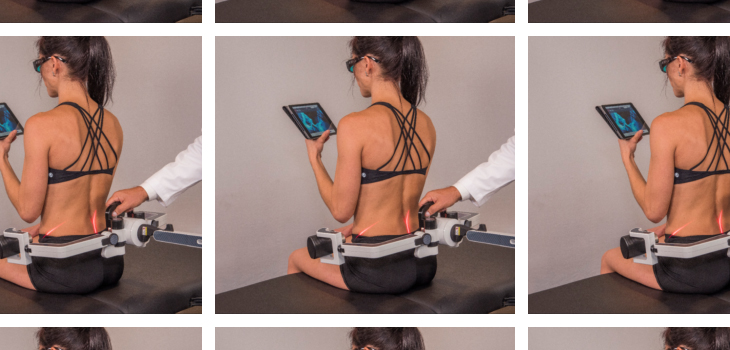
According to the FDA clearance documents, “the device has an adjustable main arm that is attached to the mobile base with the laser head assembly located at the end. The adjustable main arm can collapse into the mobile base for storage and transporting or extends to position the laser heads above the area of involvement.”
“The laser head assembly that is attached to the adjustable main arm that is manually raised and lowered, utilizes internal mechanics that collects the light emitted from each of the three laser diodes. The diodes rotate in a spiraling circle pattern that is totally random and independent of the other diodes.”
“The assembly is positioned 3-4 inches from the patient’s skin to deliver treatment for pain. This assembly can be rotated 120 degrees for proper positioning to patient for accurate treatment.”
Clinical Trial Results
The clearance, according to the company, came after a clinical trial where 72% of patients met a success criteria defined as a minimum of a 30% decrease in chronic low back pain and 35% of patients in the treated group would experience the minimum pain reduction compared to the placebo group.
Better Than Opioids and NSAIDS
The company cited a 2018 study published in JAMA, titled ” Effect of Opioid vs Nonopioid Medications on Pain-Related Function in Patients With Chronic Back Pain or Hip or Knee Osteoarthritis Pain: The Space Randomized Clinical Trial.” The study looked at chronic low back pain with opioids and nonsteroidal anti-inflammatory drugs (NSAIDS) over one year. Opioids demonstrated a 30% reduction in pain and NSAIDS proved a 34.5% reduction in pain.
Steven Shanks, president of Erchonia stated, “We believe we have demonstrated that the use of non-thermal lasers has proven to be a far better option for treating low back pain than that of opioids or nonsteroidal anti-inflammatory drugs.”
Author
React:
Discussion
This is a fascinating development. In my practice we've seen similar outcomes with the revised protocol. The key differentiator seems to be patient selection criteria. Has anyone else noticed the correlation with BMI thresholds?
Great point. I'd push back slightly on the conclusion, the sample size in the cited study is too small to draw population-level inferences. That said, the directional signal is compelling and worth a larger RCT.
We implemented a similar approach last year. Early results are promising but we're still gathering 12-month follow-up data. Happy to share our protocol if anyone is interested.
Join the conversation
Orthopedic professionals are discussing this. Sign in and upgrade to read every comment and add your voice.