
It’s going to get more expensive for medical device companies to navigate through Health Canada’s regulatory agency starting on April 1, 2020. No joke.
Steep Rise in Canadian Device Approval Fees Coming
2 min read Premium comments
Secondary#medicaldevices#fees#healthcanada
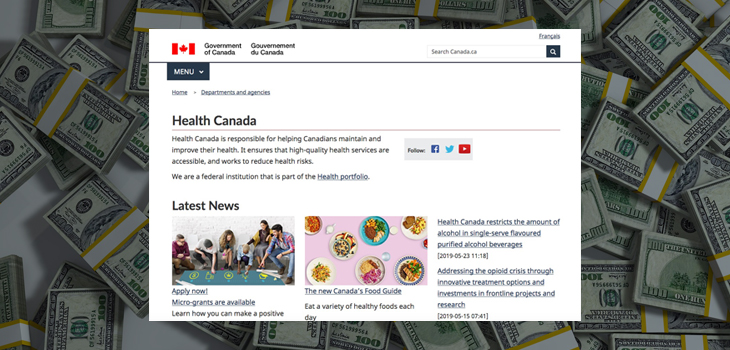
On May 16, 2019, the agency said device sponsors for Class II, III and IV medical device registrants will have to pay 75% of costs for pre-market evaluations, 67% of right to sell applications and 100% for establishment licenses.
Health Canada has not adjusted market authorization fees since 2011.
The new proposed fees would cover 90% to 100% of actual costs and tie annual fee adjustments to the previous year’s Consumer Price Index. Currently, Health Canada recovers 43% of its costs for regulatory activities from industry. The proposal would also give Health Canada the authority to withdraw approval or review of applications if fees are unpaid and sets an annual schedule whereby fees undergo review and adjustment.
Here, according to Emergo by UL, is a sample of the price increases (in Canadian dollars):
- Class II – from $395 to $627
- Class III – from $5,691 to $13,861
- Class IV – from $12,347/$22,560 to $30,063
The agency is also seeking the ability to charge full fees up front before application reviews get underway. Currently, device applicants are allowed to pay 75% of their fees upon submission and then pay the rest when their reviews are concluded. The revised policy would reflect similar approaches by medical device regulators in the U.S., Europe and Australia, stated Health Canada.
Fees for Medical Device Establishments Licenses (MDEL) required for low-risk Class I devices, however, would decrease by nearly half under new pricing, from $8,109 currently to $4,500. Health Canada also plans a small business waiver option for qualifying manufacturers. Any company that has less than 100 employees or between $30,000 and $5 million in annual gross revenues would not have to pay a registration fee larger than $10,000 for its first premarket submission.
Daryl Wisdahl, director of QA/RA of Emergo, said, “Manufacturers are currently seeing substantial increases in fees associated with maintaining their ISO quality management system certifications. The combined impact of the proposed [device] fees and the increased quality system certification fees may lead to some companies opting out of making their devices available for sale in Canada.”
Click here to read Health Canada’s new pricing.
Author
React:
Discussion
This is a fascinating development. In my practice we've seen similar outcomes with the revised protocol. The key differentiator seems to be patient selection criteria. Has anyone else noticed the correlation with BMI thresholds?
Great point. I'd push back slightly on the conclusion, the sample size in the cited study is too small to draw population-level inferences. That said, the directional signal is compelling and worth a larger RCT.
We implemented a similar approach last year. Early results are promising but we're still gathering 12-month follow-up data. Happy to share our protocol if anyone is interested.
Join the conversation
Orthopedic professionals are discussing this. Sign in and upgrade to read every comment and add your voice.