
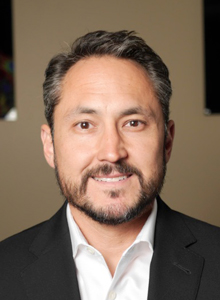
Arizona Business Magazine has selected Robert Kellar, Ph.D., one of 2019’s Healthcare Researchers of the Year. Keller is a researcher and university professor who has been recognized for developing innovative regenerative medicines used by professional athletes and weekend warriors who want to heal faster without surgery or potentially harmful painkillers.
Robert Kellar, Ph.D. Named a 2019 Healthcare Researcher of the Year
1 min read Premium comments
#robertkellar
Kellar has spent nearly 20 years developing, manufacturing, and commercializing medical devices and technologies both as a researcher and professor. He is currently at Northern University Arizona in Flagstaff, serving as an associate professor in the Center for Bioengineering Innovation, co-director of the Bioengineering Ph.D. Program, co-director for the Imaging & Histology Core Facility (IHCF), and an adjunct faculty member in Mechanical Engineering.
Kellar also serves as the chief science officer of Axolotl Biologix, Inc., a regenerative medicine company with liquid and membrane allograft products to help promote repair and regeneration of damaged tissues. Kellar’s team created Axolotl Ambient™, the first commercially available room temperature amniotic tissue derived injectable that is now available through federal agencies such as the Veterans Administration and Indian Health Services.
Kellar told OTW, “I’m deeply honored to have received this award. It is wonderful to know that the research efforts I’m a part of are making a difference and translating to helping people.”
Kerry Zang, D.P.M., Founder of the Arizona Institute of Footcare Physicians, spoke to OTW about why he uses Axolotl shots to treat his patients. He said, “From a patient perspective, it’s much better than a cortisone shot which temporarily masks the pain, but actually promotes the continued degenerative process whereas the Axolotl amniotic fluid initiates a regenerative process that we believe helps to rebuild tissue.”
Dr. Zang continued, “Patients I’ve treated have been relatively active returning to daily activities and recreational activities and do so without covering up symptoms and allowing the condition to continue to degenerate. One of my favorite examples is a gentleman that’s more than 80 years old that could no longer play golf because of the pain, but after receiving his first Axolotl shot a couple of years ago he now walks the course pain-free and is playing again.”
Author
React:
Discussion
This is a fascinating development. In my practice we've seen similar outcomes with the revised protocol. The key differentiator seems to be patient selection criteria. Has anyone else noticed the correlation with BMI thresholds?
Great point. I'd push back slightly on the conclusion, the sample size in the cited study is too small to draw population-level inferences. That said, the directional signal is compelling and worth a larger RCT.
We implemented a similar approach last year. Early results are promising but we're still gathering 12-month follow-up data. Happy to share our protocol if anyone is interested.
Join the conversation
Orthopedic professionals are discussing this. Sign in and upgrade to read every comment and add your voice.