
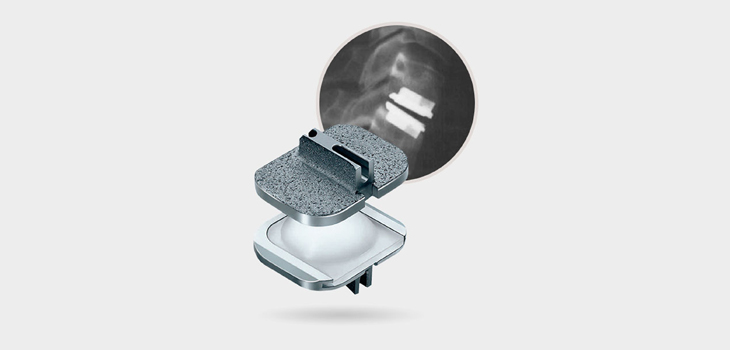
Using a retrospective cohort design, a team from Yale has determined that given the appropriate conditions, outpatient (OP) cervical total disc replacement (CTDR) can be safe.
Outpatient Cervical Disc Replacement Outcome Data
1 min read Premium comments
#totaldiscreplacementSecondary#outpatientcervicaltotaldiscreplacement#tdr
The study, “Safety of Outpatient Single-level Cervical Total Disc Replacement,” appears in the May 1, 2019 issue of Spine.
Patawut Bovonratwet, M.D., an orthopedic surgeon at the Yale School of Medicine and lead author of this study described the genesis of the work to OTW, “While on the spine service, I have seen the number of spine surgeries, including cervical total disc replacements, increasingly performed in an outpatient setting. However, there has been a paucity of studies investigating the safety these outpatient procedures, despite increasing frequency. Due to this lack of data, we decided to perform this study to investigate the complication profiles of outpatient compared to inpatient cervical total disc replacements.”
The team collected data for patients who had single-level cervical total disc arthroplasty and were part of the National Surgical Quality Improvement Program database from 2005 to 2016. Data from a total of 373 outpatient and 1,1612 inpatient procedures was collected by the study authors.
“The most important results of this study were the lack of differences in complication and readmission rates between outpatient and inpatient cervical total disc replacement, Dr. Bovonratwet told OTW.”
“We were somewhat surprised that outpatient cervical total disc replacements did not result in any higher rates of 30-day readmission. This fact further underscores how these types of procedures could reduce costs associated with overnight stays and not result in increased readmission costs.”
“This work provides evidence toward the safety of outpatient cervical total disc replacements performed in cautiously selected patients. These outpatient procedures could be done safely in appropriate patients and have the potential to reduce costs associated with overnight stays.”
Author
React:
Discussion
This is a fascinating development. In my practice we've seen similar outcomes with the revised protocol. The key differentiator seems to be patient selection criteria. Has anyone else noticed the correlation with BMI thresholds?
Great point. I'd push back slightly on the conclusion, the sample size in the cited study is too small to draw population-level inferences. That said, the directional signal is compelling and worth a larger RCT.
We implemented a similar approach last year. Early results are promising but we're still gathering 12-month follow-up data. Happy to share our protocol if anyone is interested.
Join the conversation
Orthopedic professionals are discussing this. Sign in and upgrade to read every comment and add your voice.