
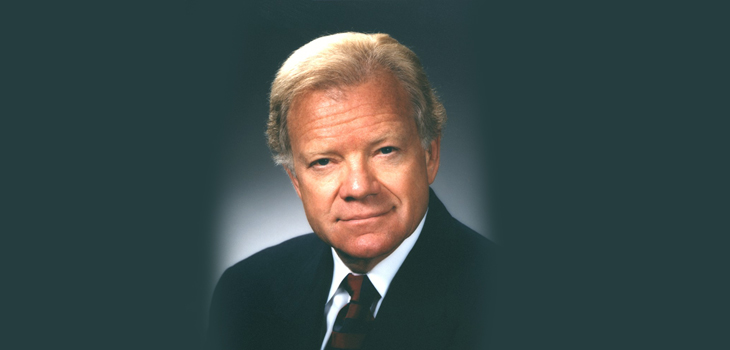
A pioneer in the field of orthopedic surgery, Thomas Mallory, M.D., of Loudonville, Ohio, passed away on May 1, 2019.
Obituary: Thomas Mallory, M.D., Total Hip Replacement Pioneer, Dies at 80
6 min read Premium comments
Remembrances#jointreplacementsurgeon#malloryheadtotalhipsystem#thomasmallory
A lifetime leader in the field, he performed the first U.S. total hip replacement surgery in Columbus, Ohio, in 1971. Dr. Mallory was also responsible for co-creating the innovative Mallory Head Total Hip System, a comprehensive hip prosthetic technology that is now used internationally. He leaves behind a significant body of professional accomplishments and research which have impacted the field of orthopedic surgery on multiple levels.

Education
Dr. Mallory was born on January 10, 1939 in Hillsboro, Ohio. He completed his bachelor’s degree at Miami University in Oxford, Ohio, where he lettered in varsity football during each of those four years.
Dr. Mallory entered medical school at the Ohio State University College of Medicine in 1961. While attending medical school, he met his future wife, Kelly Smith. Dr. Mallory completed both his medical training and orthopedic residency at Ohio State. In addition, Dr. Mallory completed a research fellowship at Tufts University. He was also a hip surgery fellow at Harvard Medical School. He would go on to engage in several decades of clinical practice, research, teaching, training, and study.
Career
Between 1965 and 1974, Mallory served in the 2291st Medical Corps as a Reserve Officer. In 1971, Dr. Mallory performed the first full hip replacement in the United States at the Ohio State University Hospital. The following year, Dr. Mallory founded Joint Implants Surgeons (JIS), a practice specializing in total hip and total knee replacement where he actively practiced medicine for 30 years.
Dr. Mallory had a vision for an efficient and evidence-based surgical practice. His funeral obituary stated that Mallory “envisioned an orthopaedic surgery center that would embody this commitment by continually developing methodologies that allowed for ever-greater efficiencies in both the operating room and post-operative care.” He employed a patient-centered, research-driven team approach to clinical care that was unique in the time he began practicing. Dr. Mallory’s vision for JIS eventually gave life to New Albany Surgical Hospital, a surgery center specializing in orthopedic care.
In addition to writing and contributing to hundreds of publications throughout the course of his clinical career, Dr. Mallory was fascinated with biomedical engineering and co-created a hip prosthesis. Along with Ohio State University professorial colleague Dr. William C. Head, he designed the Mallory-Head Hip Implant System. Marketed by Biomet in 1984, the cementless prosthesis became rapidly employed worldwide as a technology that leaves hip replacement patients with less chronic pain.
Dr. Mallory founded the Department of Orthopaedics at Ohio State University College of Medicine. He filled the role of initial chair and was later Emeritus Chairman of this department. During his term as active Chairman, he was at the helm of efforts to procure the present Ohio State University Wexner Medical Center East.
Personal Life
Dr. Mallory’s humanistic approach to medicine was partly informed by his deep spiritual convictions. He was a practicing Christian, could quote scripture freely, and reportedly drew upon his faith for inspiration. Dr. Mallory was also a great reader of British literature and loved the writings of Sir Winston Churchill. He loved travel and remained a curious student and critical thinker throughout his retirement years.
In addition to his extensive body of professional research publications, in 2007, Dr. Mallory published a professional memoir, The Man Behind the Mask. In this memoir, he described his work in introducing full hip replacement surgery policies and his innovative advocacy for modularity techniques which allowed surgeons to customize prostheses to patient joints during surgery. He also wrote of his belief in the importance of the therapeutic relationship between doctor and patient.
In 2001, Dr. Mallory was diagnosed with Parkinson’s disease, which forced him into early retirement. He continued to apply his sharp intellect and critical thinking skills to the exploration of his illness. After empirical observation of his improvement through the benefits of diet and exercise, Mallory employed colleague support in the development of a new exercise treatment for delaying the Parkinson’s symptom progression. This regimen, called “Delay the Disease,” is now utilized at OhioHealth and various international treatment centers.
Dr. Mallory, consistent with his professional spirit of vibrant energy and positive attitude, also began painting during his retirement as a way of coping with missing his passion for surgical procedure. He stated, “My discovery of painting has given me a true release from the role of surgeon in which I had been so utterly absorbed for so many years.” Dr. Mallory enjoyed this new passion alongside his beloved wife, a visual artist herself.
Legacy
Dr. Mallory is survived by his wife Kelly; his sons, Scott, Thomas Jr. and Christian; their wives Christine, Katharine, and Tonya; his grandchildren Isaac, Noah, Thomas III, Peter, Caroline, Graham, Noel, and Philip; and his great grandchildren Larissa, Alexa, and Hendrix, in addition to his brother Dr. David Mallory; his sisters-in-law Mary Jane and Eleanor Mallory; along with his nieces and nephews.
Besides his beloved family, Dr. Mallory leaves behind a rich professional legacy including his establishment of full hip replacement surgical procedure, the Joint Implants Surgeons practice, the Department of Orthopedic Surgery at the Ohio State University School of Medicine, the Mallory-Head Total Hip System, the Delay the Disease regimen, his hundreds of professional publications, his personal memoir and the Mallory-Wilson Center for Healthcare and Education, which Dr. and Mrs. Mallory gifted to Miami University in 1994.
Impact on Other Surgeons
Dr. Mallory’s eulogy was given by his dear friend and colleague Adolph Lombardi, Jr., M.D. Dr. Lombardi described Dr. Mallory as a charismatic man and an enthusiastic lifelong learner. He recalled that Dr. Mallory recommended that those in the field “read one new article every day” and “always seek to expand your knowledge base. Always seek to be better than you are today.”
Dr. Lombardi described meeting Mallory at an American Academy of Orthopaedic Surgeons continuing education conference in 1983, stating he was “in awe of this vibrant, energetic, captivating, and charismatic professor.” Dr. Lombardi remembered his excitement at later on being asked to join Mallory’s practice, and painted his mentor as a motivator and leader, always enthusiastic and energetic:
“I lived 15 minutes away, he lived an hour and a half away, and he was there 20 minutes before everyone else arrived. At 4:45 AM, he was there, ready to go, charged up. Do you think he was a lounge lizard? He never sat in the lounge. He never drank coffee between cases. He was always in the operating room, he was always ready to go, he was always motivating and inspiring. We could mop the floors, we could move the patient, we could change the bed, because we had the ticket. We had a license to practice medicine, we had a license to do the surgery, and if we were ready to go, the team was moving forward. This is what he taught us from day one. It was always, ‘proceed with vigor, enthusiasm, and a sense of optimism.’ That was the motto of the day from when we started to when we finished, only to repeat itself the next day.”
Keith Berend, M.D., another of Dr. Mallory’s esteemed colleagues at JIS said of Dr. Mallory:
“When I joined Joint Implant Surgeons JIS in 2002, Dr. Mallory had retired from operating. However, his mentorship and guidance was invaluable early in my career and continues to be so. He taught me the three most important pillars of a successful practice. These were education and training the future surgeons, research, and patient care. These three pillars of practice continue to be the foundation by which JIS orthopedics remain successful in my own practice I’m able to remain relevant. It is with sincere gratitude that I had the honor to have worked with Dr. Mallory and have him mentor me early in my career.”
Author
React:
Discussion
This is a fascinating development. In my practice we've seen similar outcomes with the revised protocol. The key differentiator seems to be patient selection criteria. Has anyone else noticed the correlation with BMI thresholds?
Great point. I'd push back slightly on the conclusion, the sample size in the cited study is too small to draw population-level inferences. That said, the directional signal is compelling and worth a larger RCT.
We implemented a similar approach last year. Early results are promising but we're still gathering 12-month follow-up data. Happy to share our protocol if anyone is interested.
Join the conversation
Orthopedic professionals are discussing this. Sign in and upgrade to read every comment and add your voice.