
Alejandro Della Valle, M.D., attending orthopedic surgeon at Hospital for Special Surgery (HSS) and a professor of Clinical Orthopedic Surgery at Weill Cornell Medical College in New York lead a team to review the safety and efficacy of multimodal thromboprophylaxis (MMP) in patients with a history of venous thromboembolism (VTE) undergoing total hip arthroplasty (THA).
HSS Team Digs Into Likelihood of VTE Before TJA
3 min read Premium comments
#totalhiparthroplasty#venousthromboembolismSecondary#multimodelthromboembolism
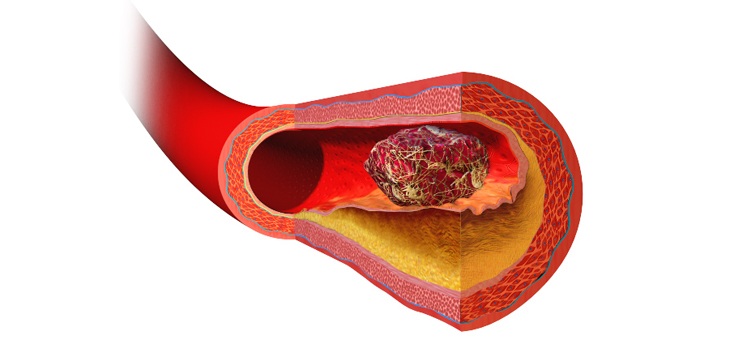
Dr. Della Valle, who cautions that these are ongoing investigations, told OTW, “Patients who undergo hip replacement are at a higher risk of experiencing a blood clot in their legs—deep vein thrombosis (DVT), or in the lungs—pulmonary embolism (PE).”
“The rates of DVT and PE have declined over the decades, reflecting improvements in medical care, a better understanding the pathogenesis and risk factors for DVT an PE, and the perfecting of prophylaxis. Most patients who are healthy and undergo hip replacement today have a low risk of DVT or PE and consequently receive aspirin for prophylaxis instead of potent anticoagulants.”
“Some patients however, come to see us for surgery and have a history of a prior PE or DVT. They are at a higher risk of a new postoperative blood clot, and consequently we prescribe a potent anticoagulant for six weeks. A DVT in and of itself is less of a threat than a PE as the latter can be fatal.”
“Decades ago, from the 1960s to the 1980s, pulmonary emboli were a big problem and the most frequent cause of death after hip replacement surgery. With advancements in prevention, diagnosis and treatment of PE, we know that today, the mortality is low. In fact, the majority of deaths are caused by a heart attack and not by a PE.”
“In this study we are looking at a consecutive group of patients with a history of DVT or PE before undergoing primary hip replacement. We gave them an anticoagulant after surgery and set out to determine the risk of a new PE, DVT, a bleed, or dying during the first year after surgery.
“We found that the likelihood of developing a new DVT or PE was quite low, which supports the way we prevent DVT and PE at the present time. While only 2.5% of patients developed a new DVT or PE, a number of them did have bleeds. Most interesting is that we were able to capture all patients who died during the first year—7 out of 277 individuals—with only one dying of a confirmed PE.”
“While recognized risk factors for PE include morbid obesity and active cancer, the most recognizable risk factor is a prior history of DVT or PE. However, the decision to anticoagulate a patient after surgery is sometimes complex, as some have hidden risk factors for VTE that remain unknown unless they can be tested. There are patients who carry gene mutations that predispose them to DVT or PE. Interestingly, these are the same gene mutations that predispose women to having recurrent inexplicable miscarriages. Since genetic testing is not cost effective, it cannot be offered to all patients.”
“The most important lesson from our work is that you have to ask all patients if they have a personal history of thromboembolic disease, how they developed the PE or DVT (was it associated with other diseases or did it arise spontaneously, the latter of which raises concern for the underlying presence of a genetic predisposition). Have that conversation with patients…ask if anyone in the family has had a DVT or PE and ask if they have a female relative who has had recurrent inexplicable miscarriages.”
“We hope to finish with this ongoing investigation which will be followed by a similar one focused on patients who need a total knee arthroplasty (TKA).”
Author
React:
Discussion
This is a fascinating development. In my practice we've seen similar outcomes with the revised protocol. The key differentiator seems to be patient selection criteria. Has anyone else noticed the correlation with BMI thresholds?
Great point. I'd push back slightly on the conclusion, the sample size in the cited study is too small to draw population-level inferences. That said, the directional signal is compelling and worth a larger RCT.
We implemented a similar approach last year. Early results are promising but we're still gathering 12-month follow-up data. Happy to share our protocol if anyone is interested.
Join the conversation
Orthopedic professionals are discussing this. Sign in and upgrade to read every comment and add your voice.