
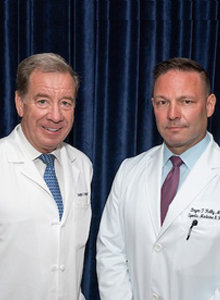
Hospital for Special Surgery (HSS) in New York City recently announced the creation of an Office of Medical Leadership which will focus on three areas: patient care, research and education. The office, headed by Bryan T. Kelly, M.D., surgeon-in-chief and medical director, will be responsible for making sure the highest standards are consistently met.
Hospital for Special Surgery Creates Office of Medical Leadership
2 min read Premium comments
#hospitalforspecialsurgery
In addition, Douglas Padgett, M.D., has been asked to serve as inaugural associate surgeon-in-chief and deputy medical director. Mathias Bostrom, M.D., will take over for Padgett as chief of adult reconstruction and joint replacement service. Both will begin their new roles on July 1.
“HSS has earned the privilege and responsibility of making the highest quality musculoskeletal healthcare more widely available to people from all walks of life and all corners of the globe,” said Louis A. Shapiro, president and CEO.
“Formation of the HSS Office of Medical Leadership, and Dr. Padgett’s appointment to join Dr. Kelly there, is the culmination of careful planning to equip HSS to further advance quality, value and impact.”
Also on July 1, Kelly will begin his responsibilities as surgeon-in-chief and medical director. Todd J. Albert, M.D., who currently holds the position, as surgeon-in-chief emeritus will still continue his spine surgical practice at HSS.
Kelly said, “HSS is at the forefront of driving high quality patient care and outstanding surgical outcomes primarily because of the unparalleled expertise, insight and experience of its medical staff. Dr. Padgett’s extensive experience and proven leadership will be valuable assets in this newly established role. I look forward to working with him closely to help advance HSS leadership.”
Kelly and Padgett will be exploring new initiatives to encourage better injury prevention and enhance non-surgical and surgical care.
“I am immensely excited about this opportunity to build on the strong foundation that currently exists,” Padgett added. “HSS has a long-standing commitment to excellence and I’m honored to work with all the outstanding and talented physicians and colleagues to advance our history of delivering excellent patient care and service.”
Bostrom brings to his new role as chief of Adult Reconstruction and Joint Replacement Service his experience as director of HSS Education and Academic Affairs and chief of the HSS Hip Service, which he has held since 2003 and 2014, respectively.
“HSS is an academic medical center committed to training future generations of orthopedic surgeons,” Padgett said.
“Our patients are able to benefit from our experience with the most complex cases, the latest treatment options and the newest technologies and most importantly, a strong team of clinicians. Dr. Bostrom is well suited to lead our service as we continue to provide superior outcomes to our patients.”
Author
React:
Discussion
This is a fascinating development. In my practice we've seen similar outcomes with the revised protocol. The key differentiator seems to be patient selection criteria. Has anyone else noticed the correlation with BMI thresholds?
Great point. I'd push back slightly on the conclusion, the sample size in the cited study is too small to draw population-level inferences. That said, the directional signal is compelling and worth a larger RCT.
We implemented a similar approach last year. Early results are promising but we're still gathering 12-month follow-up data. Happy to share our protocol if anyone is interested.
Join the conversation
Orthopedic professionals are discussing this. Sign in and upgrade to read every comment and add your voice.