
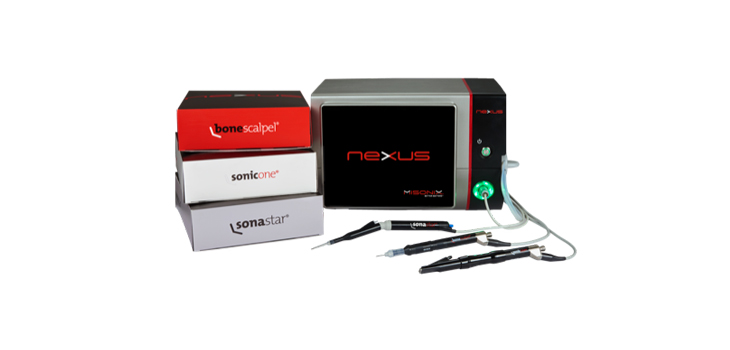
Misonix, Inc. calls its newly FDA 510(k) cleared neXus® Ultrasonic Surgical Aspirator System a “revolutionary” and “transformational” product.
FDA Clears Misonix 3-in-1 Aspirator System
2 min read Premium comments
#spinesurgerySecondary#woundcare#fdaclearance#aspirators
For the first time, the Nexus platform integrates the company’s three handheld BoneScalpel, SonicOne and Sonastar devices into one platform.
According to the company, BoneScalpel is “a precision, oscillating tool designed for millimeter-wide cuts in bone while sparing the surrounding soft tissue. …its SonicOne attachment provides a debridement tool for cleaning wounds and removing damaged tissue or bacterial biofilms during surgery.”
“The SonaStar ultrasonic aspirator is used to remove more-targeted tissues, such as tumors. It also includes bone-sculpting tips and a range of deep-access and laparoscopic probes.”
All three devices, according to FDA documents are indicated, among others, for general, orthopedic and neurosurgeries. The FDA clearance documents state the system is intended “for the fragmentation, emulsification and aspiration of both soft and hard (i.e. bone) tissue.”
Nexus Platform
In a June 3, 2019 press release, the company says the Nexus platform is driven by a new proprietary digital algorithm that results in more power, efficiency and control. “Nexus uniquely incorporates RF capabilities, allowing for use in general surgery procedures. The device also incorporates Smart Technology that allows for easier setup and use.”
The system includes a generator housed inside the console. A reusable handpiece is plugged directly into the front panel of the console.
The generator and handpiece, according to FDA documents, “are compatible with various single use disposable “probes” which are selected and attached to the handpiece by the end user. An irrigation unit provides sterile irrigant to the operative site. An aspiration system removes the fragmented, emulsified material and waste liquids from the operative site. Accessories include a wireless footswitch, various probe tip combinations, sterilization trays, probe covers, assembly & disassembly wrenches, irrigation & aspiration tubing sets, and waste collection canisters.”
“Robust” Consignment Business Model
Company president and CEO Stavros Vizirgianakis said feedback from the surgeon community, “reinforces our confidence in its potential to serve as a significant growth engine for Misonix. Nexus is a key component of our strategy to increase our presence in the neuro, spine, ortho, wound and general surgery markets. Nexus provides us with a unique opportunity to leverage our robust consignment business model, further drive the sale of consumables competitively, and extend our ability to cross-sell into multiple physician specialties.”
“The commercialization of Nexus will expand the utilization of ultrasonic surgical applications as we continue to strategically invest in our products to become the standard of care in operating rooms and hospital outpatient departments.”
The FDA took about four months to provide clearance. The company plans to commercialization the device in the U.S. in July.
Author
React:
Discussion
This is a fascinating development. In my practice we've seen similar outcomes with the revised protocol. The key differentiator seems to be patient selection criteria. Has anyone else noticed the correlation with BMI thresholds?
Great point. I'd push back slightly on the conclusion, the sample size in the cited study is too small to draw population-level inferences. That said, the directional signal is compelling and worth a larger RCT.
We implemented a similar approach last year. Early results are promising but we're still gathering 12-month follow-up data. Happy to share our protocol if anyone is interested.
Join the conversation
Orthopedic professionals are discussing this. Sign in and upgrade to read every comment and add your voice.