
Add another expandable spacer to spine surgeons’ armamentarium with the FDA’s 510(k) clearance of Life Spine, Inc’s PROLIFT® Lateral Expandable Spacer System.
FDA Clears Life Spine’s Expandable Spacer System
2 min read Premium comments
#fda510kclearance#backpainSecondary#fusion#expandablespacers
The June 18, 2019 announcement by the company stated that the agency took about two months to clear the system.

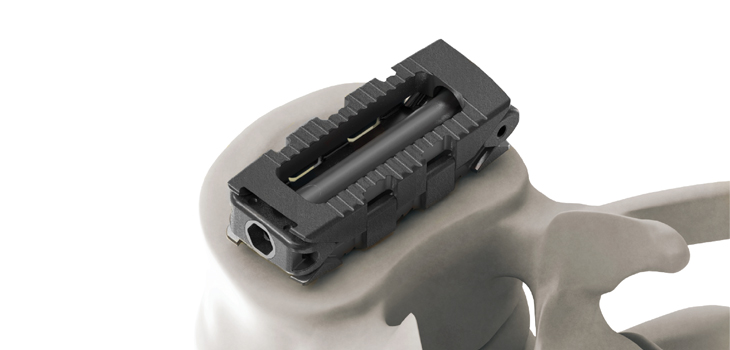
In a summary document submitted to the FDA, the company says the system is available in a range of sizes and footprints and can expand to the desired height (8mm to 20mm) to suit the individual pathology and anatomical conditions of the patient.
“It is fabricated and manufactured from titanium alloy (Ti-6Al-4V ELI) as described by ASTM F136. The implant allows packing autograft bone graft and/or allogeneic bone graft composed of cancellous and/or corticocancellous bone to help promote fusion. The superior and inferior surfaces have teeth to assist in the interface with the vertebral bodies to prevent rotation and/or migration.”
The implants are provided sterile and intended only for single use and should not be reused under any circumstances.
Indications for Use
According to the FDA documents, when used as an interbody fusion device, system is intended “for spinal fusion procedures in skeletally mature patients with degenerative disc disease (DDD) at one or two contiguous levels (L2-S1). DDD patients may also have up to Grade 1 spondylolisthesis at the involved level(s).”
In its clearance document, the FDA said that the system is to be used in patients who have had at least six months of non-operative treatment. “Patients with previous non-fusion spinal surgery at involved level(s) may be treated with the device. This device is intended to be used with autograft bone graft and/or allogeneic bone graft composed of cancellous and/or corticocancellous bone and a supplemental internal spinal fixation system (e.g., pedicle screw or anterolateral plating system) that is cleared for use in the lumbosacral spine.”
The company stated the minimal insertion height and controlled in situ expansion are critical components in a MIS Expandable Lateral Interbody Fusion. The system is complemented by Life Spine’s full lateral portfolio which consists of the CENTRIC® Retractor, Lateral Disc Prep, OSTEO-LINE® Graft Delivery Device, Neuromonitoring Instruments, LONGBOW® Expandable Spacer System and the SENTRY® Lateral Plating Systems.
The Huntley, Illinois-based company’s COO Rich Mueller noted the system uses the company’s proprietary OSSEO-LOC™ surface technology.
Author
React:
Discussion
This is a fascinating development. In my practice we've seen similar outcomes with the revised protocol. The key differentiator seems to be patient selection criteria. Has anyone else noticed the correlation with BMI thresholds?
Great point. I'd push back slightly on the conclusion, the sample size in the cited study is too small to draw population-level inferences. That said, the directional signal is compelling and worth a larger RCT.
We implemented a similar approach last year. Early results are promising but we're still gathering 12-month follow-up data. Happy to share our protocol if anyone is interested.
Join the conversation
Orthopedic professionals are discussing this. Sign in and upgrade to read every comment and add your voice.