
A stadium filled with fans wearing their favorite team’s jersey chanting players’ names, athletes anxiously waiting in the shadows to get on the floor to show off their carefully honed skills and stamina. This may sound like your typical athletic event, but it is actually the scene at an esports tournament where teams compete against each other in games like Call of Duty, League of Legends & Dota (Defense of the Ancients).
Esports: The Sports Injury Profile of a Gamer
6 min read Premium comments
#esports#esportsathletes#injuryprofile
Even traditional sports leagues see the potential with esports. The NBA sponsors its NBA 2K League and the NFL the Madden Club Championship Major Series. And Major League Baseball is considering getting on the bandwagon too.
While esports is still a relatively new area of sports and sports medicine, it might surprise you to know that competitive video games have actually been around for over 30 years.
History of Esports
The first esport competition dates back to October 19, 1972, when more than 20 students gathered at Stanford University’s Artificial Intelligence Laboratory to compete at Spacewar, the first science fiction themed videogame where spaceship captains battle it out for ultimate domination.
Many people, however, consider 1980 as the year of the first video game tournament when Atari held a Space Invaders competition with about 10,000 players across multiple cities.
In the 1980s, companies like Twin Galaxies began recording and publicizing high scores of popular video games. In the ’90s, with the dawn of the Internet age, online games where players can compete with each other became popular. And video game companies like Nintendo began sponsoring championships for video games.
Then in the 2000s, international competitions began cropping up like the Electronic Sports World Cup and Major League Gaming with bigger and bigger pots of money on the line.
Since then, professional gaming has increased exponentially and in the United States, professional gamers can now get a P-1 visa just like other athletes and compete on esports teams as student-athletes for their college or university. The Peach Belt Conference is the first NCAA conference to sponsor esports.
Esports Injuries Are Significant
As professional gamers start to face possible career-ending injuries because of the physical and mental intensity expended in both scrimmages and competitions, orthopedic and sports medicine doctors are seeing the growing need for specialized care for these athletes.
These athletes have their own unique injury profile that is important to understand.
Professional gamers perform approximately 500 to 600 actions per minute both during competitions and training which can put a lot of pressure on their hands, wrist and arms. If they use a controller while they play, they are also more prone to “gamer’s thumb,” an overuse condition also known as de Quervain’s Tenosynovitis which is the inflammation of the tendons that move the thumb.
Then there is the sedentary nature of the sport. Sitting for prolonged periods of time can lead to poor posture, obesity, and both neck and back pain.
…and Growing Rapidly
As more and more high intensity gamers present themselves to orthopedic clinics for treatment, physicians are simultaneously looking for esports injury risk profiles in order to drive prevention and treatment. Like all athletes, a gamer’s career can be cut short if he or she doesn’t properly take care of him or herself.
A study led by the German Sports University located in Cologne, Germany, found that the pressures esports athletes are under are not so different from traditional athlete pressures. All athletes rely on quick reflexes, a strong stamina and a strategic mind. The researchers found that the typical gaming athlete can only play until their mid-20s because of slower reflexes.
Another study published in the British Medical Journal in 2019 found that overuse injuries were just as much a concern among esport athletes as traditional athletes, and that there is not enough attention on physical exercise.
To better understand the needs of esports athletes, many medical institutions are opening esports medicine centers. The New York Institute of Technology College of Osteopathic Medicine now has a Center for eSports Medicine and Ohio State University recently launched an esport program that allows students to study everything from esports management, design and programming to health and rehabilitation.
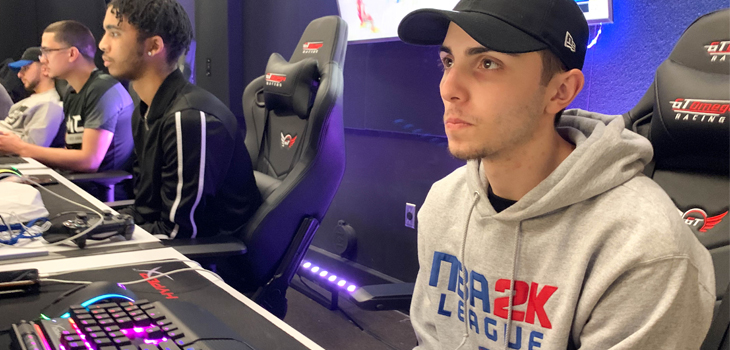
Orlando Health’s recent partnership with Magic Gaming, Orlando Magic’s professional esports team, also highlights the need for understanding the gamer’s injury profile better. Magic Gaming plays in the NBA 2K League whose season is currently underway.
“We are excited to partner with Orlando Health in their shared commitment to ensuring the health and well-being of our athletes,” said Director of Magic Gaming Ryan DeVos in a press release announcing the partnership.
Orlando Health is now responsible for all the medical care of the Magic Gaming players including overall physical and mental health evaluations and care during the season and playoffs.
“We’re very excited about this partnership and what it means for us as an organization and the diverse and rapidly growing community of gamers all over the world who are fans and participants in esports,” said Andy Gardiner, senior vice president of external affairs and community relations at Orlando Health in the same press release.
“This is a global stage for the Orlando Health brand and an opportunity to showcase our medical team’s ability to provide the unique care these athletes require to ensure Magic Gamine can compete and win at the highest level.”
Two Esports Physicians on the Front Lines
Magic Gaming is one of 21 U.S. teams competing in the NBA 2K League in which teams compete against each other as unique characters in 5-on-5 play during regular-season games, tournaments and playoffs.
Todd Sontag, DO, a physician at Orlando Health working closely with Magic Gaming told OTW, “These young men and women are true athletes. It takes incredible skill to play at their level and a lot of endurance to maintain their grueling training schedule.
“With any emerging sport, medicine has to evolve along with it. We are developing tailored care for esports athletes, from injury prevention to mental health counseling.”
Sontag explained to OTW that esports athletes are prone to some of the same musculoskeletal injuries that traditional athletes are, like tendonitis and back, neck and shoulder pain caused by a weak core and repetitive movements, but also to injuries more specific to gaming like carpal tunnel syndrome and eye strain.
He explained that they spend a lot of time sitting, almost 8 to 10 hours at a time, not just for competitions, but while training as well. Because of the sedentary nature of a gamer’s life, it is really important they incorporate healthy eating and exercise into their lives and training as well.
“Every sport starts with brain and for esports, good eye-hand coordination, good reflexes and strong mental health are needed. When you sit and watch them, their good reflexes are impressive,” he said. “And without them, they can’t be competitive.”
Levi Harrison, M.D., an orthopedic surgeon in Los Angeles, California, who specializes in esports medicine chimed in, “The injury profile of competitive gamers is very diverse. The injuries vary for different types of games. Computer/keyboard-based games, game console and VR game players all develop specific injuries based on multiple criterion.”
“One of the most significant issues in treating this demographic of patients is getting them to moderate the amount of gaming hours when they are injured or recovering from an injury.”
He added, “I recommend unique and specific individual hand/wrist/forearm exercise programs for each individual player along with him or her using exercises devices that I have invented patented. I also give them a specific diet, meditation and fitness/exercise routine to follow daily.
“And remind them to avoid smoking, alcohol, drugs, caffeine and sugar. They are also are given access to call me when they are in severe stress or crisis mode or feeling suicidal. I am always available to them.”
Orthopedic doctors like Sontag and Harrison also emphasize with their esports athletes the importance of stretching before every practice and competition and the need for ergonomically sound gaming station, including mouse, keyboard and chair. Experts recommend that a gaming chair should have armrests and back support for more comfort. Lumbar support is also important to keep pressure off joints and tendons.
Despite the advancements made so far in understanding the injury risk profile of a gamer, there are still a lot of unknowns.
Sontag said, “Esports is still in its infancy so the medicine with it is still evolving. There are probably things we can’t anticipate, but we are constantly adapting.”
Author
React:
Discussion
This is a fascinating development. In my practice we've seen similar outcomes with the revised protocol. The key differentiator seems to be patient selection criteria. Has anyone else noticed the correlation with BMI thresholds?
Great point. I'd push back slightly on the conclusion, the sample size in the cited study is too small to draw population-level inferences. That said, the directional signal is compelling and worth a larger RCT.
We implemented a similar approach last year. Early results are promising but we're still gathering 12-month follow-up data. Happy to share our protocol if anyone is interested.
Join the conversation
Orthopedic professionals are discussing this. Sign in and upgrade to read every comment and add your voice.