
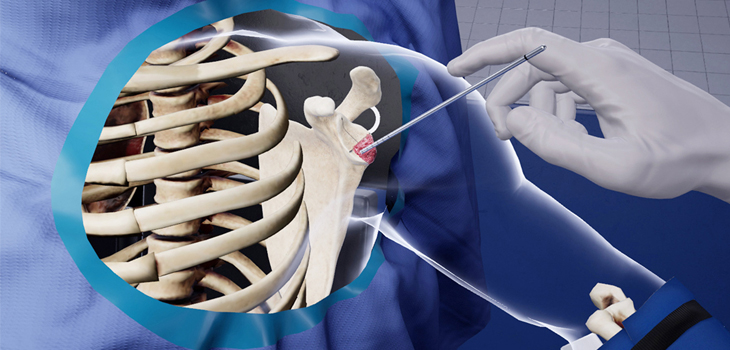
Vancouver, Canada-based Precision OS has announced that 10 of the most well-known North American universities and medical institutions have signed up to provide surgical residents with high-fidelity virtual reality (VR) orthopedic surgery training systems.
10 Top Hospitals Sign up for Virtual Reality Training
2 min read Premium comments
Secondary#surgicaltraining#precisionos
“Virtual reality has the potential to positively impact and advance the way surgery residents are trained by offering more frequent and in-depth operating room experience…” said Dr. Joaquin Sanchez-Sotelo, professor in the Department of Orthopedic Surgery at the Mayo Clinic
According to Precision OS, “Residents can practice a procedure under a variety of changing conditions, to ensure they are prepared with the skills needed to navigate potential complications in real surgery. Conditions such as arthritis and age can change the standard of procedure for surgeries involving implants. While it is not a guarantee that a resident will be exposed to such surgical experiences in a traditional training program, with VR it is.”
Precision OS will be used for orthopedic surgery training at:
- The Mayo Clinic
- The University of British Columbia
- The Sunnybrook Hospital at the University of Toronto
- The Pan Am Clinic Foundation
- Western University
- McGill University
- Dalhousie University
- The Boston Shoulder Institute
- The University of Mississippi Medical Center
Precision OS is also collaborating with John Costouros, M.D., an orthopedic surgeon and assistant professor at Stanford University, to trial virtual reality in training soon-to-be graduating surgeons.
“…Virtual reality offers an impactful way to create value by improving surgical skill and reducing errors. Precision OS will deliver value to all stakeholders in healthcare: educators, industry, hospitals, insurers, and patients. The timing of such a technology could not be more perfect!” said Dr. Jon J.P. Warner, founder of the Boston Shoulder Institute, New England Shoulder and Elbow Society, The Codman Shoulder Society, and a past president of American Shoulder and Elbow Surgeons
According to Precision OS, “…The virtual patient is responsive to successes and errors in a procedure, thereby allowing trainees to learn from their mistakes…During and following a procedure, residents are provided with detailed performance metrics so they can assess their surgical skills in real-time and identify areas of improvement. This immediate feedback facilitates tangible performance improvements and increases surgical precision quickly.”
Asked about the learning curve, Dr. Warner told OTW, “Immersive VR offered by Precision OS offers residents the opportunity to train in an environment that potentially shortens their learning curve for decision-making and component placement in arthroplasty. Moreover, this comes without cost of expensive cadaver labs. This VR environment simulates surgery in a fashion similar to what pilots experience with flight simulation. It would be hard not to imagine that this reduces errors and improves outcomes.”
“The ability to select a device and use instruments to place the device and to simultaneously receive feedback on position of an implant, will give young surgeons experience that would otherwise take many years of surgery to gain.”
Author
React:
Discussion
This is a fascinating development. In my practice we've seen similar outcomes with the revised protocol. The key differentiator seems to be patient selection criteria. Has anyone else noticed the correlation with BMI thresholds?
Great point. I'd push back slightly on the conclusion, the sample size in the cited study is too small to draw population-level inferences. That said, the directional signal is compelling and worth a larger RCT.
We implemented a similar approach last year. Early results are promising but we're still gathering 12-month follow-up data. Happy to share our protocol if anyone is interested.
Join the conversation
Orthopedic professionals are discussing this. Sign in and upgrade to read every comment and add your voice.