
Researchers from the University of California, San Francisco (UCSF) have been homing in on the role of nutrient supply in the cartilage endplate (CEP) and the use of biologic therapy as a way to address and treat disc degeneration in the spine.
Nutrients Define Spine Disc Health: New Data
2 min read Premium comments
Secondary#discdegeneration#cartilageendplate#nucieuspulposus
The study, “Nutrient supply and nucleus pulposus cell function: effects of the transport properties of the cartilage endplate and potential implications for intradiscal biologic therapy,” appears in the February 2, 2019 edition of Osteoarthritis and Cartilage.
Co-author Aaron J. Fields, Ph.D., assistant professor in the UCSF Department of Orthopaedic Surgery, explained the rationale behind his interest in this area to OTW, “Biologic therapy is a promising strategy for disc regeneration. However, despite the success of cell-based and growth factor-based therapies in preclinical models, translation to humans has shown mixed results.”
“One potentially important difference between preclinical models and the human condition is nutrient supply. Whereas the discs in common preclinical models, e.g. rodents and rabbits, are small and therefore relatively well-nourished, human lumbar discs are large and disc nutrition may be poor.”
“A broad goal of our research is to identify factors (beyond their large size, of course) that might influence nutrient transport to the disc cells. In this study, we aimed to determine how physiologic fluctuations in the transport properties of the cartilage endplate influence nucleus pulposus (NP) cell survival and function.”
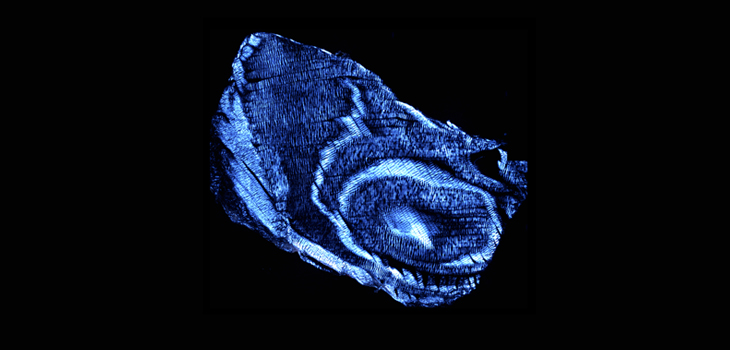
To tease out information about the role of nutrient supply and disc health, the authors harvested human cartilage endplate tissues from six fresh cadaveric lumbar spines (38–66 years old) and placed them at the open sides of diffusion chambers. They then cultured bovine nucleus pulposus (NP) cells inside the chambers and nourished them exclusively with nutrients diffusing through the cartilage endplate tissues.
After 72 hours in culture, the researchers measured depth-dependent NP cell viability and gene expression. They then used fluorescence recovery after photobleaching, and Fourier transform infrared spectroscopy to relate the cartilage endplate transport properties and biochemical composition.
Dr. Fields described what he learned to OTW, “We found that cartilage endplate transport properties had dramatic effects on cell survival: the cartilage endplates that permitted the least diffusive transport caused reductions in nutrient supply that shortened the viable distance by up to 51% inside diffusion chambers with a fixed density of NP cells. Importantly, cartilage endplate transport properties played a key role in the reduction in cell viability that occurred when we increased chamber cell density.”
“Specifically, for cartilage endplates with low diffusive transport, viable distance was insensitive to a doubling of the cell density, which suggests that those cartilage endplates may not allow adequate nutrient diffusion to satisfy cellular demands. We also identified several deficits in the composition of the cartilage endplate matrix that associated with poor nutrient diffusion, including greater amounts of collagen and aggrecan, more mineral, and lower cross-link maturity.”
“An unresolved question about the development of biologic therapy is, ‘Who is the right patient?’ Although we don’t have a definitive answer yet, these findings do underscore the potential importance of deficits in CEP transport properties, which could hinder the success of biologic therapies that require increased nutrient supply.”
“There’s a great deal of exciting work to develop biologic therapies for the disc. To that end, I hope this work will motivate consideration of disc nutrient supply and the role of the transport properties of the cartilage endplate.”
Author
React:
Discussion
This is a fascinating development. In my practice we've seen similar outcomes with the revised protocol. The key differentiator seems to be patient selection criteria. Has anyone else noticed the correlation with BMI thresholds?
Great point. I'd push back slightly on the conclusion, the sample size in the cited study is too small to draw population-level inferences. That said, the directional signal is compelling and worth a larger RCT.
We implemented a similar approach last year. Early results are promising but we're still gathering 12-month follow-up data. Happy to share our protocol if anyone is interested.
Join the conversation
Orthopedic professionals are discussing this. Sign in and upgrade to read every comment and add your voice.