
The FDA has approved a diagnostic tool to help determine whether swelling around a joint replacement is being caused by an infection. And hence, whether or not to proceed with a revision surgery.
Joint Replacement Infection Diagnostic Kit Approved by FDA
2 min read Premium comments
#fdaSecondary#jointreplacementsurgery#jointpain
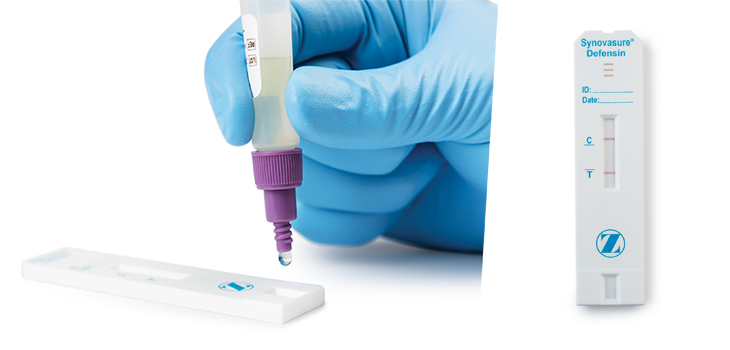
Synovasure Lateral Flow Test Kit
On May 23, 2019, the FDA gave permission to Zimmer Biomet Holdings, Inc., to market its Synovasure Lateral Flow Test Kit. In an unusual move, the FDA, instead of the company, issued the press release.
Until now there were no FDA authorized diagnostic tests specifically designed to determine whether the inflammation around a replaced joint was due to an infection or another cause.
Tim Stenzel, M.D., Ph.D., director of the Office of In Vitro Diagnostics and Radiological Health in the FDA’s Center for Devices and Radiological Health, said, “With this test, health care professionals now have an additional option available to aid their clinical assessment as to whether the patient has an infection and requires revision surgery.”
Physicians typically evaluate for potential infections using X-ray images or laboratory analysis of joint fluid, which can take days for results. This kit detects proteins called human alpha defensins in the synovial fluid of patients with a total joint replacement in approximately 10 minutes.
“Whereas before surgeons may have opted for surgery when the presence of an infection was unclear, with this test, they have more information and could potentially reduce patient risk by avoiding unnecessary revision operations for replacement joints.”
Manufactured by CD Diagnostics, which was acquired by Zimmer Biomet in 2016, the kit takes a sample from the viscous, lubricating fluid that surrounds the joint and searches for antimicrobial proteins released by white blood cells. It is designed for patients being evaluated for surgery to revise or replace a failing implant.
“Alpha defensins are antimicrobial proteins released by activated neutrophils (white blood cells) in response to infection. The Synovasure Lateral Flow Test Kit is intended as an aid to determine whether there is an infection present in synovial fluid. It is not intended to identify a specific type of infection. The test results are also intended to be used in conjunction with other clinical and diagnostic findings to aid in a patient’s diagnosis of prosthetic joint infection.”
The FDA put the kit through the de novo premarket review pathway, for low-to-moderate-risk devices of a new type.
New Special Control Established
“Along with this authorization, the FDA is establishing criteria, called special controls, which determine the requirements for demonstrating the safety and effectiveness of tests to detect and measure non-microbial analytes (substances) that aid in the detection and identification of localized human infections,” stated the FDA press release.
Author
React:
Discussion
This is a fascinating development. In my practice we've seen similar outcomes with the revised protocol. The key differentiator seems to be patient selection criteria. Has anyone else noticed the correlation with BMI thresholds?
Great point. I'd push back slightly on the conclusion, the sample size in the cited study is too small to draw population-level inferences. That said, the directional signal is compelling and worth a larger RCT.
We implemented a similar approach last year. Early results are promising but we're still gathering 12-month follow-up data. Happy to share our protocol if anyone is interested.
Join the conversation
Orthopedic professionals are discussing this. Sign in and upgrade to read every comment and add your voice.