
The Food and Drug Administration (FDA) published on May 24 a Class I recall of monitors often used in total joint arthroplasty and trauma cases to measure the levels of patient heart and respiratory functions during surgery.
FDA Issues Class I Recall for Common Surgery Monitors
2 min read Premium comments
#fdaSecondary#edwardslifesciences#operatingroomfire
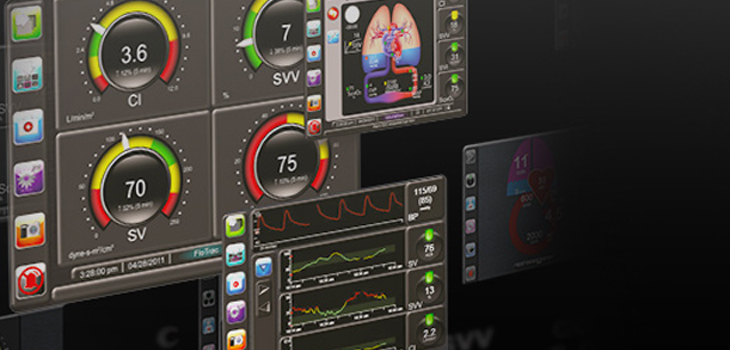
The monitor’s manufacturer is Edwards Lifesciences LLC and the product is the EV1000 clinical platform.
The recall notice says there is a “potential for fluids to leak into the AC power outlet on both the EV1000A and the EV1000NI.” An electrical short “may result in serious injury to patients and health care professionals, including electrical shock, burns, and cardiac arrest, or death. The risk of fire increases in oxygen enriched environments, such as operating rooms and intensive care units.”
The high-tech device “provides the choice of parameters you want to view and how you want to view them. Screen options include the real-time physiology screen (both intermittent and continuous), the cockpit screen, the goal positioning screen, graphical trend screen and the physio-relationship screen,” according to a page at the company’s website, which has illustrations showing what its various display options look like.
Recall Details
The recalled model numbers are EV1000A, EV1000NI, and EV1000CS. The lot numbers are all lots for these models, distributed November 5, 2010 to March 4, 2019. The total number of devices being recalled in the U.S. is 11,000.
The company initiated the recall March 21, 2019 after sending “Urgent Medical Device Safety Notification” letters on March 13, “advising customers to keep IV fluid bags and other fluids away from the AC power connector to avoid liquids leaking into the electrical components,” the FDA notice said.
On May 9, 2019, Edwards Lifesciences sent a second notification letter about additional potential causes of fire hazards.
The FDA says that for EV1000A clinical platform installations, users should:
- “Confirm compliance of installation configuration with the current requirements documented in the Operator’s Manual section EV1000 Power Adapter Mounting Bracket.
- “Avoid immersion of the device or its components and do not allow fluid to enter the device (reference is included in the Warning and Caution section of the Operator’s Manual).”
Also, “the external power supply for the EV1000A should be installed as illustrated in the Operator’s Manual (Figure 15-8 EV1000 Power Adapter Bracket and Figure 15-9 EV1000 Power Adapter Bracket included in the Operator’s Manual) where the AC cord plugs into the power supply, exactly as shown in the illustrations in the Operators Manual.” The images in the manual show the power supply positioned with one end up; the danger for that model lies in putting it in the upside-down position.
For EV1000NI clinical platform installations, “We have received reports where liquid is dripping on to the unit which may lead to an electrical short circuit leading to a possible fire hazard due to liquid ingress. Unlike the EV1000A, the EV1000NI AC cord inserts horizontally into the unit. Therefore, orientation is not a factor of liquid ingress. However, in case of excessive liquid exposure, the unit may short circuit leading to a possible fire hazard due to liquid ingress at the AC cord.”
Contact Information: Edwards Lifesciences, LLC, 1 Edwards Way, Irvine, CA, 92614-5688, 1-800-424-3278.
Author
React:
Discussion
This is a fascinating development. In my practice we've seen similar outcomes with the revised protocol. The key differentiator seems to be patient selection criteria. Has anyone else noticed the correlation with BMI thresholds?
Great point. I'd push back slightly on the conclusion, the sample size in the cited study is too small to draw population-level inferences. That said, the directional signal is compelling and worth a larger RCT.
We implemented a similar approach last year. Early results are promising but we're still gathering 12-month follow-up data. Happy to share our protocol if anyone is interested.
Join the conversation
Orthopedic professionals are discussing this. Sign in and upgrade to read every comment and add your voice.