
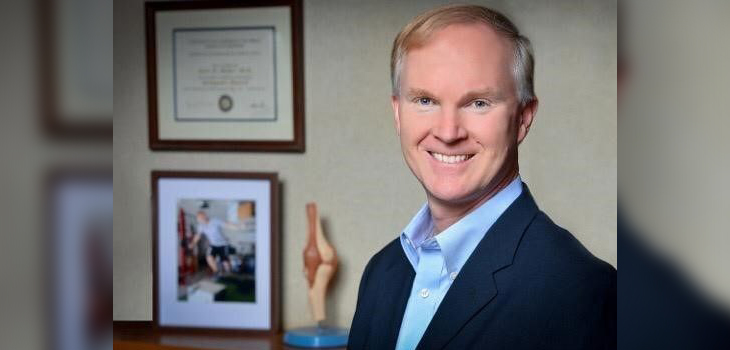
CartiHeal Ltd. recently announced that Scott A. Hacker, M.D., a sports medicine orthopedic surgeon at Grossmont Hospital in San Diego, California performed cartilage repair surgery using the Agili-C cartilage regeneration implant on the first four U.S. West Coast patients in the CartiHeal Food and Drug Administration Investigational Device Exemption (FDA IDE) study.
Dr. Scott Hacker Performs 1st West Coast Agili-C Cases
2 min read Premium comments
Secondary#cartilagerepair#cartiheal#scotthacker
The purpose of the randomized and controlled study is to compare the Agili-C regeneration implant to microfracture and debridement which is the standard procedure to repair cartilage.
The Agili-C implant, made of Aragonite, is designed for patients with knee-cartilage defects. It encourages regeneration of the cartilage and subchondral bone.
Hacker and 14 other U.S. orthopedic surgeons are participating in this study.
He said, “I’ve been waiting to participate in a study like this, which allows me to enroll and treat a wide variety of patients that I often see in my clinic, for some time. My first four patients enrolled into the study provide a great example to the uniqueness of this important study.
“The first case was a 56-year-old man with a 6cm lesion on his medial femoral condyle and moderate osteoarthritis.”
“The second case was a 48-year-old man with a 4.5cm lesion on his lateral femoral condyle and mild osteoarthritis with previous ACL reconstruction and partial meniscectomy.”
“The third case was a 46-year-old man with moderate osteoarthritis and a 4cm chondral lesion on his medial femoral condyle that was treated in the past with microfracture but continued to be symptomatic.”
“The fourth case was a 32-year-old man with 2 large lesions on his trochlea and the medial femoral condyle, with a total lesions size of 7cm, where a previous autologous osteochondral transplantation failed.”
He added, “I believe that these kinds of patients have been waiting a long time for a viable treatment option for their painful cartilage defect. They will greatly benefit from this technology, if the study meets its endpoint. As a surgeon I liked the simplicity of the implantation procedure and the easy-to-use surgical toolset. It takes only a few minutes to place the Agili-C implant. I’ve already identified additional patients that may be enrolled in the upcoming weeks.”
Nir Altschuler, founder and CEO of CartiHeal, also said, “We are excited that Dr. Hacker has elected to take part in our Pivotal study. Dr. Hacker brings vast experience from his previous clinical studies and we look forward to working with him. Over 180 patients have already been enrolled into the study and we are extremely pleased with the fast enrollment rate. We believe that this is a positive sign of trust in the study that we are conducting.”
CartiHeal, headquartered in Israel, is a privately held medical device company. Its focus is on the development of proprietary implants for the treatment of cartilage and osteochondral defects in traumatic and osteoarthritic joints.
In the United States, the Agili-C is an investigational device limited for use in the IDE study and not available for sale.
Author
React:
Discussion
This is a fascinating development. In my practice we've seen similar outcomes with the revised protocol. The key differentiator seems to be patient selection criteria. Has anyone else noticed the correlation with BMI thresholds?
Great point. I'd push back slightly on the conclusion, the sample size in the cited study is too small to draw population-level inferences. That said, the directional signal is compelling and worth a larger RCT.
We implemented a similar approach last year. Early results are promising but we're still gathering 12-month follow-up data. Happy to share our protocol if anyone is interested.
Join the conversation
Orthopedic professionals are discussing this. Sign in and upgrade to read every comment and add your voice.