
Naples, Florida-based Catalyst OrthoScience Inc., a medical device company that focuses on upper extremity orthopedics, has raised $12.7 million in an oversubscribed Series-C1 financing round that was led by Cincinnati, Ohio-based River Cities Capital Funds.
Catalyst OrthoScience Raises $12.7 Million
1 min read Premium comments
Secondary#catalystorthoscience#capitalraise#rivercitiescapitalfunds
Founded in 2014 by orthopedic surgeon Steven Goldberg, M.D., Catalyst OrthoScience develops and markets surgical implants intended for minimally invasive orthopedic surgeries. Goldberg founded the company because he saw the need for less invasive surgeries that gave patients a more natural-feeling shoulder after surgery.
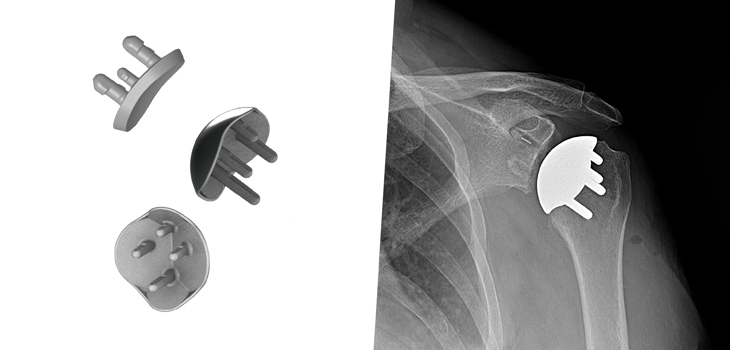
Catalyst OrthoScience developed the Catalyst CSR™ Total Shoulder System, an innovative approach to total shoulder arthroplasty. The Catalyst CSR system “creates a unique, multiplanar chamfer cut on the humeral head that minimizes bone removal and preserves the strongest, densest bone for the humeral component fixation—similar to modern knee replacement. Patented, angled glenoid instruments aid in the glenoid exposure and lessen retraction on the soft tissue. The precision of the system’s implants and instrumentation yields highly accurate and repeatable restoration of the native non-spherical anatomy.”
Brian K. Hutchison, Catalyst OrthoScience chairman and CEO, told OTW, “The Catalyst CSR system is a departure from any other total shoulder system on the market today, developed from a surgeon’s point of view. With this financing, we’ll be able to expand distribution for this unique shoulder system, enhance the infrastructure and inventory to support the distribution, and develop new products for the market.”
Carter McNabb, managing director at River Cities, said, “We are excited to partner with Catalyst to fuel the growth of the company and advance minimally invasive surgery in shoulder arthroplasty.” McNabb will join Catalyst’s board of directors. River Cities is a growth equity firm that invests in high-potential healthcare and information technology companies.
England Securities LLC acted as financial advisor and Dentons US LLP acted as Catalyst’s legal advisor for the transaction.
Author
React:
Discussion
This is a fascinating development. In my practice we've seen similar outcomes with the revised protocol. The key differentiator seems to be patient selection criteria. Has anyone else noticed the correlation with BMI thresholds?
Great point. I'd push back slightly on the conclusion, the sample size in the cited study is too small to draw population-level inferences. That said, the directional signal is compelling and worth a larger RCT.
We implemented a similar approach last year. Early results are promising but we're still gathering 12-month follow-up data. Happy to share our protocol if anyone is interested.
Join the conversation
Orthopedic professionals are discussing this. Sign in and upgrade to read every comment and add your voice.